Back

Sigma and Pi Bonds definitions

Control buttons has been changed to "navigation" mode.
1/13
  • Sigma Bond

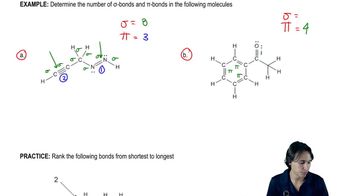
    A region of direct orbital overlap along the axis connecting two nuclei, allowing free rotation and forming the basis of single bonds.
  • Pi Bond

    A region of side-by-side p orbital overlap above and below the bond axis, restricting rotation and present in double and triple bonds.
  • Single Bond

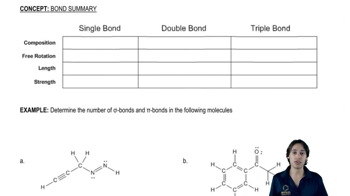
    A connection between two atoms involving only one sigma bond, characterized by free rotation and the longest bond length.
  • Double Bond

    A connection involving one sigma and one pi bond, restricting rotation and having intermediate bond length and strength.
  • Triple Bond

    A connection with one sigma and two pi bonds, preventing rotation and resulting in the shortest and strongest bond.
  • Bond Strength

    A measure of energy required to break a bond; increases from single to triple due to more overlapping orbitals.
  • Bond Length

    The distance between nuclei of bonded atoms; decreases from single to triple bonds as more orbitals overlap.
  • Orbital Overlap

    The sharing of electron density between atomic orbitals, determining bond type, strength, and rotation ability.
  • Free Rotation

    The ability of atoms to rotate around a bond without breaking it, possible only in single bonds due to one region of overlap.
  • Energy Savings

    The stabilization gained when bonds form; sigma bonds contribute more to this than pi bonds.
  • Region of Overlap

    The spatial area where atomic orbitals combine, forming bonds and influencing molecular properties.
  • p Orbital

    A type of atomic orbital involved in forming pi bonds through side-by-side overlap above and below the bond axis.
  • s Orbital

    A spherical atomic orbital that participates in sigma bond formation through direct overlap along the bond axis.