Back

Tertiary Protein Structure quiz

Control buttons has been changed to "navigation" mode.
1/15
  • What is the tertiary structure of a protein?

    The tertiary structure is the overall three-dimensional shape of a protein formed by folding the polypeptide chain, involving alpha helices and beta pleated sheets.
  • What stabilizes the tertiary structure of proteins?

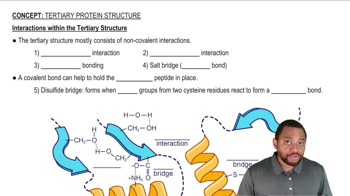
    The tertiary structure is stabilized mainly by interactions between R groups, including non-covalent interactions and covalent disulfide bridges.
  • Does the formation of tertiary structure alter the primary or secondary structure of a protein?

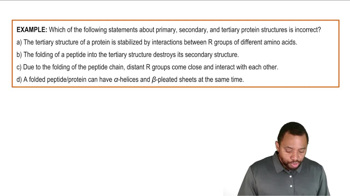
    No, the tertiary structure builds upon the primary and secondary structures without changing them.
  • What types of secondary structures are involved in tertiary protein structure?

    Alpha helices and beta pleated sheets are both involved in the tertiary structure.
  • What are hydrophobic interactions in tertiary protein structure?

    Hydrophobic interactions occur between nonpolar R groups that avoid water, helping stabilize the folded protein.
  • What is a salt bridge in the context of protein tertiary structure?

    A salt bridge is an ionic bond formed between oppositely charged R groups within the protein.
  • How do hydrogen bonds contribute to tertiary structure?

    Hydrogen bonds form between polar R groups, stabilizing the protein's three-dimensional shape.
  • What is a disulfide bridge and how is it formed?

    A disulfide bridge is a covalent bond formed between two cysteine residues when their SH groups react to create an SS bond.
  • Are disulfide bridges covalent or non-covalent interactions?

    Disulfide bridges are covalent interactions.
  • What role do R groups play in tertiary protein structure?

    R groups interact with each other through various forces, driving the folding and stabilization of the protein's tertiary structure.
  • What is the difference between hydrophobic and hydrophilic interactions in proteins?

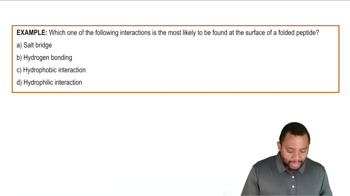
    Hydrophobic interactions involve nonpolar R groups avoiding water, while hydrophilic interactions involve polar R groups that are attracted to water.
  • How does the tertiary structure relate to protein functionality?

    The tertiary structure is crucial for protein functionality, as it determines the protein's overall shape and active sites.
  • Can a polypeptide chain have multiple alpha helices and beta sheets in its tertiary structure?

    Yes, a polypeptide chain can contain multiple regions of alpha helices and beta pleated sheets within its tertiary structure.
  • What is the sequence of protein structure levels leading to tertiary structure?

    The sequence is primary structure (amino acid sequence), secondary structure (alpha helices and beta sheets), and then tertiary structure (overall folding).
  • Why are disulfide bridges important for protein structure?

    Disulfide bridges provide strong covalent links that help maintain the protein's folded shape and structural integrity.