Back
BackAlcohols and Phenols: Structure, Nomenclature, Properties, and Synthesis
Study Guide - Smart Notes
 Tailored notes based on your materials, expanded with key definitions, examples, and context.
Alcohols and Phenols
Introduction to Alcohols and Phenols
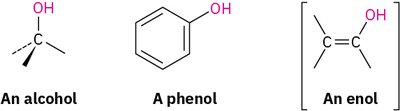
Alcohols and phenols are fundamental oxygen-containing functional groups in organic chemistry. Alcohols are characterized by a hydroxyl group (–OH) attached to a saturated, sp3-hybridized carbon, while phenols have the –OH group bonded directly to an aromatic ring. Enols, which have the –OH group attached to a vinylic, sp2-hybridized carbon, are a distinct class discussed elsewhere.
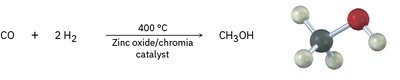
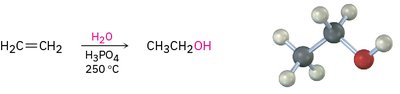
Alcohols and phenols are widespread in nature and industry, serving as solvents, intermediates, and bioactive molecules. Methanol and ethanol are two of the most important industrial alcohols, produced via catalytic reduction of carbon monoxide and hydration of ethylene, respectively.
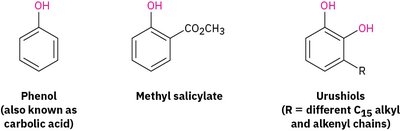
Phenols are also industrially significant, found in products such as adhesives, antiseptics, and flavoring agents. Examples include phenol itself, methyl salicylate, and urushiols.
Nomenclature of Alcohols and Phenols
Classification and IUPAC Naming
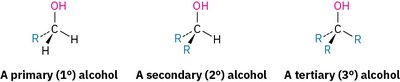
Alcohols are classified based on the number of organic groups attached to the hydroxyl-bearing carbon:
Primary (1°) alcohol: One organic group attached
Secondary (2°) alcohol: Two organic groups attached
Tertiary (3°) alcohol: Three organic groups attached
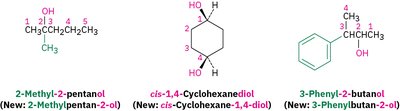
The IUPAC system names alcohols as derivatives of the parent alkane, replacing the -e ending with -ol. The chain is numbered to give the hydroxyl group the lowest possible number, and substituents are listed alphabetically with their positions indicated. For diols, the suffix -diol is used.
Some simple alcohols have common names accepted by IUPAC, such as benzyl alcohol, allyl alcohol, tert-butyl alcohol, ethylene glycol, and glycerol.

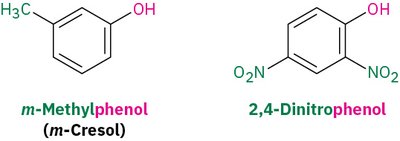
Phenols are named as derivatives of phenol, with substituents indicated by their positions on the aromatic ring.
Properties of Alcohols and Phenols
Physical Properties and Hydrogen Bonding
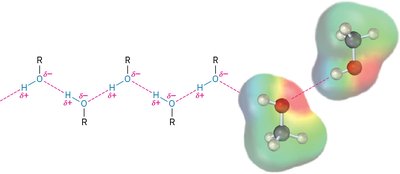
Alcohols and phenols have a nearly tetrahedral geometry around the oxygen atom, similar to water. Their boiling points are significantly higher than those of analogous hydrocarbons due to extensive hydrogen bonding between molecules.
Acid-Base Properties
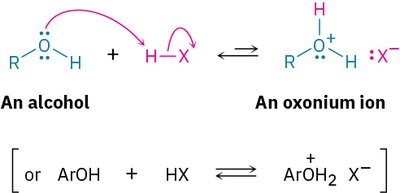
Alcohols and phenols are weak acids and weak bases. As bases, they can be protonated by strong acids to form oxonium ions:
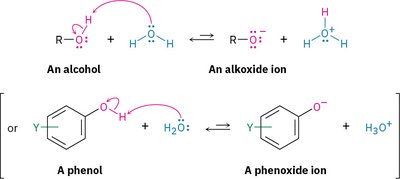
As acids, they can donate a proton to water, forming alkoxide or phenoxide ions:
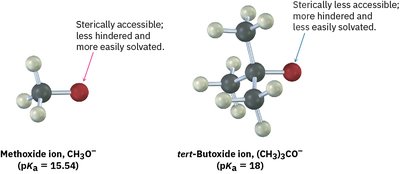
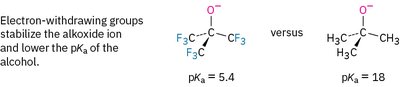
The acidity of alcohols is influenced by solvation and steric effects. Less hindered alkoxides are more easily solvated and thus more acidic.
Electron-withdrawing groups increase acidity by stabilizing the negative charge on the alkoxide ion.
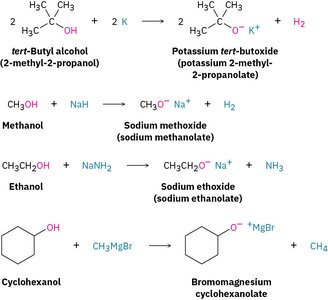
Alcohols react with strong bases and alkali metals to form alkoxides, which are useful as bases and nucleophiles in organic synthesis.
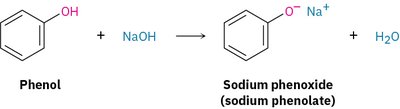
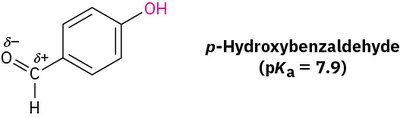
Phenols are much more acidic than alcohols due to resonance stabilization of the phenoxide ion. They are soluble in aqueous NaOH and can be separated by basic extraction.
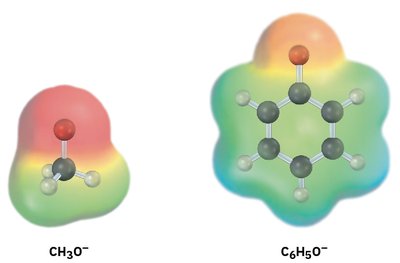
Substituents on the aromatic ring affect phenol acidity: electron-withdrawing groups increase acidity, while electron-donating groups decrease it.

Preparation of Alcohols
Overview of Alcohol Synthesis
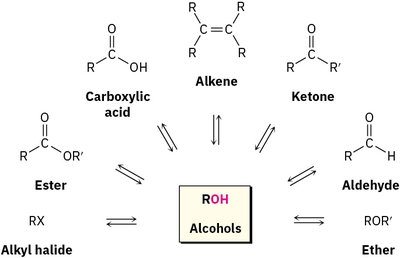
Alcohols can be synthesized from a variety of starting materials, including alkenes, alkyl halides, carbonyl compounds, esters, and carboxylic acids. They also serve as intermediates for the synthesis of many other functional groups.
Hydration of Alkenes
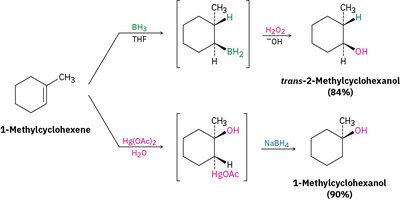
Alcohols are commonly prepared by the hydration of alkenes. Two main laboratory methods are:
Hydroboration–oxidation: Produces syn, anti-Markovnikov alcohols.
Oxymercuration–demercuration: Produces Markovnikov alcohols.
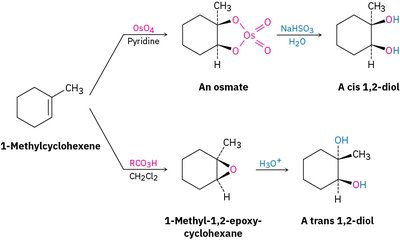
1,2-Diols can be prepared by hydroxylation of alkenes with OsO4 (cis diol) or by acid-catalyzed hydrolysis of epoxides (trans diol).
Alcohols from Carbonyl Compounds: Reduction
Reduction of Aldehydes and Ketones
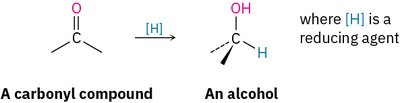
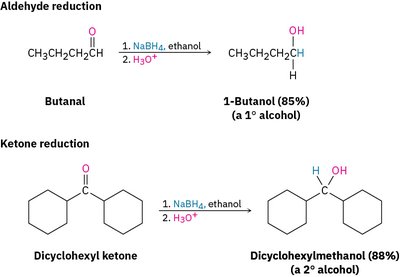
The most general method for preparing alcohols is the reduction of carbonyl compounds. Aldehydes are reduced to primary alcohols, and ketones to secondary alcohols, using reagents such as sodium borohydride (NaBH4) or lithium aluminum hydride (LiAlH4).

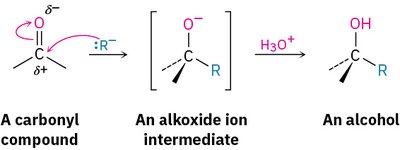
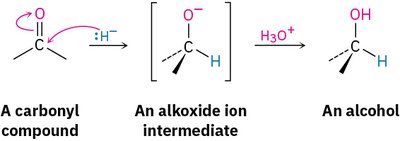
The mechanism involves nucleophilic addition of hydride to the carbonyl carbon, forming an alkoxide intermediate, which is then protonated to yield the alcohol.
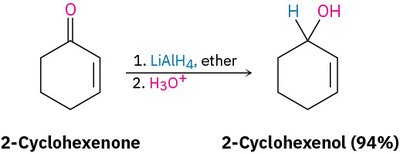
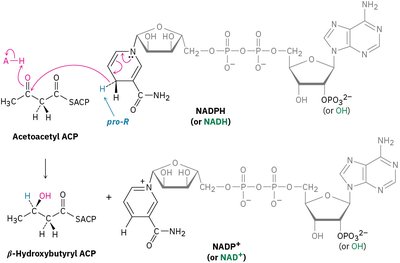
In biological systems, reductions are carried out by coenzymes NADH or NADPH, which act as hydride donors in enzyme-catalyzed reactions.
Reduction of Carboxylic Acids and Esters
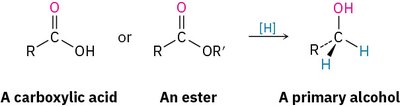
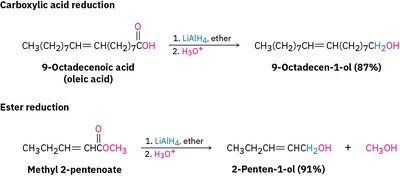
Carboxylic acids and esters are reduced to primary alcohols, typically using LiAlH4 as the reducing agent. NaBH4 is not effective for these substrates.
Alcohols from Carbonyl Compounds: Grignard Reaction
Grignard Addition to Carbonyl Compounds
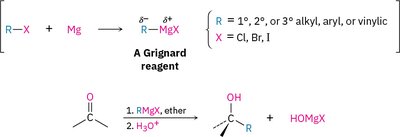
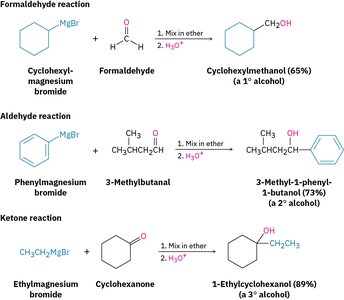
Grignard reagents (RMgX) react with carbonyl compounds to form alcohols via nucleophilic addition. The type of alcohol formed depends on the carbonyl compound:
Formaldehyde yields primary alcohols
Aldehydes yield secondary alcohols
Ketones yield tertiary alcohols
Esters yield tertiary alcohols (with two equivalents of Grignard reagent)
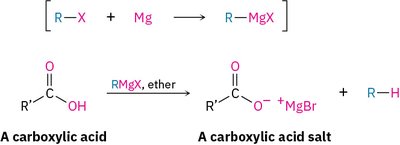
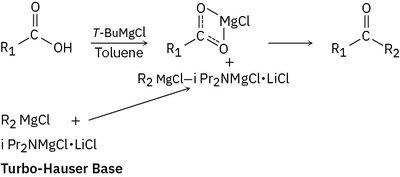
Carboxylic acids do not react directly with Grignard reagents due to acid-base reactions, but can be converted to ketones using the turbo-Hauser base.

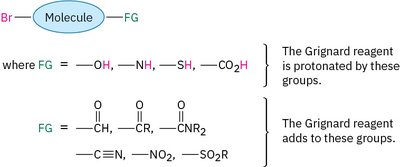
Grignard reagents cannot be prepared from alkyl halides containing reactive functional groups such as –OH, –NH2, –SH, or –CO2H, as these groups react with the Grignard reagent itself.
The mechanism of Grignard addition is analogous to hydride reduction: nucleophilic attack forms an alkoxide intermediate, which is protonated to yield the alcohol.
Worked examples illustrate the use of Grignard reagents to synthesize specific alcohols from ketones or esters.