 Back
BackAtomic Structure and Chemical Bonding: Foundations for Organic Chemistry
Study Guide - Smart Notes
 Tailored notes based on your materials, expanded with key definitions, examples, and context.
Atomic Structure
Historical Experiments and Models
The understanding of atomic structure has evolved through key experiments and theoretical models, which laid the foundation for modern chemistry and organic chemistry in particular.
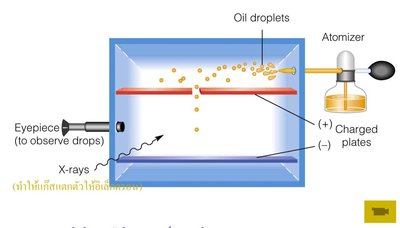
Millikan Oil Drop Experiment: Determined the charge of the electron by observing the motion of oil droplets in an electric field.
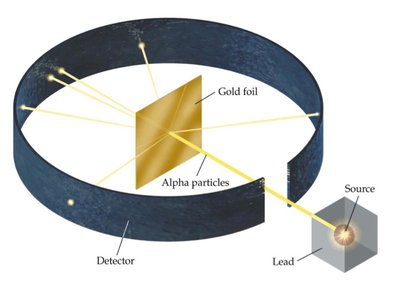
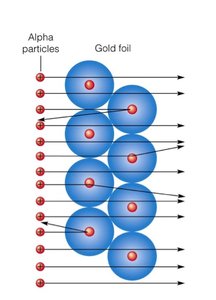
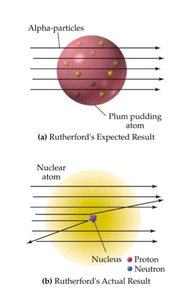
Rutherford Gold Foil Experiment: Demonstrated the existence of a small, dense, positively charged nucleus within the atom, refuting the plum pudding model.
Bohr Model: Proposed quantized energy levels for electrons, explaining atomic emission spectra.
Atomic Models and Electron Configuration
Modern atomic theory describes electrons as occupying orbitals defined by quantum numbers. The arrangement of electrons determines chemical properties and reactivity.
Quantum Numbers: Principal (n), angular momentum (l), magnetic (ml), and spin (ms).
Aufbau Principle: Electrons fill orbitals from lowest to highest energy.
Pauli Exclusion Principle: No two electrons in an atom can have the same set of four quantum numbers.
Hund's Rule: Electrons occupy degenerate orbitals singly before pairing.
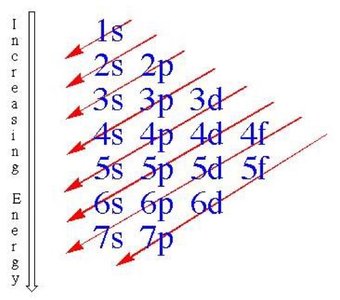
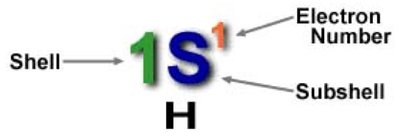
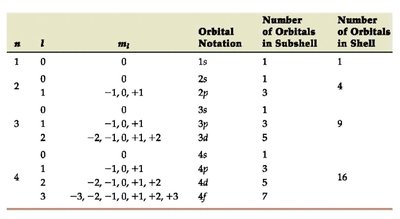
Atomic Spectra and Energy Levels
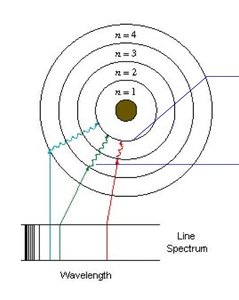
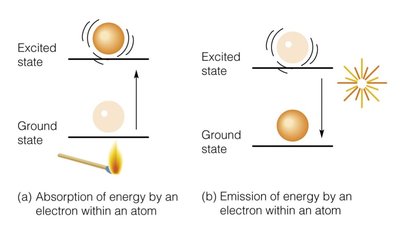
Electrons transition between discrete energy levels, absorbing or emitting photons of specific energies. This underpins the line spectra observed for elements.
Absorption: Electron moves to a higher energy level by absorbing energy.
Emission: Electron falls to a lower energy level, emitting energy as light.
Line Spectra: Each element has a unique emission spectrum, useful for identification.
Periodic Trends and Properties
Ionization Energy and Atomic Radius
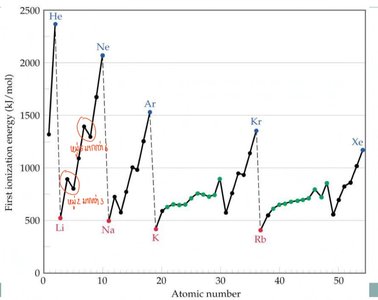
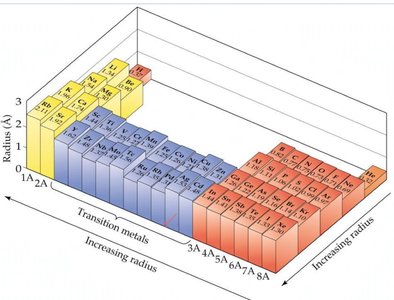
Periodic trends in the periodic table reflect changes in atomic structure and influence chemical reactivity, especially in organic chemistry.
Ionization Energy: The energy required to remove an electron from an atom. Increases across a period, decreases down a group.
Atomic Radius: The size of an atom. Decreases across a period, increases down a group.
Chemical Bonding
Types of Chemical Bonds
Chemical bonds are the forces holding atoms together in molecules and compounds. The type of bond affects molecular structure and properties, which are central to organic chemistry.
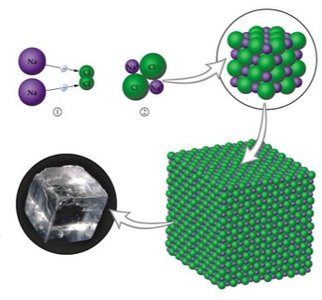
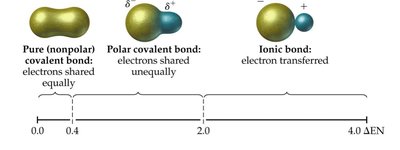
Ionic Bonds: Formed by the transfer of electrons from one atom to another, resulting in oppositely charged ions.
Covalent Bonds: Formed by the sharing of electron pairs between atoms. Can be nonpolar (equal sharing) or polar (unequal sharing).
Metallic Bonds: Involve a 'sea' of delocalized electrons around metal cations (less relevant for organic chemistry).
Bond Energies and Molecular Geometry
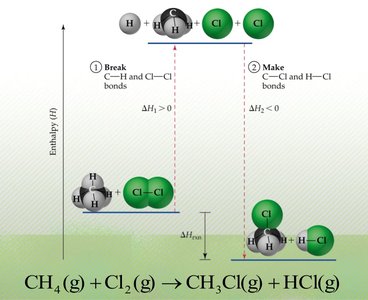
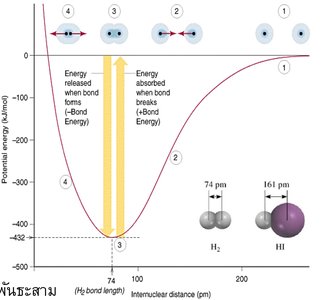
The strength and arrangement of bonds determine molecular shape and stability.
Bond Energy: The energy required to break a bond. Stronger bonds have higher bond energies.
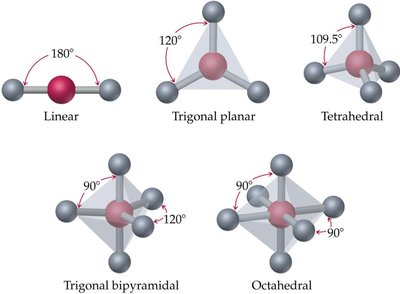
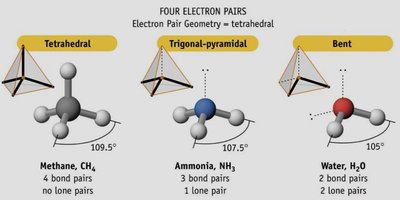
VSEPR Theory: Predicts molecular geometry based on electron pair repulsion.
Common Geometries: Linear, trigonal planar, tetrahedral, trigonal bipyramidal, octahedral.
Polarity and Dipole Moments
Molecular polarity arises from differences in electronegativity and molecular geometry, influencing solubility and reactivity in organic compounds.
Electronegativity: The ability of an atom to attract electrons in a bond.
Dipole Moment: A measure of molecular polarity, important for understanding intermolecular interactions.
Lewis Structures and Resonance
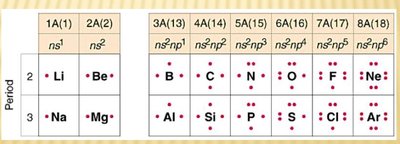
Lewis structures represent the arrangement of electrons in molecules. Resonance structures describe delocalized electrons in molecules where a single Lewis structure is insufficient.
Lewis Structure: Shows bonding and lone pairs of electrons.
Resonance: Multiple valid Lewis structures for a molecule, actual structure is a hybrid.
Additional info:
These foundational concepts are essential for understanding organic chemistry, including molecular structure, reactivity, and mechanisms.
Knowledge of atomic structure and bonding underpins later topics such as functional groups, reaction mechanisms, and spectroscopy.
