
Ch. 1 - Introduction to Statistics
Larson - Elementary Statistics: Picturing the World 8th Edition
Larson8th EditionElementary Statistics: Picturing the WorldISBN: 9780137493470Not the one you use?Change textbook
Chapter 1, Problem 1.3.33

Determine whether the survey question is biased. If the question is biased, suggest a better wording.
How much do you exercise during an average week?

Verified step by step guidance
1
Step 1: Understand the concept of bias in survey questions. A biased question is one that leads respondents toward a particular answer or does not allow for a fair and neutral response. Bias can arise from wording, tone, or assumptions embedded in the question.
Step 2: Analyze the given question, 'How much do you exercise during an average week?' This question assumes that the respondent exercises, which may not be true for everyone. This assumption can make the question biased as it excludes individuals who do not exercise.
Step 3: Consider how to make the question more neutral and inclusive. A better wording would avoid assumptions and allow for a broader range of responses. For example, 'How much physical activity, if any, do you engage in during an average week?'
Step 4: Ensure the revised question provides clarity and neutrality. The phrase 'if any' accommodates respondents who may not engage in physical activity, making the question unbiased and inclusive.
Step 5: Review the revised question for potential improvements. Confirm that it aligns with the survey's goals and does not unintentionally lead respondents toward a specific type of answer.

Verified video answer for a similar problem:

This video solution was recommended by our tutors as helpful for the problem above.
Video duration:
2m
Was this helpful?

Key Concepts

Here are the essential concepts you must grasp in order to answer the question correctly.

Survey Bias

Survey bias occurs when the wording of a question leads respondents to answer in a certain way, potentially skewing the results. This can happen through leading questions, loaded language, or assumptions about the respondent's behavior. Identifying bias is crucial for ensuring that survey results accurately reflect the opinions or behaviors of the target population.
Recommended video:
Guided course
03:06
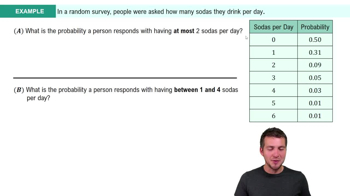
Intro to Random Variables & Probability Distributions Example 1

Question Wording

The wording of survey questions significantly influences how respondents interpret and answer them. Clear, neutral, and specific language helps minimize confusion and bias. For example, instead of asking 'How much do you exercise during an average week?', a more neutral phrasing could be 'On average, how many days per week do you engage in physical exercise?'
Recommended video:
Guided course
06:19
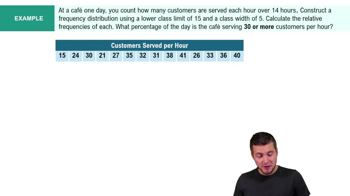
Intro to Frequency Distributions Example 1

Response Options

Providing appropriate response options is essential for capturing accurate data in surveys. Open-ended questions allow for diverse responses, while closed-ended questions can limit answers to predefined choices. In the context of exercise, offering a range of options (e.g., '0 days', '1-2 days', '3-4 days', '5 or more days') can help clarify the respondent's habits without leading them.
Recommended video:
06:10
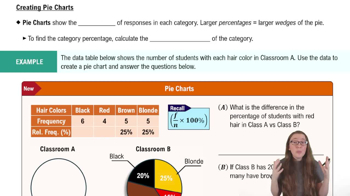
Creating Pie Charts