Ch. 1 - Introduction to Statistics
Triola - Elementary Statistics 14th Edition
Triola14th EditionElementary StatisticsISBN: 9780137366446Not the one you use?Change textbook
Chapter 1, Problem 1.1.9

In Exercises 9–12, determine whether the sampling method appears to be sound or is flawed.


Nuclear Power Plants In a survey of 1368 subjects, the following question was posted on the USA Today website: “In your view, are nuclear plants safe?” The survey subjects were Internet users who chose to respond to the question posted on the electronic edition of USA Today.

Verified step by step guidance
1
Identify the type of sampling method used in the survey. In this case, the survey was conducted online, where participants chose to respond voluntarily. This is known as a voluntary response sample.
Evaluate the representativeness of the sample. Consider whether the sample of Internet users who chose to respond is representative of the general population's views on nuclear plant safety.
Consider potential biases. Voluntary response samples often suffer from self-selection bias, where individuals with strong opinions are more likely to participate, potentially skewing the results.
Assess the reliability of the survey results. Due to the self-selection bias and lack of random sampling, the results may not accurately reflect the views of the broader population.
Conclude whether the sampling method is sound or flawed. Given the voluntary nature and potential biases, the sampling method appears to be flawed for making generalizations about the population's views on nuclear plant safety.

Verified video answer for a similar problem:

This video solution was recommended by our tutors as helpful for the problem above.
Video duration:
2m
Was this helpful?

Key Concepts

Here are the essential concepts you must grasp in order to answer the question correctly.

Sampling Method

The sampling method refers to the process used to select individuals from the population to participate in a survey. A sound sampling method should ensure that the sample is representative of the entire population, minimizing bias. In this case, the method involves self-selection by Internet users, which may not accurately reflect the views of the general population.
Recommended video:
05:11
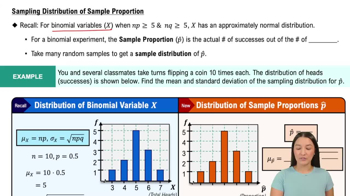
Sampling Distribution of Sample Proportion

Self-Selection Bias

Self-selection bias occurs when individuals select themselves to participate in a survey, leading to a non-random sample. This can result in a sample that is not representative of the broader population, as those who choose to respond may have different opinions or characteristics than those who do not. In the given survey, only those who visited the USA Today website and chose to respond are included, potentially skewing the results.
Recommended video:
Guided course
08:33
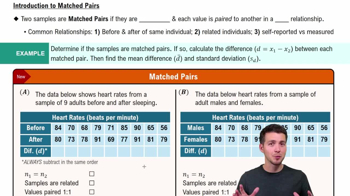
Introduction to Matched Pairs

Representativeness

Representativeness is the degree to which a sample accurately reflects the characteristics of the population from which it is drawn. A representative sample allows for generalizations about the population. In this scenario, the sample may lack representativeness due to the limited demographic of Internet users who visit the USA Today website and opt to participate, which may not mirror the views of the entire population on nuclear plant safety.
Recommended video:
Guided course
03:55
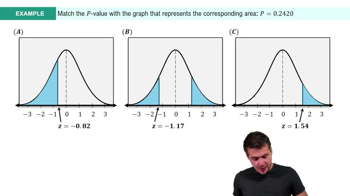
Step 3: Get P-Value Example 3
Related Practice
Textbook Question

E-Cigarette Survey In a survey of 36,000 adults, 3.7% said that they regularly use E-cigarettes (based on data from the National Center for Health Statistics)


b. Is the value of 3.7% a statistic or parameter?

300
views

Textbook Question

In Exercises 25–28, refer to the data in the table below. The entries are for five different years, and they consist of weights (metric tons) of lemons imported from Mexico and U.S. car crash fatality rates per 100,000 population [based on data from “The Trouble with QSAR (or How I Learned to Stop Worrying and Embrace Fallacy)” by Stephen Johnson, Journal of Chemical Information and Modeling, Vol. 48, No. 1].

[IMAGE]

Conclusion If we were to use the sample data and conclude that there is a correlation or association between lemon imports and crash fatality rates, does it follow that lemon imports are the cause of fatal crashes?

186
views
Textbook Question

Quantitative/Categorical Data Identify each of the following as quantitative data or categorical data.


a. The platelet counts in Data Set 1 “Body Data” in Appendix B

228
views
Textbook Question

In Exercises 21–24, refer to the sample of body temperatures (degrees Fahrenheit) in the table below. (The body temperatures are from Data Set 5 in Appendix B.)

[IMAGE]

Conclusion Given the body temperatures in the table, what issue can be addressed by conducting a statistical analysis of the data?

297
views
Textbook Question

In Exercises 37–44, answer the given questions, which are related to percentages.

Marriage Proposals In a survey conducted by TheKnot.com, 1165 engaged or married women were asked about the importance of a bended knee when making a marriage proposal. Among the 1165 respondents, 48% said that the bended knee was essential.


a. What is the exact value that is 48% of 1165 survey respondents?

b. Could the result from part (a) be the actual number of survey subjects who said that a bended knee is essential? Why or why not?

324
views
Textbook Question

In Exercises 29–36, identify what is wrong.

Cell Phones and Pirates In recent years, the numbers of cell phones and the numbers of pirates have both increased, so there is a correlation, or association, between those two variables. Therefore, pirates cause increases in cell phones.

303
views