

Literacy for the 21st Century: A Balanced Approach, 3rd edition
Published by Pearson (23 August 2018) © 2019
- Gail E. Tompkins California State University, Fresno, Late Professor Emerita
- Carol Smith University of Sunshine Coast
- Rod Campbell University of Queensland
- David Green Queensland University of Technology (retired)
eTextbook
- Easy-to-use search and navigation
- Add notes and highlights
- Quizzes and flashcards help streamline study
- Access online and offline via mobile app
Revel
- Inspire engagement through active learning
- Provide an immersive reading experience
- Assess student progress with performance insights
- A print text (hardcopy or paperback)
- Free shipping
Title overview
For all levels of Bachelor and Masters Education courses
Literacy for the 21st Century supports the development of knowledge, understanding and skills in teaching literacy to children from the Foundation Year to Year 6.
The book emphasises that successful teaching involves knowing the students, the content and associated curriculum requirements, and understanding how to apply this knowledge in different ways to meet individual students' literacy learning needs.
Samples
Download the detailed table of contents >
Preview a sample chapter from Literacy for the 21st Century >
Student resources:
Key features
- Challenges readers to consider ways of knowing, learning and teaching by providing learning opportunities to consider ways of using digital platforms to develop children's reading, writing, speaking, listening and viewing skills.
- Includes professional and children's book references.
- A range of teaching strategies are included throughout and consolidated in an updated Part 4: Compendium of teaching strategies.
- A renewal of a range of Australian resources, including children's literature, interactive websites, information texts and content-area topics.
- Incorporation of current language and literacy research and practice into discussions on classroom practice.
- Includes updated content to align more closely with further developments in the Australian Teaching Standards and the Australian Curriculum: English. Content is mapped to industry standards and this mapping is available as a downloadable resource.
- Used across all levels of Bachelor and Masters Education courses.
Key features
What is Pearson eTextbook?
Pearson eTextbook is a flexible, affordable digital alternative to print, designed to enhance how students engage with course content.
- A streamlined, lower-cost replacement for traditional textbooks
- A dynamic reading experience that uses digital features to deepen understanding
- Accessible anytime, anywhere via browser or the Pearson app on any device
Why choose Pearson eTextbook?
Pearson eTextbook gives educators the tools to support learning, improve engagement, and save preparation time:
Drive engagement with interactive content
Embedded videos, media, and interactive elements bring key concepts to life directly within the text.
Support guided learning with assignments
Instructor-led assignments can be integrated alongside eTextbook content, helping reinforce understanding and track student progress.
Enhance study with AI-powered support
Students can access an AI study tool that delivers personalised explanations, guided practice, and on-demand support — helping them stay on track between classes.
Improve flexibility
Audio playback and instant language translation tools help students engage with content in ways that suit their learning needs and preferences.
Encourage active study habits
Students can learn faster with ready-made Pearson flashcards or create their own to reinforce key concepts.
Find what matters, faster
Smart search functionality helps students quickly locate key terms, images, media, and even their own notes.
Built for flexible learning
Mobile-optimised and fully accessible, Pearson eTextbook allows students to study whenever and wherever it suits them.
Expert content, designed for outcomes
Developed by trusted authors, each eTextbook combines clear explanations with problem-solving exercises, reflection questions, and real-world applications to help students succeed.
*Features vary by title.
What is Revel?
Dynamic content designed for the way today's students read, think, and learn
Integrated within the narrative, theory and concepts are brought to life through interactives and videos created to empower students to engage with concepts, and take an active role in learning. Revel's media interactives have been designed to be completed quickly, and videos are brief, so students stay focused and on task.
Revel's quizzing, integrated throughout as well as at the end of each module, provides students opportunities to check their understanding at regular intervals before moving on.
Revel's writing functionality, available in select courses, enables educators to integrate writing - among the best ways to foster and assess critical thinking - into the course without significantly impacting their grading burden. Self-paced Journaling Prompts throughout the narrative encourage students to express their thoughts without breaking stride in their reading. Assignable Shared Writing Activities direct students to share written responses with classmates, fostering peer discussion.
Highlighting, note taking, and a glossary let students customise their reading and studying experience. Instructors can add notes for students too, including reminders or study tips.
Table of contents
- PART 1 Literacy for the 21st century
- 1 Becoming an effective teacher of language, literature and literacy
- 2 Teaching the reading and writing processes
- 3 Assessing students' literacy development
- PART 2 Components of literacy development
- 4 Working with the youngest readers and writers
- 5 Cracking the alphabet code
- 6 Teaching English grammar: the language code for reading and writing
- 7 Developing fluent readers and writers
- 8 Expanding academic vocabulary
- 9 Promoting comprehension: reader factors and text factors
- PART 3 Organising for literacy instruction
- 10 Organising for instruction
- 11 Differentiating for success
- 12 Reading and writing in the content areas
- PART 4 Compendium of teaching strategies
- Professional references
- Children's book references
- Glossary
- Author and title index
- Subject index
Need help?Get in touch
 Play
Play
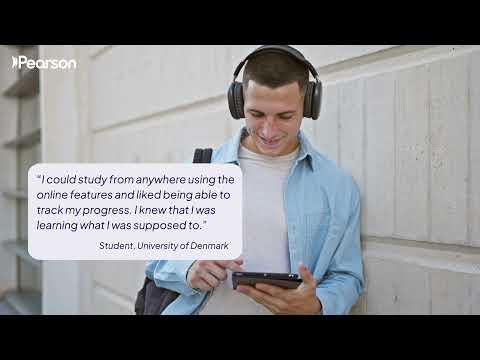
Help students learn, wherever life takes them
Your students deserve more than just a digital textbook. Revel® combines content, media, and assessment to create an engaging, immersive experience that lets them learn on the go — anytime, anywhere, on any device.