Improving employee engagement: The crucial role of language learning in business

Samantha Ball
A business woman and man sat at a long table discussing with eachother
Reading time: 8 minutes

The ways we approach employee engagement are rapidly evolving and changing. For HR professionals and global business leaders, understanding these trends is essential to encourage a motivated, productive, and loyal workforce. A key yet often overlooked aspect of this engagement is the role of language learning and cultural understanding. Failure to adapt to the international market doesn’t just hinder growth—it can lead to significant financial losses.

This blog post will delve into current employee engagement trends, provide suggestions for improvement, and talk about the importance of language learning and company culture in fostering a thriving global workforce through an effective employee engagement strategy.

How can language learning help employee engagement?
Privacy and cookies

By watching, you agree Pearson can share your viewership data for marketing and analytics for one year, revocable by deleting your cookies.

Employee engagement trends: A snapshot

Declining engagement levels

Recent research reveals that only 33% of employees in the US are actively engaged at work, while in 2023, 50% of employees were not engaged (quiet quitting). “Quietly quitting”—a term used to describe psychological disengagement from work. This issue is costly, with Gallup estimating an annual global economic impact of around $8.8 trillion.

The rise of learning and development (L&D)

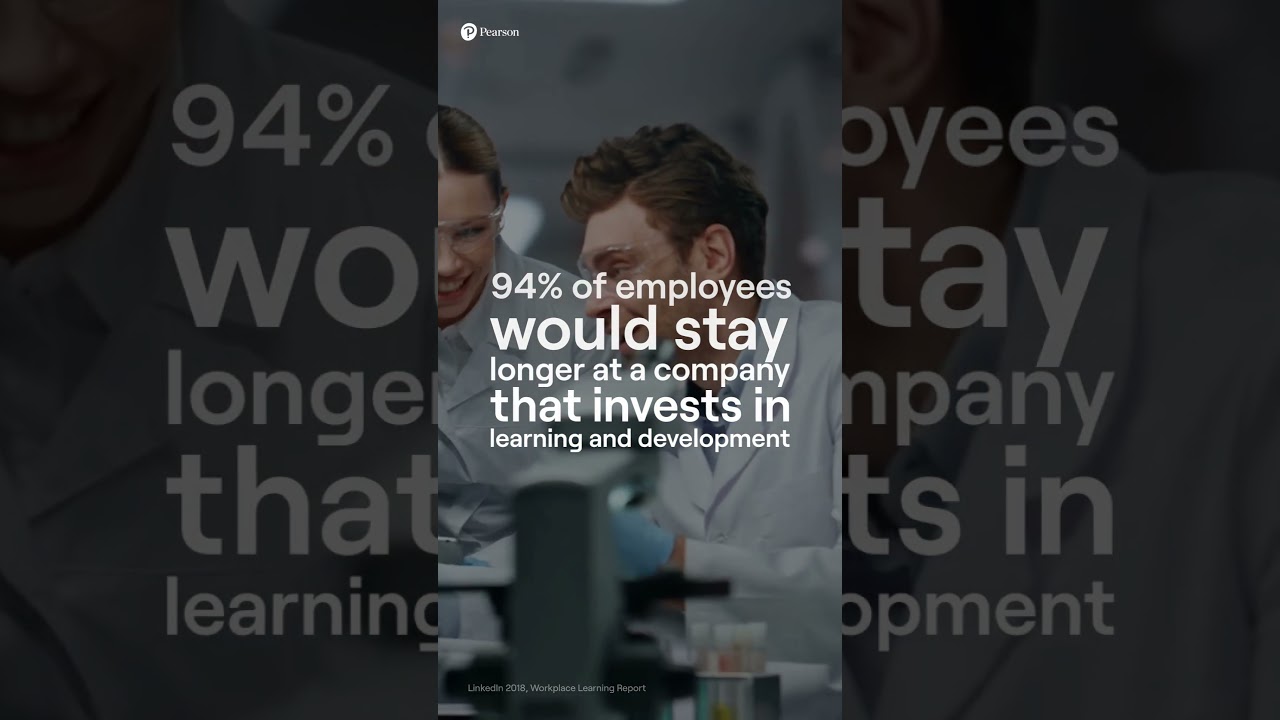
Despite these alarming engagement statistics, there is a silver lining: 94% of employees state they would stay longer at a company that invests in their learning and development (L&D). This indicates a pivotal opportunity for businesses to enhance engagement through targeted L&D initiatives, which can help cultivate an engaged employee.

These initiatives can include comprehensive training and development programs, language training, professional development opportunities, and continuous learning opportunities.

The impact of language barriers

Language barriers are a significant impediment to effective communication in the workplace. Miscommunication costs businesses an average of $62.4 million annually, illustrating the critical need for robust language training programs. According to our research, only one in three companies currently provides language upskilling, despite 88% of employees acknowledging its importance.

What are some employee engagement strategies used to motivate employees?

Foster a culture of recognition 

Recognizing and rewarding employees for their contributions can significantly boost morale and employee motivation too. Implementing a robust employee recognition program that includes both formal awards and informal acknowledgments can help employees feel valued and appreciated.

Enhance internal communication 

Effective communication is a cornerstone of any employee engagement program. Regular updates from leadership, open forums for feedback, and transparent communication channels can foster a sense of inclusion and trust within the organization.

Develop clear career pathways 

Employees are more likely to stay engaged when they see a clear pathway to career advancement. Regular performance reviews, employee feedback, setting achievable goals, and providing opportunities for promotion can help keep employees motivated and focused on their long-term career aspirations.

Invest in comprehensive L&D programs

Given the strong correlation between L&D and employee retention, companies should prioritize comprehensive training programs that include effective employee engagement strategies addressing both technical skills and soft skills. Incorporating language learning into these programs can significantly enhance employee satisfaction and improve engagement, as shown by our Pearson success stories.

Implement flexible learning solutions to encourage employees

With busy workloads, employees often struggle to find time for learning. Mondly by Pearson offers flexible online language learning solutions that allow employees to study at their own pace, fitting lessons around their schedules. Employers can track progress via a central dashboard, ensuring that learning objectives are met without disrupting daily operations. Flexible learning solutions like these can also boost engagement by allowing employees to learn at their own pace and on their own schedule.

Use technology for enhanced engagement

Incorporating technology like VR, AR and AI can enhance employee engagement through immersive training experiences, personalized learning, and real-time feedback.

Measure and analyze engagement metrics

To enhance your employee engagement programs effectively, it is crucial to regularly measure and analyze engagement metrics. Utilizing advanced employee engagement software can provide valuable insights into areas such as employee satisfaction, communication efficacy, and training program effectiveness. By continuously monitoring these metrics, businesses can identify trends, detect issues early, and adjust employee development strategies accordingly, ensuring that employee engagement initiatives are always aligned with the evolving needs of the workforce.

Prioritise employee wellbeing

Employee well-being should be at the heart of engagement strategies. Promoting a healthy work-life balance, providing mental health support, and creating a supportive work environment are essential components.

Companies that prioritize wellbeing are likely to see higher engagement levels, as employees feel valued and cared for. Initiatives such as wellness programs, flexible working hours, and access to mental health resources and counseling services can significantly contribute to a more engaged and productive workforce.

Comprehensive wellness programs that address physical, mental, and emotional health can significantly impact employee engagement. This can include fitness challenges, counseling services, and wellness workshops.

A multi-faceted approach for engaged employees

Employee engagement is multifaceted and requires a strategic approach that encompasses learning and development, cultural understanding, language training, and leveraging technology. By investing in these areas, businesses can cultivate a motivated, skilled, and loyal workforce positioned to thrive in a globalized economy.

Emphasizing inclusivity, flexibility, technological integration, and wellbeing can drive meaningful employee engagement efforts and ultimately lead to sustained business success.

The impact of ignoring employee engagement on the international stage

Ignoring the international market and failing to address language barriers can have dire financial consequences. According to SHRM, poor communication can cause an average loss per company of $62.4 million.

Moreover, recruiting staff with formal English qualifications only to discover they cannot effectively communicate in English once hired leads to frustration and inefficiencies. Addressing language barriers can help engage employees by improving communication and collaboration across the entire organization too.

Addressing language learning in a globalized workplace

Effective communication between teams spread across different countries and cultures is crucial to business success. When employees possess strong language skills, they’re better equipped to navigate complex, multilingual environments, leading to improved collaboration and productivity. Consequently, investing in language training programs is not just a strategic move to enhance an individual employee's skill sets but an essential step toward fostering a cohesive, well-integrated and engaged workforce.

Language learning: Boosting engagement and productivity

The benefits of language learning extend beyond mere communication. Employees who receive language training report higher levels of engagement and job satisfaction. Language learning can lead to motivated employees who are more engaged and productive in their roles. Mondly by Pearson’s flexible language learning solutions are designed to meet the specific needs of businesses, providing enhanced business-centric content to improve workplace skills and confidence.

Building soft skills

Soft skills are becoming increasingly important for employees. With AI being used more in the workplace, soft skills that AI can’t replace are being sought after more. Soft skills such as critical thinking, collaboration, and emotional intelligence are all key to building an engaged team.

Language learning can help develop these soft skills by providing opportunities for employees to work together on language exercises, practice speaking and listening, and collaborate in a new language. This not only improves their language proficiency but also boosts their soft skills, making them more valuable assets to the company.

The strategic advantage of language learning

We’ve discussed the advantages of learning a new language for your business before but to reiterate, investing in language learning is a strategic enabler for international business. It allows companies to:

  • Increase employee engagement: Providing language learning opportunities can improve employee engagement by equipping employees with the skills they need to succeed in a global market.
  • Recruit top talent: Language training broadens the talent pool, allowing businesses to attract and retain employees who might otherwise be overlooked due to language barriers.
  • Engage in the global economy: Proficiency in multiple languages enables businesses to engage more effectively with global markets, enhancing competitiveness.
  • Enhance customer service: Prioritizing language learning can significantly improve customer service and overall operational efficiency.

The path forward for employee engagement initiatives

Understanding and adapting to employee engagement trends is essential for HR professionals and global business leaders. Investing in language learning and cultural understanding not only mitigates the cost of miscommunication but also the workplace culture that drives employee engagement, satisfaction, and productivity. Engaged employees are more satisfied, productive, and motivated, contributing significantly to overall organizational success.

Elevate your workplace with Pearson

Take the first step towards a more engaged, skilled, and motivated workforce. Explore Mondly by Pearson for your workforce to help them develop their language skills further. 

Contact us today to learn how Versant by Pearson and our workplace solutions can help your organization achieve its goals. Empower your team, boost employee engagement, enhance communication, and unlock unparalleled growth potential. Don't wait—act now and lead your business to success.

More blogs from Pearson

  • University students sitting outside together smiling
    Which English test should I take? Pearson test comparison
    Di Abi Fordham
    Reading time: 4 minutes

    Searching for the best English test can be challenging with so many options available. How do you choose the one that suits your needs?

    At Pearson, we provide a range of leading English tests, including PTE Academic and the Pearson English Express Test. Both tests are tailored for specific goals, supported by decades of experience, trusted by thousands of institutions worldwide, and designed to help you achieve success.

    Let’s break it down.

    PTE Academic: For global study and migration

    PTE Academic is a leading English proficiency test designed for students and professionals seeking to study or migrate internationally. Recognized by over 3,500 universities and government bodies worldwide, including Australia, New Zealand, Canada and the UK. It offers global acceptance.

    • Test center delivery: Conducted at official Pearson VUE centers for secure and reliable testing.
    • Comprehensive format: A 2-hour exam assessing all four language skills with 20 question types.
    • Global recognition: Perfect for applications related to study, work and migration in various countries.
    • Trusted reputation: Accepted by top universities such as Harvard and Yale, as well as governments worldwide.

    If you are applying to multiple countries or require a recognized English test for visa purposes, PTE Academic is the ideal choice.

    Pearson English Express Test: For fast, flexible US Study

    The Pearson English Express Test is a fast, reliable, and flexible online English proficiency test specifically designed for students applying to universities in the USA. Take the test securely from home, without the stress of travel arrangements or appointments.

    • 100% online: Conveniently complete the test from anywhere, at any time.
    • Quick results: Receive unofficial scores within minutes and official certified results in just 48 hours.
    • Affordable: Priced at a fixed $70 USD, regardless of your location.
    • Smart scoring: Utilizes AI technology and remote security review to ensure fairness and accuracy.
    • Student-focused: Measures real-world academic readiness in just one hour.

    This test is the ideal choice for students seeking a quick, secure and recognized English assessment for US university applications. 

    Why Pearson tests stand out

    Discover why Pearson tests are the top choice for English assessment:

    • Trusted expertise: With over 30 years of education leadership, Pearson is recognized worldwide for research, innovation and global partnerships.
    • Comprehensive support: Access clear score guides, preparation materials and a dedicated support team to help you succeed.
    • Reliable security: Pearson tests are designed with robust security measures, ensuring your results are accurate and trustworthy.

    Which English exam should you choose?

  • Young adult students sat at a desk with notes and papers studying with a teacher stood by them helping out
    5 academic skills to prepare your students for higher education
    Di Richard Cleeve
    Reading time: 4 minutes

    Studying abroad in an English-speaking country is a fantastic opportunity for your students to use their language skills in real-world situations and give their confidence a boost. But how can we help prepare them for success, so that they can really benefit from their experience abroad?

    One way to do this is to develop their academic skills alongside their language skills.

    Why are academic skills important?

    Academic skills encourage students to become more efficient learners. They give students the confidence to participate fully in English-speaking courses and are invaluable outside of the classroom and after they graduate. These skills, which include critical thinking and note-taking, are also highly transferable and, therefore, vital for success in any career.

    Students are expected to have a number of these skills when they start in higher education. The Global Scale of English (GSE) Teacher Toolkit organizes them into five categories:

    1. Academic Discourse: skills for communicating effectively in debates, discussions and presentations
    2. Academic Text Strategies: skills for analyzing academic texts in greater detail
    3. Academic Strategies: skills for understanding and responding critically to lectures
    4. Composition: skills for effective academic writing
    5. Comprehension: skills for understanding academic texts and lectures

    Developing academic skills in the classroom

    Here are five ways to help you build the skills in each of those categories:

    1. Academic Discourse: responding to and asking questions

    Many teachers ask their students to practice presentations in class and this is a great skill to have. However, it’s very easy to overlook the students who aren’t speaking. By asking these students to prepare follow-up questions for the speakers, you can transform this activity into an active listening task. After the presentation has finished, conduct a student-led Q&A session, and provide feedback to the speakers on how they can better deal with difficult questions.

    Give your students extra motivation by offering a prize for the person that asks the most interesting question.

    2. Academic Text Strategies: looking for inferred meaning in texts

    Being able to make inferences is a very important academic reading skill. It not only helps students understand the text, but also encourages students to "read between the lines" and look for deeper meaning.

    How, then, can you strengthen this skill in the classroom? First, try developing this skill without a text. You can use short videos or pictures and ask your students to try and infer the meaning of the photo; the New York Times' "What’s Going On in This Picture?" series is a great source for this. Once students have practiced this several times, move on to short texts. Take the first paragraph of a short story, for example, and have students make inferences about the character, the plot and other aspects of the story using evidence from the text. Provide them with the rest of the story (or a summary if it’s too long) to have them find out whether their guesses were correct or not.

    3. Academic Strategies: writing effective notes

    How many of your students find it difficult to both listen and take notes at the same time when they are watching a video or lecture?

    Effective note-taking is an essential skill for your students to learn before they go on to further education. Using short videos, such as TED Talks, have students take notes while they watch. Then, in pairs or small groups, get your students to combine their notes to "recreate the video" in as much detail as possible. Further extension tasks can then include having the groups summarize their notes into a short social media post, or, if it’s a higher-level group, have them paraphrase their notes into their own words.

    4. Composition: developing a coherent argument

    When having class discussions, how effective are your students’ arguments? Producing coherent arguments is a vital skill for learners in higher education, and one that you can practice in the classroom. Find a model, written argument from the opinion section of a newspaper and cut it up into sections for your learners. Have them reorganize the text, and once correct, analyze the different components that make it coherent. Once students have discussed these, have them write their own coherent arguments on a range of topics that interest them. Then have them recite these arguments to their peers, and provide feedback on how logical their arguments are.

    5. Comprehension: identifying specific ideas in academic texts and lectures

    In the context of further education, it’s not just enough to say what you think the idea of a text is – students need to be able to provide evidence from the text itself. During class reading activities, have students get into the habit of underlining or highlighting parts of the text that they think support their answers, and discuss them during the feedback session after the activity. Encourage them not to highlight large parts of the text; instead, give them a word limit. By reducing the amount of underlined words, learners need to read the content carefully to identify the key words and phrases.

    Resources to help develop your students’ academic skills

    There are many resources that you can use to help prepare your students for university study.

  • A teacher with students working together on electronics
    How adaptive technology can boost student confidence and outcomes
    Di Charlotte Guest
    Reading time: 5 minutes

    Every day, teachers work hard to support diverse learners, juggling different needs and finding creative ways to bring out every student’s best. Adaptive technology is designed to stand alongside that dedication. In simple terms, it’s technology that responds to each learner in real time, adjusting tasks, feedback and pathways, so students get the right level of challenge at the right moment. In today’s classrooms, adaptive tools help teachers personalize instruction without sacrificing precious time, turning data into decisions that lift both confidence and achievement.

    What is adaptive technology in education?

    Adaptive technology uses student performance data to tailor the learning experience. Unlike traditional digital tools that deliver the same sequence for everyone, adaptive tools continuously adjust content, difficulty and pacing based on each learner’s responses and behavior.

    Examples you may already know:

    • Adaptive learning platforms that modify question difficulty and provide targeted practice
    • AI-driven quizzes that adjust based on correctness and confidence
    • Language-learning apps that adapt vocabulary and grammar tasks to proficiency
    • Math practice tools that identify prerequisite gaps and deliver just-in-time support

    Under the surface, adaptive systems gather data – such as correct/incorrect responses, time on task, patterns of misconceptions and even self-reported confidence – and use it to personalize the next step.