Haploid cells formed via meiosis, carrying a single set of chromosomes, essential for sexual reproduction by fusing to create a diploid zygote. Male types are sperm; female types are eggs.
Meiosis
A type of cell division that reduces the chromosome number by half, creating four haploid cells, each genetically distinct from the parent cell, essential for sexual reproduction.
Eggs
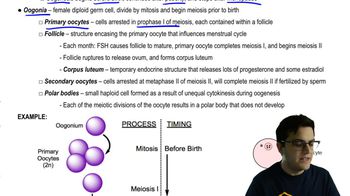
Large, non-motile female gametes produced in the ovaries, containing half the genetic material (haploid) necessary for sexual reproduction, and capable of being fertilized by male sperm to form a zygote.
Fertilization
The process where a male sperm cell and a female egg cell merge to form a zygote, combining genetic material from both parents, resulting in a diploid cell with two sets of chromosomes.
Zygote
A fertilized egg cell formed by the union of a sperm and an egg, containing two sets of chromosomes, one from each parent, marking the beginning of a new organism's development.
Binary Fission
A form of asexual reproduction where a single organism divides into two genetically identical daughter cells, commonly seen in prokaryotes like bacteria.
Parthenogenesis
A form of asexual reproduction where an egg develops into an organism without fertilization, resulting in offspring that are genetically identical to the mother.
Red Queen Hypothesis
The hypothesis posits that organisms must continuously adapt and evolve not just for reproductive advantage but to survive against ever-evolving opposing organisms, maintaining a dynamic equilibrium.
Scrotum
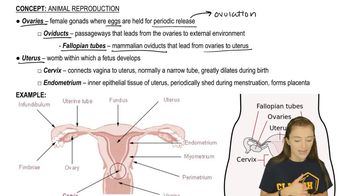
A skin pouch that holds the testes outside the body, maintaining an optimal temperature of around 95°F for proper sperm production, crucial for male fertility in most land mammals.
Seminiferous Tubules
Coiled structures in the testes where sperm production occurs through spermatogenesis, involving the development of spermatogonia into mature spermatozoa.
 Back
Back
 04:09
04:09