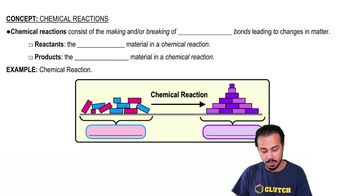
The making or breaking of chemical bonds, transforming reactants into products, and resulting in changes in matter.
Chemical Bonds
Forces that hold atoms together in molecules, formed by the sharing, transferring, or attraction of electrons, enabling chemical reactions and changes in matter.
Reactants
Reactants are the starting materials in a chemical reaction, serving as the ingredients that undergo change to form products.
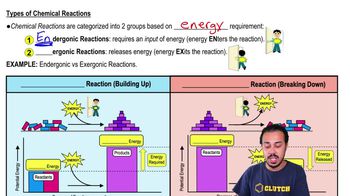
Exergonic Reactions
Reactions where energy is released, resulting in products with less free energy than the reactants.
Endergonic Reactions
Reactions that require an input of energy from the surroundings to proceed, resulting in products with higher energy than the reactants.
Free Energy
The energy available to do work in a system, determining the direction and spontaneity of chemical reactions.
Net Loss
The total energy of the products is less than that of the reactants, indicating energy release.
Spontaneous
Occurs without the need for external energy input, driven by the system's inherent properties, often resulting in a net release of energy.
Energy Input
The energy required to initiate a chemical reaction, often provided by heat, light, or another form of energy.
 Back
Back

 01:56
01:56