

Pearson+ LogoPearson+ Logo
Ch. 30 How Animals Move
Taylor - Campbell Biology: Concepts & Connections 10th Edition
Taylor, Simon, Dickey, Hogan10th EditionCampbell Biology: Concepts & ConnectionsISBN: 9780136538783Not the one you use?Change textbook
Chapter 30, Problem 13

The greatest concentration of thoroughbred horse farms is in the bluegrass region of Kentucky. The grass in the limestone-based soil of this area is especially rich in calcium. How does this grass affect the development of championship horses?

Verified step by step guidance
1
Identify the key nutrients in the bluegrass region's soil: The soil in this region is rich in calcium due to its limestone base. Calcium is a crucial nutrient for many biological processes.
Understand the role of calcium in horse development: Calcium is essential for the proper development of bones and teeth in horses. It also plays a significant role in muscle contraction, nerve function, and blood clotting.
Examine how the nutrient-rich grass influences horse health: Horses grazing on calcium-rich grass will likely have better bone density and overall skeletal strength, which are important for thoroughbred horses used in racing and other competitive events.
Consider the broader impact on horse performance: Strong bones and good muscle function contribute to the overall performance, endurance, and speed of thoroughbred horses, making them more competitive in races.
Reflect on the relationship between environment and animal development: This scenario illustrates how the specific characteristics of an environment, like soil composition, can directly influence the health and capabilities of animals living in that environment.

Verified video answer for a similar problem:

This video solution was recommended by our tutors as helpful for the problem above.
Video duration:
1m
Was this helpful?

Key Concepts

Here are the essential concepts you must grasp in order to answer the question correctly.

Nutritional Value of Grass

The nutritional composition of grass, particularly its mineral content, plays a crucial role in the growth and development of horses. Grass rich in calcium and other nutrients supports bone health, muscle development, and overall vitality, which are essential for athletic performance in championship horses.
Recommended video:
Guided course
05:58
Nutritional Diversity Among Microbes

Calcium's Role in Bone Development

Calcium is a vital mineral for horses, contributing significantly to bone density and strength. Adequate calcium intake during the growth phase helps prevent skeletal issues and supports the development of strong limbs, which is critical for the physical demands of competitive racing.
Recommended video:
Guided course
06:02
Embryonic Plant Development

Impact of Soil Composition on Forage Quality

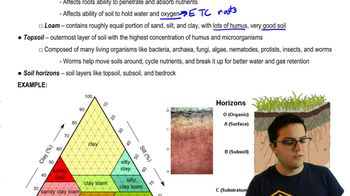
The limestone-based soil in Kentucky's bluegrass region enhances the mineral content of the grass, particularly calcium. This soil composition directly influences the quality of forage available to horses, ensuring they receive the necessary nutrients for optimal growth and performance, which is essential for producing championship contenders.
Recommended video:
Guided course
06:13
Soil Composition