
Pearson+ LogoPearson+ Logo
Ch. 30 How Animals Move
Taylor - Campbell Biology: Concepts & Connections 10th Edition
Taylor, Simon, Dickey, Hogan10th EditionCampbell Biology: Concepts & ConnectionsISBN: 9780136538783Not the one you use?Change textbook
Chapter 30, Problem 16

Drugs are often used to relax muscles during surgery.
Which of the following chemicals do you think would make a better muscle relaxant, and why?
Chemical A: Blocks acetylcholine receptors on muscle cells.
Chemical B: Floods the cytoplasm of muscle cells with calcium ions.

Verified step by step guidance
1
Understand the role of acetylcholine in muscle contraction: Acetylcholine is a neurotransmitter that binds to receptors on muscle cells, triggering a series of events that lead to muscle contraction. Blocking these receptors would prevent the signal for contraction from being received.
Understand the role of calcium ions in muscle contraction: Calcium ions are essential for muscle contraction because they bind to troponin, which allows the actin and myosin filaments to interact and generate contraction. Flooding the cytoplasm with calcium ions would likely cause continuous contraction or spasm.
Analyze the effect of Chemical A: By blocking acetylcholine receptors, Chemical A would prevent the initiation of muscle contraction, leading to muscle relaxation. This makes it a potential candidate for a muscle relaxant.
Analyze the effect of Chemical B: By flooding the cytoplasm with calcium ions, Chemical B would promote continuous muscle contraction rather than relaxation. This would not be suitable for a muscle relaxant.
Conclude which chemical is better: Based on the mechanisms of action, Chemical A is the better choice for a muscle relaxant because it prevents the signal for contraction, whereas Chemical B would cause sustained contraction, which is the opposite of relaxation.

Verified video answer for a similar problem:

This video solution was recommended by our tutors as helpful for the problem above.
Video duration:
1m
Was this helpful?

Key Concepts

Here are the essential concepts you must grasp in order to answer the question correctly.

Acetylcholine and Muscle Contraction

Acetylcholine is a neurotransmitter that plays a crucial role in muscle contraction. It binds to receptors on muscle cells, triggering a series of events that lead to muscle fiber contraction. Blocking these receptors prevents acetylcholine from exerting its effect, thereby inhibiting muscle contraction and promoting relaxation.
Recommended video:
Guided course
02:40
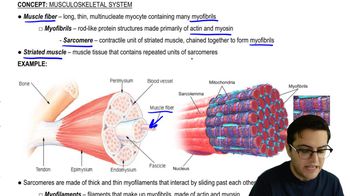
Muscle Fibers and Sarcomeres

Calcium Ions in Muscle Physiology

Calcium ions are essential for muscle contraction. When a muscle cell is stimulated, calcium is released from the sarcoplasmic reticulum into the cytoplasm, initiating the contraction process. Flooding the cytoplasm with calcium ions would enhance contraction rather than relaxation, making it counterproductive as a muscle relaxant.
Recommended video:
Guided course
05:13
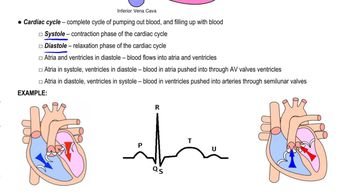
Heart Physiology

Mechanism of Muscle Relaxants

Muscle relaxants work by interfering with the neuromuscular transmission or the excitation-contraction coupling in muscle cells. Effective muscle relaxants typically inhibit the action of neurotransmitters like acetylcholine or alter calcium dynamics to reduce muscle tone. Understanding these mechanisms is crucial for evaluating the effectiveness of different chemicals as muscle relaxants.
Recommended video:
Guided course
02:08
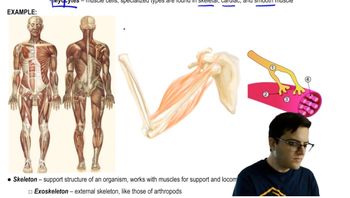
Muscle System and Skeleton
Related Practice
Textbook Question
The greatest concentration of thoroughbred horse farms is in the bluegrass region of Kentucky. The grass in the limestone-based soil of this area is especially rich in calcium. How does this grass affect the development of championship horses?
629
views
Textbook Question
Describe how you bend your arm, starting with action potentials and ending with the contraction of a muscle. How does a strong contraction differ from a weak one?
853
views
Textbook Question
Using examples, explain this statement: 'Vertebrate skeletons are variations on a theme.'
1075
views
Textbook Question
An earthworm's body consists of a number of fluid-filled compartments, each with its own set of longitudinal and circular muscles. But in the roundworm, a single fluid-filled cavity occupies the body, and there are only longitudinal muscles that run its entire length. Predict how the movement of a roundworm would differ from the movement of an earthworm.
872
views
Textbook Question
When a person dies, muscles become rigid and fixed in position—a condition known as rigor. Rigor mortis occurs because muscle cells are no longer supplied with ATP (when breathing stops, ATP synthesis ceases). Calcium also flows freely into dying cells. The rigor eventually disappears because the biological molecules break down. Explain, in terms of the mechanism of contraction described in Modules 30.9 and 30.10, why the presence of calcium and the lack of ATP would cause muscles to become rigid, rather than limp, soon after death.
4363
views
Textbook Question

Imagine you have a friend who had her child's ACTN3 genotype tested. After reviewing the study described in Module 30.12, what cautions would you offer about interpreting the test results?

1078
views