Pearson+ LogoPearson+ Logo
Ch. 30 How Animals Move
Taylor - Campbell Biology: Concepts & Connections 10th Edition
Taylor, Simon, Dickey, Hogan10th EditionCampbell Biology: Concepts & ConnectionsISBN: 9780136538783Not the one you use?Change textbook
Chapter 30, Problem 18

When a person dies, muscles become rigid and fixed in position—a condition known as rigor. Rigor mortis occurs because muscle cells are no longer supplied with ATP (when breathing stops, ATP synthesis ceases). Calcium also flows freely into dying cells. The rigor eventually disappears because the biological molecules break down. Explain, in terms of the mechanism of contraction described in Modules 30.9 and 30.10, why the presence of calcium and the lack of ATP would cause muscles to become rigid, rather than limp, soon after death.

Verified step by step guidance
1
Understand the role of ATP in muscle contraction: ATP is essential for muscle contraction as it provides the energy needed for the myosin heads to detach from the actin filaments after a contraction cycle. Without ATP, myosin heads cannot detach, leading to a continuous state of contraction.
Recognize the function of calcium in muscle cells: Calcium ions play a crucial role in muscle contraction by binding to troponin, a regulatory protein on actin filaments. This binding causes a conformational change that moves tropomyosin away from the myosin-binding sites on actin, allowing myosin heads to attach and initiate contraction.
Connect the cessation of ATP synthesis to muscle rigidity: After death, when ATP synthesis stops, existing ATP in the muscle cells is rapidly depleted. Without ATP, the myosin heads remain attached to actin, causing the muscles to stay contracted and become rigid, leading to rigor mortis.
Explain the effect of unregulated calcium flow: In living cells, calcium levels are tightly regulated. However, after death, calcium flows freely into the cells. This influx of calcium continues to activate the contraction process even though ATP is no longer available to release the myosin heads from actin.
Describe the resolution of rigor mortis: Over time, the proteins within the muscle cells, including actin and myosin, begin to break down due to enzymatic activities. This degradation eventually leads to the relaxation of the muscles as the structural integrity of the contractile apparatus is lost.

Verified video answer for a similar problem:

This video solution was recommended by our tutors as helpful for the problem above.
Video duration:
1m
Was this helpful?

Key Concepts

Here are the essential concepts you must grasp in order to answer the question correctly.

Muscle Contraction Mechanism

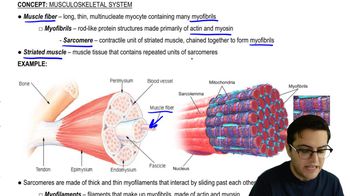
Muscle contraction is primarily driven by the interaction between actin and myosin filaments within muscle fibers. This process is initiated when calcium ions bind to troponin, causing a conformational change that exposes binding sites on actin for myosin heads. The myosin heads then attach to actin, pulling the filaments past each other, which shortens the muscle and generates force.
Recommended video:
Guided course
02:40
Muscle Fibers and Sarcomeres

Role of ATP in Muscle Function

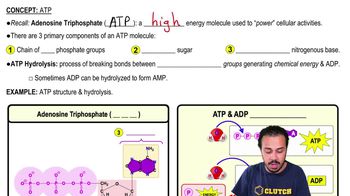
Adenosine triphosphate (ATP) is crucial for muscle function, as it provides the energy required for muscle contraction and relaxation. ATP is necessary for the detachment of myosin heads from actin after a power stroke, allowing the muscle to relax. Without ATP, myosin remains bound to actin, preventing muscle fibers from returning to their relaxed state, which contributes to the rigidity observed in rigor mortis.
Recommended video:

Calcium's Effect on Muscle Tone

Calcium ions play a vital role in muscle contraction by facilitating the interaction between actin and myosin. In the absence of ATP, calcium remains in the cytoplasm, continuously activating the contractile machinery of the muscle. This persistent activation leads to sustained contraction and rigidity, as the muscle fibers cannot relax without the energy provided by ATP to detach myosin from actin.
Recommended video:
Guided course
02:08
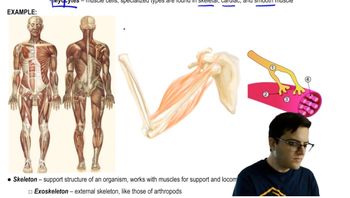
Muscle System and Skeleton