
Pearson+ LogoPearson+ Logo
Ch. 38 Conservation Biology
Taylor - Campbell Biology: Concepts & Connections 10th Edition
Taylor, Simon, Dickey, Hogan10th EditionCampbell Biology: Concepts & ConnectionsISBN: 9780136538783Not the one you use?Change textbook
Chapter 38, Problem 1

Complete the following map, which organizes some of the key concepts of conservation biology. Flowchart illustrating key concepts of conservation biology, including ecosystems, restoration, and sustainable development.

Verified step by step guidance
1
Identify the key concepts in conservation biology that need to be filled in the blanks.
For (a), consider what conservation biology seeks to conserve, which is typically 'species' or 'biodiversity'.
For (b), think about what conservation biology may involve, such as 'bioremediation' or 'ecological restoration'.
For (c), determine what is used to detoxify or replenish degraded ecosystems, which could be 'biological agents' or 'microorganisms'.
For (d), consider what nature reserves may support, which is often 'wildlife' or 'habitats'.

Verified video answer for a similar problem:

This video solution was recommended by our tutors as helpful for the problem above.
Video duration:
2m
Was this helpful?

Key Concepts

Here are the essential concepts you must grasp in order to answer the question correctly.

Conservation Biology

Conservation biology is a multidisciplinary field that focuses on the protection and management of biodiversity, ecosystems, and landscapes. It aims to understand the impacts of human activity on the environment and to develop strategies for preserving natural habitats and species. This field encompasses various approaches, including the establishment of protected areas, restoration projects, and sustainable development practices.
Recommended video:
Guided course
03:56
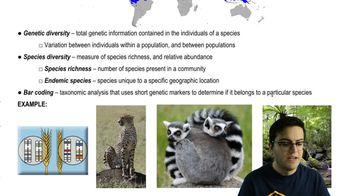
Conservation Biology and Biodiversity

Ecosystems and Landscapes

Ecosystems are communities of living organisms interacting with their physical environment, while landscapes refer to the broader geographical areas that encompass multiple ecosystems. Conservation efforts often target these systems to maintain ecological balance and support biodiversity. Protecting ecosystems and landscapes is crucial for sustaining the services they provide, such as clean water, air, and habitat for wildlife.
Recommended video:
Guided course
04:07
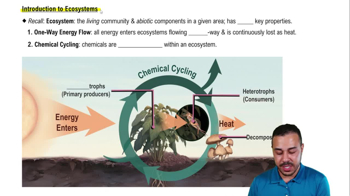
Introduction to Ecosystems

Restoration Projects

Restoration projects are initiatives aimed at rehabilitating degraded ecosystems to restore their natural functions and biodiversity. These projects can involve activities such as reforestation, wetland restoration, and the removal of invasive species. Successful restoration not only helps recover ecological integrity but also enhances the resilience of ecosystems against future disturbances, contributing to overall conservation goals.
Recommended video:
02:37
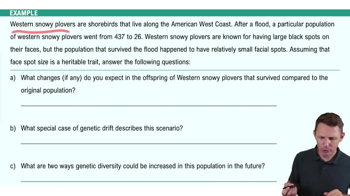
Genetic Drift Example 2