Pearson+ LogoPearson+ Logo
Ch. 38 Conservation Biology
Taylor - Campbell Biology: Concepts & Connections 10th Edition
Taylor, Simon, Dickey, Hogan10th EditionCampbell Biology: Concepts & ConnectionsISBN: 9780136538783Not the one you use?Change textbook
Chapter 38, Problem 3

Which of the following currently poses the single greatest threat to biodiversity?
a. Invasive species
b. Overhunting
c. Habitat loss
d. Pollution

Verified step by step guidance
1
Understand the concept of biodiversity: Biodiversity refers to the variety of life in all its forms, including species diversity, genetic diversity, and ecosystem diversity. It is essential for ecosystem stability and human well-being.
Analyze the options provided: Each option represents a factor that can negatively impact biodiversity. Consider how each factor affects ecosystems and species populations.
Evaluate the impact of invasive species: Invasive species can outcompete native species for resources, disrupt ecosystems, and lead to the decline or extinction of native species.
Evaluate the impact of overhunting: Overhunting can lead to population declines and extinction of species, particularly those that are already vulnerable or have slow reproductive rates.
Evaluate the impact of habitat loss: Habitat loss, often caused by deforestation, urbanization, and agriculture, is widely recognized as the most significant driver of biodiversity loss because it directly removes the living space and resources species need to survive.

Verified video answer for a similar problem:

This video solution was recommended by our tutors as helpful for the problem above.
Video duration:
1m
Was this helpful?

Key Concepts

Here are the essential concepts you must grasp in order to answer the question correctly.

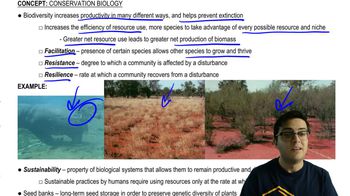
Biodiversity

Biodiversity refers to the variety of life forms on Earth, encompassing the diversity of species, ecosystems, and genetic variations within species. It is crucial for ecosystem resilience, providing essential services such as pollination, nutrient cycling, and climate regulation. A decline in biodiversity can disrupt these services, leading to ecological imbalances and reduced quality of life for all organisms, including humans.
Recommended video:
Guided course
05:06
Biodiversity and Sustainability

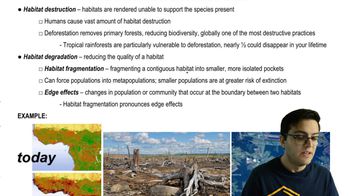
Habitat Loss

Habitat loss occurs when natural environments are altered or destroyed, often due to human activities such as urban development, agriculture, and deforestation. This loss is a primary driver of species extinction, as organisms lose their homes and resources necessary for survival. The fragmentation of habitats can also isolate populations, making it difficult for species to reproduce and adapt to changing conditions.
Recommended video:
Guided course
03:23
Habitat Destruction and Degradation

Invasive Species

Invasive species are non-native organisms that, when introduced to a new environment, can outcompete, prey on, or bring diseases to native species. They often disrupt local ecosystems, leading to declines in biodiversity. The introduction of invasive species can be accidental or intentional, and their impact can be profound, as they may alter habitat structures and nutrient cycles, further threatening native biodiversity.
Recommended video:
03:24
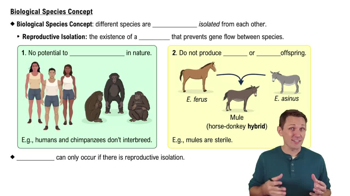
Biological Species Concept