Pearson+ LogoPearson+ Logo
Ch. 38 Conservation Biology
Taylor - Campbell Biology: Concepts & Connections 10th Edition
Taylor, Simon, Dickey, Hogan10th EditionCampbell Biology: Concepts & ConnectionsISBN: 9780136538783Not the one you use?Change textbook
Chapter 38, Problem 2

Which of these statements best describes what conservation biologists mean by 'the rapid loss of biodiversity'?
a. Introduced species, such as starlings and zebra mussels, have rapidly expanded their ranges.
b. Harvests of marine fishes, such as cod and bluefin tuna, are declining.
c. The current species extinction rate is as much as 100 times greater than at any time in the past 100,000 years.
d. Many potential medicines are being lost as plant species become extinct.

Verified step by step guidance
1
Step 1: Understand the term 'rapid loss of biodiversity.' Biodiversity refers to the variety of life on Earth, including species diversity, genetic diversity, and ecosystem diversity. Rapid loss of biodiversity means a significant and accelerated decline in the number of species, ecosystems, or genetic variation.
Step 2: Analyze each option to determine which one aligns with the concept of rapid biodiversity loss. For example, introduced species (option a) can impact ecosystems but do not directly describe the rate of biodiversity loss.
Step 3: Evaluate option b, which discusses declining fish harvests. While this indicates overfishing, it does not directly address the broader concept of biodiversity loss across species and ecosystems.
Step 4: Examine option c, which states that the current species extinction rate is as much as 100 times greater than in the past 100,000 years. This directly quantifies the rapid loss of biodiversity by highlighting the accelerated extinction rate.
Step 5: Consider option d, which mentions the loss of potential medicines due to plant extinction. While this is a consequence of biodiversity loss, it does not specifically describe the rapid rate of species extinction. Therefore, option c best aligns with the concept of rapid biodiversity loss.

Verified video answer for a similar problem:

This video solution was recommended by our tutors as helpful for the problem above.
Video duration:
2m
Was this helpful?

Key Concepts

Here are the essential concepts you must grasp in order to answer the question correctly.

Biodiversity

Biodiversity refers to the variety of life on Earth, encompassing the diversity of species, ecosystems, and genetic variations within species. It is crucial for ecosystem resilience, providing essential services such as pollination, nutrient cycling, and climate regulation. The loss of biodiversity can disrupt these services, leading to ecological imbalances and diminished quality of life for humans.
Recommended video:
Guided course
05:06
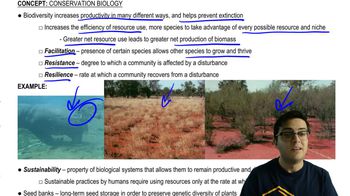
Biodiversity and Sustainability

Species Extinction Rate

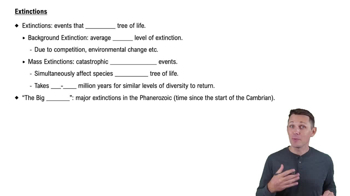
The species extinction rate is a measure of how quickly species are disappearing from the planet. Current estimates suggest that this rate is significantly higher than the natural background rate due to human activities such as habitat destruction, pollution, and climate change. Understanding this rate is vital for conservation efforts, as it highlights the urgency of protecting endangered species and their habitats.
Recommended video:
04:48
Extinctions

Conservation Biology

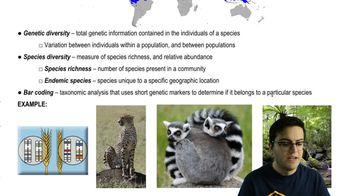
Conservation biology is a multidisciplinary field focused on the study and preservation of biodiversity. It aims to understand the factors leading to species decline and extinction, and to develop strategies for protecting ecosystems and species. Conservation biologists work to implement policies and practices that mitigate human impact on the environment, ensuring the sustainability of natural resources for future generations.
Recommended video:
Guided course
03:56
Conservation Biology and Biodiversity