
Pearson+ LogoPearson+ Logo
Ch. 38 Conservation Biology
Taylor - Campbell Biology: Concepts & Connections 10th Edition
Taylor, Simon, Dickey, Hogan10th EditionCampbell Biology: Concepts & ConnectionsISBN: 9780136538783Not the one you use?Change textbook
Chapter 38, Problem 7

With limited resources, conservation biologists need to prioritize their efforts. Of the following choices, which should receive the greatest attention for the goal of conserving biodiversity?
a. A commercially important species
b. All endangered vertebrate species
c. A declining keystone species in a community
d. All endangered species

Verified step by step guidance
1
Understand the concept of biodiversity conservation: Biodiversity conservation focuses on maintaining the variety of life forms in ecosystems, including species, genetic diversity, and ecological processes. Conservation biologists aim to protect species that play critical roles in ecosystems or are at risk of extinction.
Define key terms: A keystone species is one that has a disproportionately large impact on its ecosystem relative to its abundance. Its removal can lead to significant changes in the structure and function of the ecosystem. Endangered species are those at risk of extinction, and commercially important species are those valued for economic purposes.
Evaluate the options: Consider the ecological importance of each choice. While endangered species are important, prioritizing all endangered species may not be feasible due to limited resources. Commercially important species may not necessarily contribute significantly to ecosystem stability. Keystone species, however, are critical for maintaining ecosystem balance and biodiversity.
Apply prioritization principles: Conservation efforts often focus on species that have the greatest impact on ecosystem health and stability. Declining keystone species are particularly important because their loss can lead to cascading effects that harm other species and the ecosystem as a whole.
Conclude the reasoning: Based on the goal of conserving biodiversity, the declining keystone species should receive the greatest attention. This approach ensures the preservation of ecosystem integrity and supports the survival of other species within the community.

Verified video answer for a similar problem:

This video solution was recommended by our tutors as helpful for the problem above.
Video duration:
2m
Was this helpful?

Key Concepts

Here are the essential concepts you must grasp in order to answer the question correctly.

Biodiversity

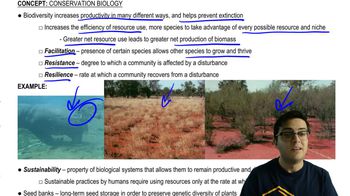
Biodiversity refers to the variety of life forms within a given ecosystem, including the diversity of species, genetic variations, and ecological processes. It is crucial for ecosystem resilience, providing essential services such as pollination, nutrient cycling, and climate regulation. Conserving biodiversity helps maintain the balance of ecosystems, which is vital for the survival of all species, including humans.
Recommended video:
Guided course
05:06
Biodiversity and Sustainability

Keystone Species

A keystone species is one that has a disproportionately large impact on its environment relative to its abundance. These species play critical roles in maintaining the structure of an ecological community, influencing the types and numbers of other species present. Protecting keystone species is essential for conserving biodiversity, as their decline can lead to significant changes in ecosystem dynamics and the loss of other species.
Recommended video:
03:24
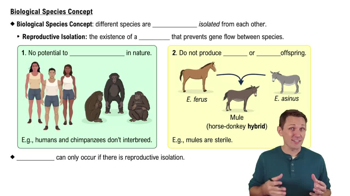
Biological Species Concept

Endangered Species

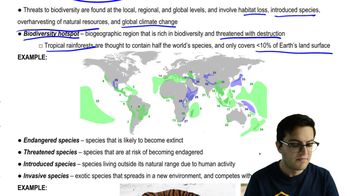
Endangered species are those at risk of extinction due to factors such as habitat loss, pollution, overexploitation, and climate change. Conservation efforts often focus on these species to prevent their extinction and to preserve the ecosystems they inhabit. Protecting endangered species is vital for maintaining biodiversity, as their loss can disrupt ecological balance and lead to further declines in other species.
Recommended video:
Guided course
04:32
Biodiversity Hotspots and Endangered Species
Related Practice