
Pearson+ LogoPearson+ Logo
Ch. 26 Hormones and the Endocrine System
Taylor - Campbell Biology: Concepts & Connections 10th Edition
Taylor, Simon, Dickey, Hogan10th EditionCampbell Biology: Concepts & ConnectionsISBN: 9780136538783Not the one you use?Change textbook
Chapter 26, Problem 9

A strain of mice remains healthy as long as they are fed regularly. After they eat, their blood glucose level rises slightly and then declines to a homeostatic level. However, when these mice fast or exercise, their blood glucose drops dangerously. Which hypothesis best explains their problem? (Explain your choice.)
a. The mice have insulin-dependent diabetes.
b. The mice lack insulin receptors on their cells.
c. The mice lack glucagon receptors on their cells.
d. The mice cannot synthesize glycogen from glucose.

Verified step by step guidance
1
Step 1: Understand the role of insulin and glucagon in blood glucose regulation. Insulin lowers blood glucose levels by promoting glucose uptake into cells and glycogen synthesis, while glucagon raises blood glucose levels by stimulating glycogen breakdown and glucose release from the liver.
Step 2: Analyze the symptoms described in the problem. The mice experience dangerously low blood glucose levels during fasting or exercise, which suggests an issue with maintaining blood glucose homeostasis when glucose intake is limited.
Step 3: Evaluate option (a): Insulin-dependent diabetes. This condition typically results in high blood glucose levels due to insufficient insulin production or action, which does not match the symptoms of low blood glucose in the mice.
Step 4: Evaluate option (b): Lack of insulin receptors. This would also lead to high blood glucose levels because cells would not respond to insulin, which again does not align with the observed low blood glucose levels.
Step 5: Evaluate option (c): Lack of glucagon receptors. If the mice lack glucagon receptors, their cells would not respond to glucagon, preventing glycogen breakdown and glucose release during fasting or exercise. This aligns with the observed symptoms of dangerously low blood glucose levels.

Verified video answer for a similar problem:

This video solution was recommended by our tutors as helpful for the problem above.
Video duration:
3m
Was this helpful?

Key Concepts

Here are the essential concepts you must grasp in order to answer the question correctly.

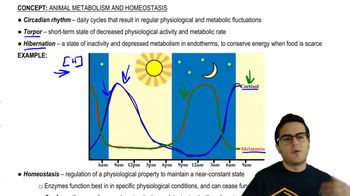
Homeostasis

Homeostasis refers to the body's ability to maintain stable internal conditions despite external changes. In the context of blood glucose levels, homeostasis involves the regulation of glucose through hormones like insulin and glucagon, ensuring that levels remain within a narrow range. Disruptions in this balance can lead to conditions such as hypoglycemia or hyperglycemia.
Recommended video:

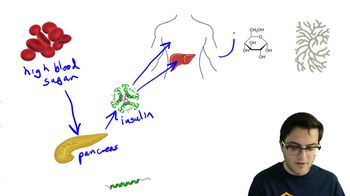
Insulin and Glucagon

Insulin and glucagon are two key hormones produced by the pancreas that regulate blood glucose levels. Insulin lowers blood glucose by facilitating its uptake into cells, while glucagon raises blood glucose by promoting the release of glucose from glycogen stores in the liver. A deficiency or insensitivity to these hormones can lead to metabolic disorders, affecting the body's ability to respond to fasting or exercise.
Recommended video:
Guided course
07:01
Blood Sugar Homeostasis

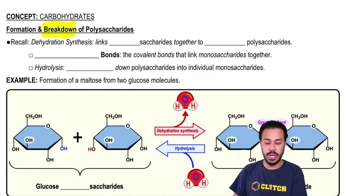
Glycogen Synthesis and Breakdown

Glycogen is a stored form of glucose found primarily in the liver and muscles. The synthesis of glycogen from glucose (glycogenesis) and its breakdown into glucose (glycogenolysis) are crucial processes for maintaining energy levels. If the mice cannot synthesize glycogen effectively, they may struggle to maintain blood glucose levels during periods of fasting or increased energy demand, leading to dangerously low glucose levels.
Recommended video:
Guided course
03:08
Formation & Breakdown of Polysaccharides