

Pearson+ LogoPearson+ Logo
Ch. 24 The Immune System
Taylor - Campbell Biology: Concepts & Connections 10th Edition
Taylor, Simon, Dickey, Hogan10th EditionCampbell Biology: Concepts & ConnectionsISBN: 9780136538783Not the one you use?Change textbook
Chapter 24, Problem 16

One of the key difficulties in the development of anti-HIV drugs is the fact that HIV only infects humans. This precludes the testing of drugs in animals and instead requires that drugs be tested on volunteer human subjects. The developing world (particularly sub-Saharan Africa and Southeast Asia) has the highest rates of HIV infection. Consequently, drug companies frequently conduct studies in these regions. Some people decry such tests, fearing that drug companies may profit hugely from the use of economically disadvantaged people. Others counter that such tests are the only way to find new and cheaper drugs that will ultimately help everyone. What do you think are the ethical issues surrounding trials of anti-HIV drugs in the developing world? Which side do you think has the more morally compelling argument?

Verified step by step guidance
1
Identify the ethical concerns related to conducting anti-HIV drug trials in economically disadvantaged regions. Consider issues such as informed consent, exploitation, and the balance between risks and benefits for the participants.
Examine the arguments in favor of conducting these trials in high HIV prevalence areas. Consider the potential for faster drug development, access to treatment for participants, and the broader impact on global health.
Analyze the arguments against these trials, focusing on the potential for exploitation and the ethical implications of using vulnerable populations in drug testing without guaranteed access to the drugs post-trial.
Consider the role of regulatory bodies and ethical guidelines in ensuring that the trials are conducted in a manner that respects the rights and welfare of participants. Look into international guidelines like the Declaration of Helsinki.
Evaluate which argument might be more morally compelling by weighing the potential benefits against the ethical risks and considering the effectiveness of safeguards put in place to protect participants.

Verified video answer for a similar problem:

This video solution was recommended by our tutors as helpful for the problem above.
Video duration:
3m
Was this helpful?

Key Concepts

Here are the essential concepts you must grasp in order to answer the question correctly.

Ethical Considerations in Medical Research

Ethical considerations in medical research involve the moral principles that govern the conduct of research involving human subjects. Key principles include respect for persons, beneficence, and justice. Researchers must ensure informed consent, minimize harm, and distribute benefits and burdens fairly among participants. In the context of anti-HIV drug trials, these principles are crucial to address concerns about exploitation and the welfare of vulnerable populations.
Recommended video:
Guided course
03:07
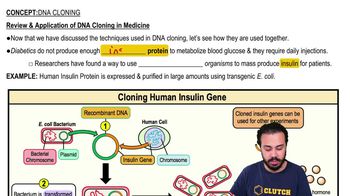
Review & Application of DNA Cloning in Medicine

Informed Consent

Informed consent is a fundamental ethical requirement in medical research, ensuring that participants are fully aware of the nature, risks, and benefits of a study before agreeing to participate. This process involves providing clear information and allowing individuals to make voluntary decisions without coercion. In the context of trials in developing countries, ensuring that participants truly understand the implications of their involvement is particularly challenging and critical to ethical research practices.
Recommended video:
Guided course
05:45
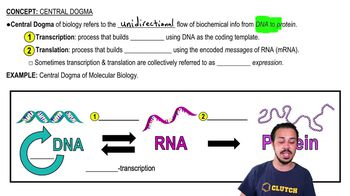
Central Dogma

Global Health Equity

Global health equity refers to the fair distribution of health resources and opportunities across different populations, particularly between wealthy and low-income countries. It emphasizes the need for equitable access to medical advancements and the ethical obligation to conduct research that benefits all, not just those in affluent regions. In the case of anti-HIV drug trials, the debate centers on whether it is just to conduct research in economically disadvantaged areas, potentially exploiting their circumstances for the benefit of a broader population.
Recommended video:
Guided course
05:02
Broad Patterns of Global Air Circulation & Precipitation
Related Practice
Textbook Question
Your roommate is rushed to the hospital after suffering a severe allergic reaction to a bee sting. After she is treated and released, she asks you (the local biology expert!) to explain what happened. She says, 'I don't understand how this could have happened. I've been stung by bees before and didn't have a reaction.' Suggest an explanation for what has happened to cause her severe allergic reaction and why she did not have the reaction after previous bee stings.
720
views
Textbook Question

Compare the outcomes of two different cases of infectious diseases in a community.

Case 1: A man with an infectious disease enters a community where the disease has not previously occurred.

Case 2: A man with an infectious disease enters a community where almost everyone has been vaccinated against the disease.

900
views
Textbook Question
Organ donation saves many lives each year. Even though some transplanted organs are derived from living donors, the majority come from patients who die but still have healthy organs that can be of value to a transplant recipient. Potential organ donors can fill out an organ donation card to specify their wishes. If the donor is in critical condition and dying, the donor's family is usually consulted to discuss the donation process. Generally, the next of kin must approve before donation can occur, regardless of whether the patient has completed an organ donation card. In some cases, a family member overrides the donor's wishes. Do you think that family members should be able to overrule the stated intentions of the potential donor? Why or why not? Have you signed up to be an organ donor? Why or why not?
810
views