Pearson+ LogoPearson+ Logo
Ch. 43 - Animal Nervous Systems
Freeman - Biological Science 7th Edition
Freeman7th EditionBiological ScienceISBN: 9783584863285Not the one you use?Change textbook
Chapter 43, Problem 4

Which of the following brain regions is responsible for the formation of new memories?
a. Brainstem
b. Cerebellum
c. Frontal lobe
d. Hippocampus

Verified step by step guidance
1
Identify the primary function of each brain region listed in the options.
Understand that the brainstem is responsible for basic life functions such as breathing and heart rate, not memory formation.
Recognize that the cerebellum is primarily involved in motor control and coordination, rather than memory formation.
Learn that the frontal lobe is associated with higher cognitive functions such as decision making and problem solving, but not specifically with the formation of new memories.
Know that the hippocampus is a critical region for the formation of new memories, particularly in converting short-term memories into long-term ones.

Verified video answer for a similar problem:

This video solution was recommended by our tutors as helpful for the problem above.
Video duration:
2m
Was this helpful?

Key Concepts

Here are the essential concepts you must grasp in order to answer the question correctly.

Hippocampus

The hippocampus is a critical region of the brain involved in the formation of new memories. It is part of the limbic system and plays a key role in converting short-term memories into long-term ones. Damage to the hippocampus can lead to difficulties in forming new memories, highlighting its importance in memory processing.
Recommended video:
Guided course
04:35
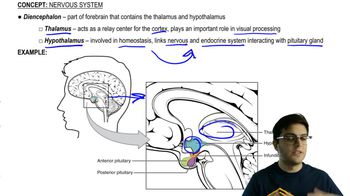
Limbic System

Memory Formation

Memory formation is the process by which experiences and information are encoded, stored, and retrieved in the brain. It involves various brain regions, with the hippocampus being central to the initial encoding and consolidation of new memories. Understanding this process is essential for identifying how different brain areas contribute to memory.
Recommended video:
Guided course
07:41
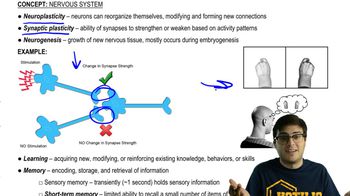
Neuroplasticity, Learning, and Memory

Brain Regions

Different brain regions have specialized functions, with the hippocampus being specifically linked to memory formation. The brainstem controls basic life functions, the cerebellum is involved in motor control, and the frontal lobe is associated with higher cognitive functions. Recognizing these roles helps in understanding how the brain supports various activities, including memory.
Recommended video:
Guided course
05:07
Terrestrial Biomes: Northern Regions Example 1