Back

Protein Sorting definitions

Control buttons has been changed to "navigation" mode.
1/15
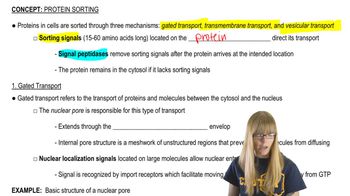
  • Gated Transport

    Movement of molecules between cytosol and nucleus via selective passage through a specialized pore in the nuclear envelope.
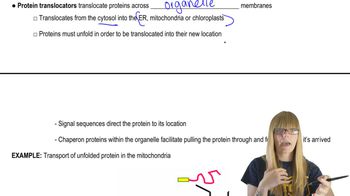
  • Transmembrane Transport

    Passage of unfolded polypeptides across organelle membranes using dedicated protein channels, followed by refolding inside.
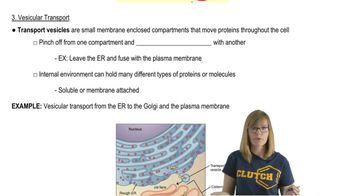
  • Vesicle Transport

    Encapsulation of cargo within membrane-bound compartments that bud and fuse with target membranes to deliver contents.
  • Sorting Signal

    Short amino acid sequence directing a polypeptide to its correct cellular location or organelle.
  • Nuclear Pore Complex

    Large protein assembly spanning the nuclear envelope, controlling selective exchange of macromolecules.
  • Nuclear Localization Signal

    Amino acid motif recognized by import machinery, enabling entry of proteins into the nucleus.
  • Import Receptor

    Protein that binds specific localization motifs and mediates cargo passage through selective barriers.
  • GTP

    Energy-providing molecule required for active transport processes, including nuclear import.
  • Protein Translocator

    Membrane-embedded channel facilitating the movement of unfolded polypeptides into organelles.
  • Chaperone Protein

    Molecule assisting in the proper folding of polypeptides after their translocation into organelles.
  • Signal Peptidase

    Enzyme that removes targeting sequences from polypeptides once they reach their destination.
  • Transport Vesicle

    Small, membrane-bound compartment carrying proteins or molecules between cellular locations.
  • Endoplasmic Reticulum

    Organelle serving as a major entry point for proteins into the secretory pathway.
  • Golgi Apparatus

    Organelle modifying, sorting, and packaging proteins for delivery to various destinations.
  • Plasma Membrane

    Cellular boundary where proteins may be delivered for secretion or membrane integration.