Back

Endothermic & Exothermic Reactions quiz

Control buttons has been changed to "navigation" mode.
1/18
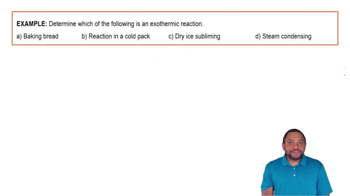
  • Which reaction is exothermic?

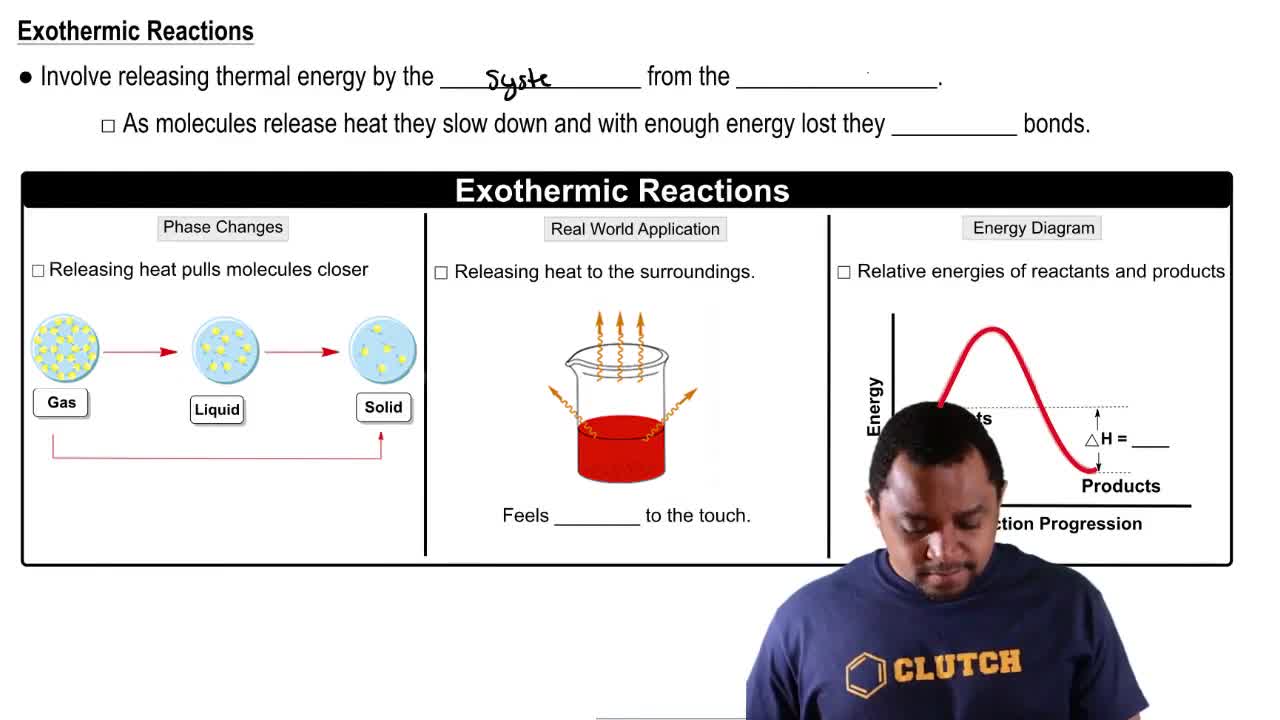
    Exothermic reactions are those that release thermal energy, such as condensation, freezing, and deposition.
  • What is an accurate statement about exothermic reactions?

    Exothermic reactions release thermal energy, causing molecules to slow down and form bonds, and they feel warm to the touch.
  • How is energy used in chemical reactions?

    D) Both A and B
  • Which reaction is an example of an endergonic reaction?

    A) Melting of ice
  • For an exothermic solution, what happens to the enthalpy change (ΔH)?

    For an exothermic solution, the enthalpy change (ΔH) is negative, indicating that energy is released.
  • What is the basic difference between exergonic and endergonic reactions?

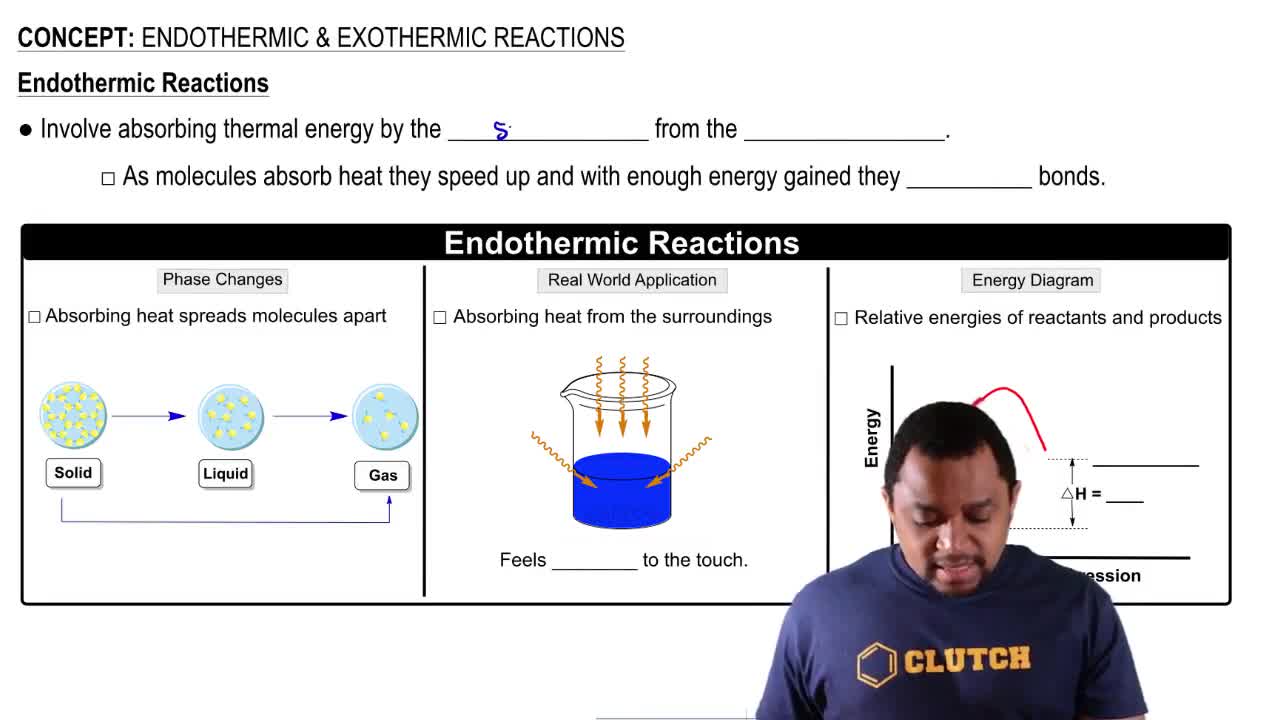
    Exergonic reactions release energy, while endergonic reactions absorb energy.
  • What is an example of an endergonic reaction?

    Photosynthesis
  • Which chemical reaction releases energy?

    Combustion
  • What is an example of an endergonic process?

    Melting of ice
  • In which scenario is chemical energy transformed into thermal energy?

    Combustion of gasoline
  • Which reaction releases energy?

    Combustion
  • What is true about exothermic reactions?

    They release energy
  • What reaction releases a large amount of energy that the cell can use to do work? A) ATP hydrolysis, B) Photosynthesis, C) Melting of ice, D) Vaporization

    A) ATP hydrolysis
  • Which chemical process requires an input of energy to occur?

    A) Photosynthesis
  • Which process releases energy? A) Combustion, B) Photosynthesis, C) Melting, D) Vaporization

    A) Combustion
  • Which chemical reaction releases energy?

    A) Combustion
  • What type of reaction releases energy? A) Exothermic, B) Endothermic, C) Neutral, D) None of the above

    A) Exothermic
  • What is an end product of an exothermic reaction?

    A) Heat