Mole Concept quiz #6 Flashcards

Mole Concept quiz #6
Control buttons has been changed to "navigation" mode.
1/40
  • What is the total number of molecules of hydrogen in 0.25 mole of hydrogen?

    0.25 × 6.022×10^23 = 1.51×10^23 molecules.
  • How many silver atoms are in a 33.0 g bar of silver?

    33.0 g ÷ 107.87 g/mol ≈ 0.306 mol; 0.306 × 6.022×10^23 ≈ 1.84×10^23 atoms.
  • Which of the following is equal to one mole of calcium atoms?

    40.08 grams of calcium.
  • How many moles of beryllium are in 1.00 g?

    1.00 g ÷ 9.01 g/mol ≈ 0.111 moles.
  • How many moles are in 35 g of H2O?

    35 g ÷ 18.02 g/mol ≈ 1.94 moles.
  • Which contains more atoms: a mole of carbon or a mole of sulfur?

    They contain the same number of atoms (6.022×10^23).
  • What does baking soda do to moles?

    This question is unrelated; in chemistry, a mole is a counting unit, not an animal.
  • How many silicon atoms are there in 2 molecules of SiH4?

    2 molecules × 1 Si per molecule = 2 Si atoms.
  • How many moles of N are in 0.231 g of N2O?

    0.231 g ÷ 44.01 g/mol ≈ 0.00525 mol N2O; 0.00525 × 2 = 0.0105 mol N.
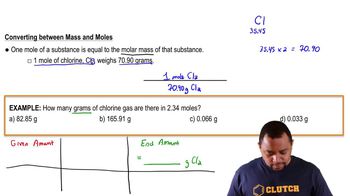
  • How many molecules are in 48.0 grams of oxygen?

    48.0 g ÷ 32.00 g/mol = 1.5 mol; 1.5 × 6.022×10^23 = 9.03×10^23 molecules.
  • How many atoms of Mg are in a given sample?

    Divide the sample's mass by 24.31 g/mol to get moles, then multiply by 6.022×10^23.
  • How many moles of N are in 0.239 g of N2O?

    0.239 g ÷ 44.01 g/mol ≈ 0.00543 mol N2O; 0.00543 × 2 = 0.0109 mol N.
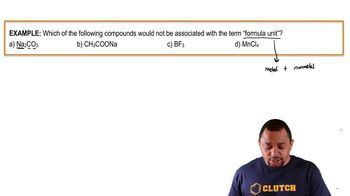
  • For which items are moles an appropriate unit of measurement?

    Atoms, molecules, ions, and formula units.
  • An aluminum can has a mass of 15.8 grams. How many aluminum atoms are in this can?

    15.8 g ÷ 26.98 g/mol ≈ 0.586 mol; 0.586 × 6.022×10^23 ≈ 3.53×10^23 atoms.
  • How many grams of carbon are in 12 × 10^23 atoms of carbon?

    12×10^23 ÷ 6.022×10^23 = 1.99 mol; 1.99 × 12.01 g/mol ≈ 23.9 g.
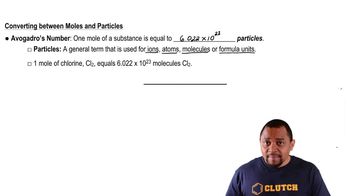
  • How many atoms are in a mole?

    6.022×10^23 atoms.
  • How many atoms are equal to 1.5 moles of helium?

    1.5 × 6.022×10^23 = 9.03×10^23 atoms.
  • How many basketballs are there in 1 mole of basketballs?

    6.022×10^23 basketballs.
  • How many particles are in 1 mole?

    6.022×10^23 particles.
  • How many moles are in 36 g of Be?

    36 g ÷ 9.01 g/mol ≈ 4.00 moles.
  • Which contains the most moles: 10.0 g of hydrogen gas or another sample?

    The sample with the greatest mass-to-molar-mass ratio contains the most moles.
  • How many atoms are in 1 mole of copper?

    6.022×10^23 atoms.
  • How many atoms are found in one mole of atoms?

    6.022×10^23 atoms.
  • If we compare a mole of carbon atoms to a mole of oxygen atoms, what is true?

    Both contain the same number of atoms (6.022×10^23), but have different masses.
  • How many atoms of gold (Au) are present in a 90.2-g sample? The molar mass of gold is 197.0 g/mol.

    90.2 g ÷ 197.0 g/mol ≈ 0.458 mol; 0.458 × 6.022×10^23 ≈ 2.76×10^23 atoms.
  • How many moles of water are contained in 1.99 × 10^26 molecules of water?

    1.99×10^26 ÷ 6.022×10^23 ≈ 330 moles.
  • How many molecules are in 25 grams of NH3?

    25 g ÷ 17.03 g/mol ≈ 1.47 mol; 1.47 × 6.022×10^23 ≈ 8.85×10^23 molecules.
  • How many moles are in molecules of a given substance?

    Divide the number of molecules by 6.022×10^23 to get moles.
  • Which statement best describes a mole?

    A mole is a counting unit equal to 6.022×10^23 particles.
  • Which statement best explains the purpose of using a mole in the measurement of matter?

    It allows chemists to count and relate large numbers of particles using a manageable unit.
  • How many moles are in 2.5 g of N2?

    2.5 g ÷ 28.02 g/mol ≈ 0.0893 moles.
  • How many particles are in a mole?

    6.022×10^23 particles.
  • How many molecules are in 2.50 moles of H2O?

    2.50 × 6.022×10^23 = 1.51×10^24 molecules.
  • How many moles of ethane are in a given sample?

    Divide the sample's mass by 30.07 g/mol to find moles.
  • How many moles of H+ would this same solution have per liter? (use the decimal form of your answer.)

    The molarity of H+ equals the molarity of the acid in a monoprotic acid solution.
  • How many moles of Ba(NO3)2 are there in 0.25 L of a 2.00 M Ba(NO3)2 solution?

    0.25 L × 2.00 mol/L = 0.50 mol.
  • How many moles are there in 8.50 × 10^24 molecules of sodium sulfate?

    8.50×10^24 ÷ 6.022×10^23 ≈ 14.1 moles.
  • How many moles of copper would be needed to make 1 mole of Cu2O?

    2 moles of copper atoms are needed for 1 mole of Cu2O.
  • How many moles of PCl5 contain 7.50 × 10^21 atoms of chlorine?

    7.50×10^21 ÷ (5 × 6.022×10^23) ≈ 0.00249 moles of PCl5.
  • What is the number of moles of CO2 in a 220-gram sample of CO2 (gram-formula mass = 44 g/mol)?

    220 g ÷ 44 g/mol = 5.0 moles.