Periodic Table: Element Symbols definitions Flashcards

Periodic Table: Element Symbols definitions
Control buttons has been changed to "navigation" mode.
1/15
  • Periodic Table
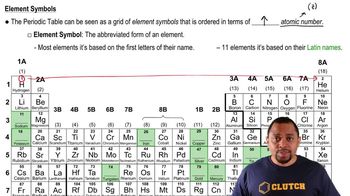
    A grid of elemental symbols arranged by increasing atomic number, reflecting shared chemical properties.
  • Element
    A substance consisting of atoms with the same number of protons, represented by a unique symbol.
  • Symbol
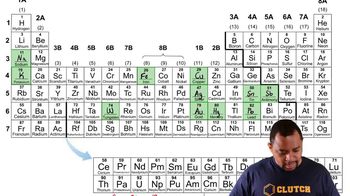
    An abbreviated form of an element's name, often derived from its English or Latin name.
  • Atomic Number
    The number of protons in an element's nucleus, denoted by the variable Z.
  • Proton
    A positively charged particle in an atom's nucleus, determining the atomic number.
  • Group
    A column in the periodic table where elements share similar chemical properties.
  • Mendeleev
    A scientist who organized elements by periodic properties, predicting undiscovered elements.
  • Lavoisier
    A chemist who compiled a list of 23 known elements and their symbols in the 18th century.
  • Latin Name
    The original name of an element from which some symbols are derived, differing from modern names.
  • Sodium
    An element with the symbol Na, derived from its Latin name 'Natrium'.
  • Potassium
    An element with the symbol K, derived from its Latin name 'Kalium'.
  • Iron
    An element with the symbol Fe, derived from its Latin name 'Ferrum'.
  • Tungsten
    An element with the symbol W, derived from its German name 'Wolfram'.
  • Antimony
    An element with the symbol Sb, derived from its Latin name 'Stibium'.
  • Periodic Law
    The principle that elements are organized by recurring chemical properties in the periodic table.