Back

Temperature quiz

Control buttons has been changed to "navigation" mode.
1/15
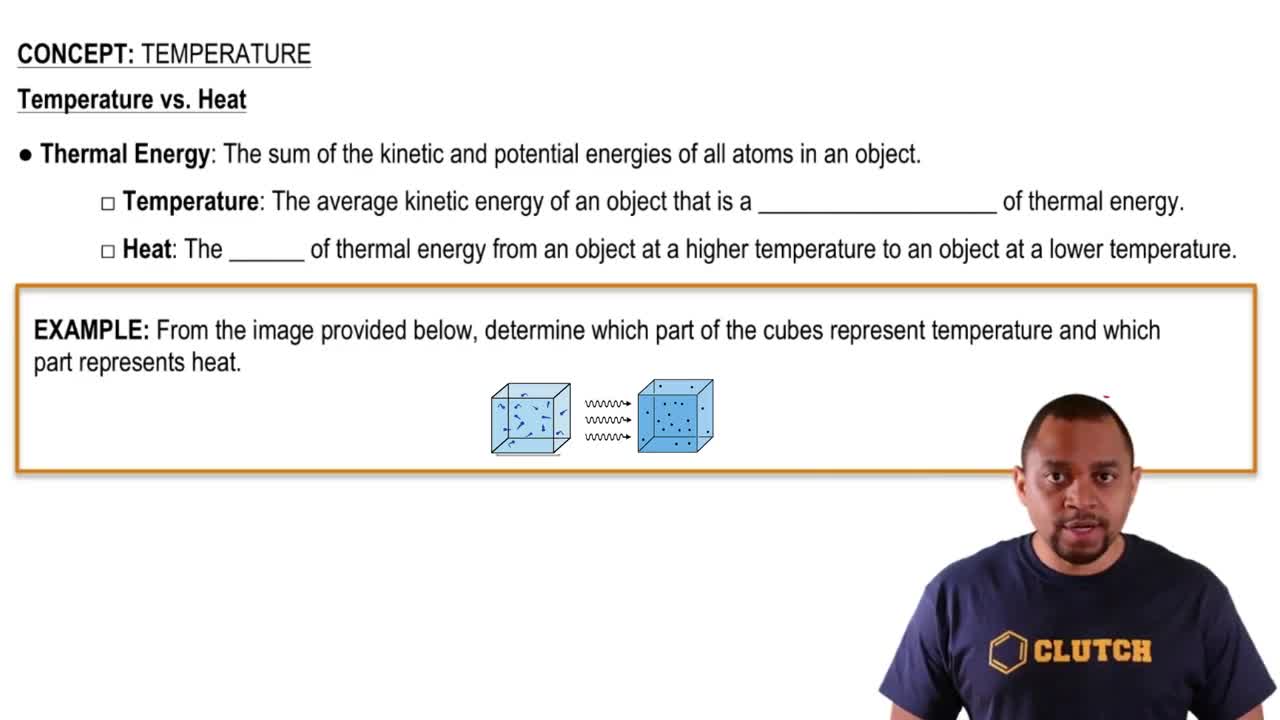
  • What is the main difference between temperature and heat?

    Temperature is the average kinetic energy of molecules in a substance, while heat is the transfer of thermal energy from a hotter object to a cooler one.
  • Is temperature an intensive or extensive property, and what does that mean?

    Temperature is an intensive property, meaning it does not depend on the amount of substance present.
  • How is heat defined in terms of thermal energy?

    Heat is the flow of thermal energy from an object at a higher temperature to an object at a lower temperature.
  • Why can a cup of water and a gallon of water have the same temperature?

    Because temperature does not depend on the amount of water, both can have the same temperature if their average kinetic energy is the same.
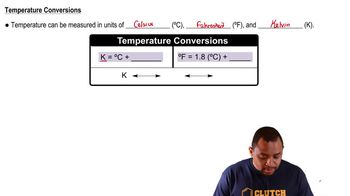
  • What is the formula to convert Celsius to Kelvin?

    The formula is K = °C + 273.15.
  • What is the formula to convert Celsius to Fahrenheit?

    The formula is °F = 1.8 × °C + 32.
  • Which temperature scale acts as a bridge between Kelvin and Fahrenheit?

    Celsius acts as the bridge between Kelvin and Fahrenheit.
  • What does it mean when heat is described as an extensive property?

    It means that the amount of heat depends on the amount of substance present.
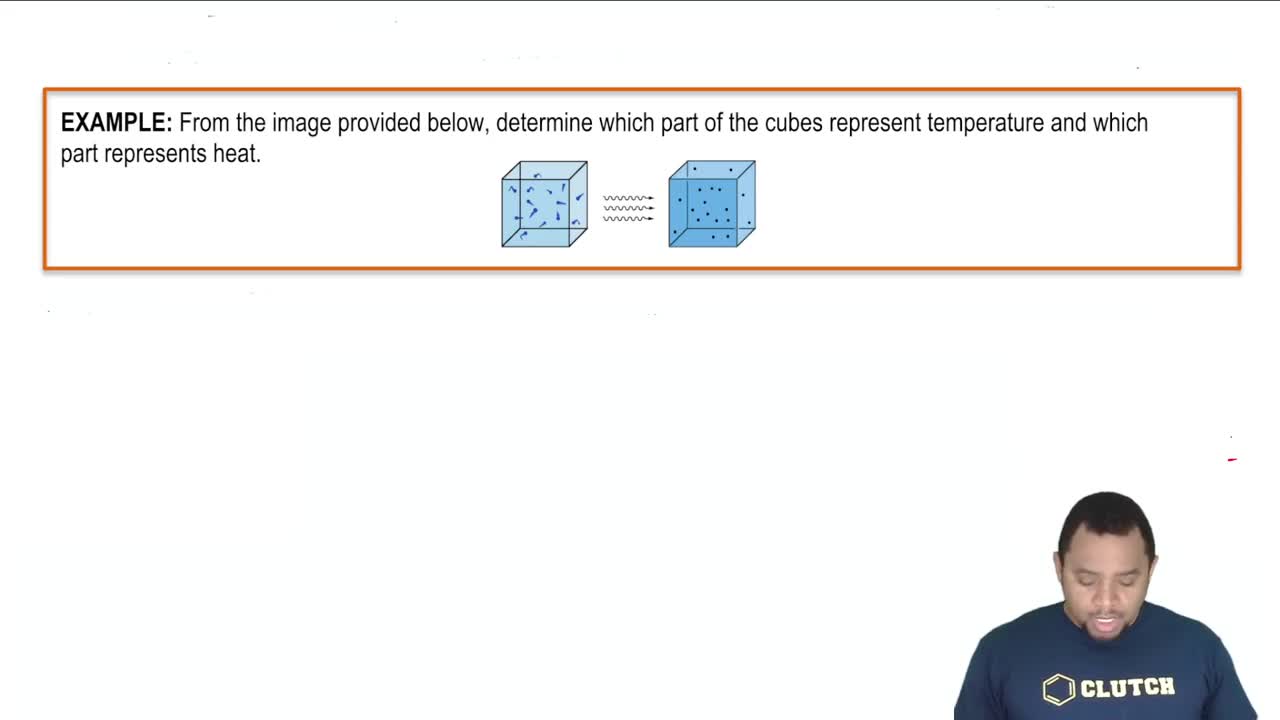
  • In the example with two cubes, what does the movement of red balls represent?

    The movement of red balls represents the kinetic energy of molecules, which relates to temperature.
  • What do the wavy lines between two cubes in the example represent?

    The wavy lines represent the flow of heat from the hotter cube to the cooler cube.
  • Why is it important to memorize the temperature conversion formulas?

    Because these formulas are often not provided on exams or quizzes and are essential for accurate scientific measurements.
  • What are the three common units for measuring temperature?

    The three common units are Celsius, Fahrenheit, and Kelvin.
  • What is thermal energy in terms of kinetic and potential energy?

    Thermal energy is the sum of all kinetic and potential energies of all atoms in an object.
  • How does heat naturally flow between objects?

    Heat naturally flows from a hotter object to a colder object.
  • What does kinetic energy refer to in the context of temperature?

    Kinetic energy refers to the energy of motion of molecules, which determines the temperature of a substance.