Triprotic Acids and Bases Calculations definitions Flashcards

Triprotic Acids and Bases Calculations definitions
Control buttons has been changed to "navigation" mode.
1/10
  • Triprotic Acids
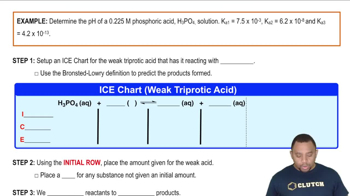
    Acids capable of donating three protons, existing in four forms: fully protonated, two intermediates, and deprotonated.
  • Acidic Form
    The form of a triprotic acid where all three protons are present, used in pH calculations with Ka1.
  • Basic Form
    The deprotonated form of a triprotic acid, used in pH calculations with Kb1.
  • Intermediate Form
    Forms of a triprotic acid where one or two protons have been lost, not primarily used in pH calculations.
  • Ka1
    The acid ionization constant used to calculate the pH of the fully protonated form of a triprotic acid.
  • Kb1
    The base ionization constant used to calculate the pH of the deprotonated form of a triprotic acid.
  • Ionization
    The process by which an acid loses protons, significant in determining the pH of triprotic acids.
  • Protonated
    A state where an acid retains its protons, crucial for understanding the acidic form in triprotic acids.
  • Deprotonated
    A state where an acid has lost its protons, relevant for the basic form in triprotic acids.
  • pH Calculation
    The process of determining the acidity or basicity of a solution, focusing on the initial forms of triprotic acids.