Back

X-Inactivation definitions

Control buttons has been changed to "navigation" mode.
1/15
  • Dosage Compensation

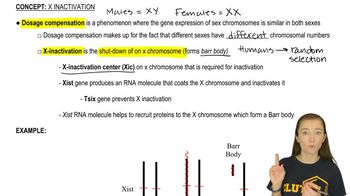
    A mechanism ensuring equal expression of X-linked genes in both sexes, despite differing numbers of X chromosomes.
  • Barr Body

    A condensed, inactive X chromosome found in female cells, formed to prevent excess X-linked gene expression.
  • X Inactivation Center

    A critical region on the X chromosome containing genes necessary for initiating and regulating inactivation.
  • XIST Gene

    A locus producing RNA that coats and silences one X chromosome, preventing its gene expression.
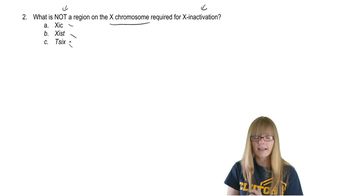
  • TSIX Gene

    A gene producing antisense RNA that blocks inactivation on the active X chromosome by counteracting XIST RNA.
  • Histones

    DNA-binding proteins that compact chromatin, making the inactivated X chromosome transcriptionally silent.
  • DNA Methylation

    The addition of methyl groups to DNA, further repressing gene expression on the inactivated X chromosome.
  • Heterochromatin

    A tightly packed chromatin state, characteristic of the inactive X chromosome, preventing gene transcription.
  • Antisense RNA

    A complementary RNA molecule produced by TSIX, which binds to XIST RNA to inhibit its function.
  • Gene Expression

    The process by which genetic information is used to synthesize gene products, regulated during X inactivation.
  • Maternal X Chromosome

    The X chromosome inherited from the mother, which may be randomly inactivated in female cells.
  • Paternal X Chromosome

    The X chromosome inherited from the father, also subject to random inactivation in human females.
  • Autosome

    A non-sex chromosome, which can be mistakenly inactivated if the X inactivation center is mutated.
  • RNA Coating

    The process where XIST RNA envelops the inactive X chromosome, ensuring its transcriptional silencing.
  • Random Inactivation

    The phenomenon in humans where either the maternal or paternal X chromosome is silenced in each cell.