Back
BackChapter 1: Introduction to Genetics – Foundations, History, and Modern Applications
Study Guide - Smart Notes
 Tailored notes based on your materials, expanded with key definitions, examples, and context.
Introduction to Genetics
Definition and Scope of Genetics
Genetics is the branch of biology concerned with the study of inherited variation, focusing on the origin, transmission, expression, and evolution of genetic information. The field explores how traits are passed from one generation to the next and how genetic information is expressed and modified over time.
Inherited Variation: Differences in genetic information that are passed from parents to offspring.
Genetic Information: Encoded in DNA, it determines the traits and characteristics of organisms.
Applications: Genetics underpins fields such as medicine, agriculture, biotechnology, and evolutionary biology.
Historical Foundations of Genetics
Ancient Observations and Early Theories
Humans have long observed heredity, as seen in ancient practices of artificial selection and selective breeding in plants and animals (8000–10000 B.C.). Early Greek philosophers proposed theories to explain inheritance, such as the role of 'humors' and the concept of 'vital heat.'
Hippocratic School: Proposed that 'humors' from different body parts contributed to heredity.
Aristotle: Suggested that male semen contained a 'vital heat' shaping the embryo, emphasizing the influence of form and environment.
Dawn of Modern Biology (1600–1850)
Advancements in biology led to new theories about development and heredity:
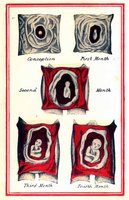
Preformation Theory: Proposed that a miniature adult (homunculus) existed in the sperm or egg.
Epigenesis Theory (William Harvey): Stated that organisms develop from a fertilized embryo through a series of developmental events.
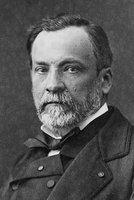
Spontaneous Generation: The idea that living material arises from nonliving matter, later disproven by Louis Pasteur.
Cell Theory (Schleiden & Schwann): All organisms are composed of cells, which arise from preexisting cells.
Charles Darwin and the Theory of Evolution
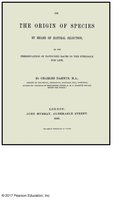
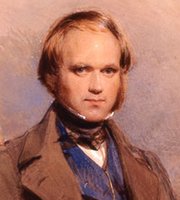
In the 19th century, Charles Darwin revolutionized biology with his theory of evolution by natural selection, proposing that species change over time through the differential survival and reproduction of individuals with favorable traits.
Natural Selection: Individuals with advantageous inherited traits are more likely to survive and reproduce.
Descent with Modification: Species evolve over generations, accumulating changes.
Gregor Mendel: The Father of Genetics
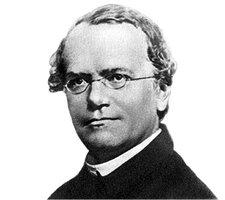
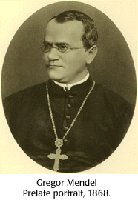
Gregor Mendel's experiments with pea plants established the foundational principles of inheritance. He demonstrated that traits are controlled by discrete units (now called genes) that segregate and assort independently.
Heritable Units: Mendel's term for what we now call genes.
Principles: Traits are controlled by pairs of factors, which separate during gamete formation.
Legacy: Mendel's work, published in 1866, became the cornerstone of modern genetics.
Chromosome Theory of Inheritance
Linking Mendel’s Principles to Chromosomes
Advances in microscopy revealed the existence of chromosomes, leading to the chromosome theory of inheritance. This theory states that genes are located on chromosomes, which are transmitted through gametes, ensuring genetic continuity.
Diploid Number (2n): Most cells have pairs of homologous chromosomes.
Haploid Number (n): Gametes contain one chromosome from each pair.
Mitosis: Produces identical diploid cells.
Meiosis: Produces haploid gametes, maintaining chromosome number across generations.
Genetic Variation and Mutation
Alleles, Genotype, and Phenotype
Genetic variation arises from mutations, which create different forms of a gene called alleles. The combination of alleles (genotype) determines the observable characteristics (phenotype) of an organism.
Alleles: Alternative forms of a gene.
Genotype: The set of alleles for a given trait.
Phenotype: The observable expression of the genotype.
The Chemical Nature of Genes
Discovery of DNA as Genetic Material
Early 20th-century research established that genes are located on chromosomes, which are composed of DNA and proteins. Experiments by Avery, MacLeod, McCarty, Hershey, and Chase demonstrated that DNA, not protein, is the genetic material.
Key Experiments: Transformation in bacteria and viral infection studies confirmed DNA's role.
Impact: Shifted scientific consensus toward DNA as the molecule of heredity.
Discovery of the Double Helix
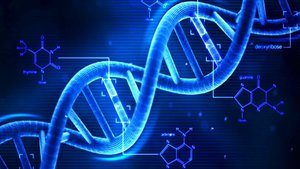
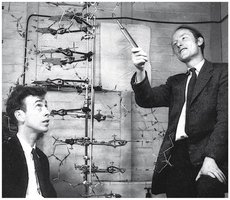
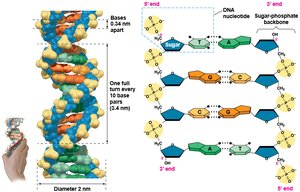
The elucidation of DNA's structure by James Watson and Francis Crick in 1953 marked the beginning of molecular genetics. DNA is a double-stranded helix with complementary base pairing.
Nucleotides: Building blocks of DNA, each containing a sugar (deoxyribose), phosphate, and nitrogenous base (A, T, G, C).
Base Pairing: Adenine pairs with Thymine, Guanine pairs with Cytosine.
Antiparallel Strands: The two DNA strands run in opposite directions.
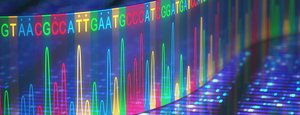

Gene Expression: From DNA to Phenotype
The Central Dogma of Molecular Genetics
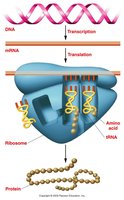
Genetic information flows from DNA to RNA to protein. This process involves two main steps: transcription and translation.
Transcription: DNA is used as a template to synthesize messenger RNA (mRNA).
Translation: mRNA is decoded by ribosomes to assemble amino acids into proteins.
Genetic Code: The sequence of nucleotide triplets (codons) in mRNA specifies amino acids.
Proteins and Their Biological Functions
Proteins are the primary products of gene expression and perform a wide variety of functions, including catalysis (as enzymes), structural support, and regulation. The sequence of amino acids in a protein is determined by the sequence of nucleotides in the gene.
Linking Genotype to Phenotype: Sickle-Cell Anemia
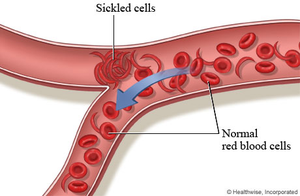
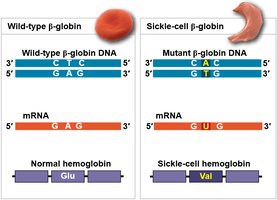
Sickle-cell anemia is a classic example of how a single nucleotide mutation in the β-globin gene leads to a change in the protein product, resulting in altered red blood cell shape and function.
Mutation: A single base change in the gene alters the amino acid sequence of hemoglobin.
Phenotypic Effect: Causes red blood cells to become sickle-shaped, leading to health complications.
Recombinant DNA Technology and Biotechnology
Development of Recombinant DNA Technology
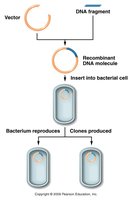
Recombinant DNA technology enables the creation of DNA molecules by joining DNA from different sources. This technology has revolutionized genetics by allowing the cloning and analysis of specific genes and genomes.
Restriction Enzymes: Cut DNA at specific sequences, enabling the creation of recombinant molecules.
Vectors: DNA molecules used to carry foreign DNA into host cells for cloning.
Cloning: Production of identical copies of DNA fragments or entire genomes.
Applications and Impact of Biotechnology
Biotechnology involves the manipulation of organisms or their components to produce useful products. Applications include agriculture, medicine, and industry, with advances such as genetically modified crops, gene therapy, and DNA sequencing.
Genetically Modified Organisms (GMOs): Organisms with altered genetic material for improved traits.
Gene Therapy: Treating genetic disorders by correcting defective genes.
Ethical Considerations: Genetic testing and modification raise important ethical questions.
Genetic Modification in Agriculture
Genetic engineering has enabled the development of crop plants with enhanced traits such as resistance to herbicides, insects, and viruses, as well as improved nutritional content.
Trait | Example Crops |
|---|---|
Herbicide Resistance | Corn, soybeans, rice, cotton, sugarbeets, canola |
Insect Resistance | Corn, cotton, potato |
Virus Resistance | Potato, yellow squash, papaya |
Nutritional Enhancement | Golden rice |
Altered Oil Content | Soybeans, canola |
Delayed Ripening | Tomato |

Transgenic Animals and Cloning
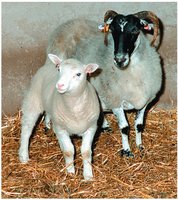
Transgenic animals are produced by introducing genes from one species into another. Cloning techniques, such as nuclear transfer, have enabled the creation of genetically identical animals, exemplified by the cloning of Dolly the sheep.
Genetics in Medicine
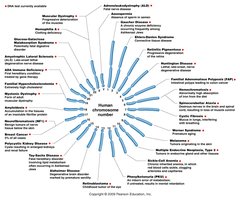
Genetic research has led to the identification and mapping of genes responsible for numerous genetic disorders. Genetic testing and gene therapy are now integral to modern medicine, though they raise ethical considerations.
Genomics, Proteomics, and Bioinformatics
New and Expanding Fields
Genomics, proteomics, and bioinformatics are rapidly growing disciplines that analyze the structure, function, and interactions of genes and proteins on a genome-wide scale.
Genomics: Study of entire genomes, including gene mapping and sequencing.
Proteomics: Analysis of the full set of proteins expressed by a genome.
Bioinformatics: Use of computational tools to manage and analyze biological data.
Approaches to Understanding Gene Function
Classical (Forward) and Reverse Genetics
Classical genetics involves identifying genes responsible for observed phenotypes, while reverse genetics starts with a known gene sequence and investigates its function, often by disrupting the gene and observing the resulting phenotype.
Model Organisms in Genetic Research
Criteria and Examples of Model Organisms
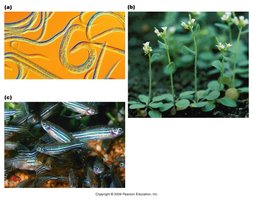
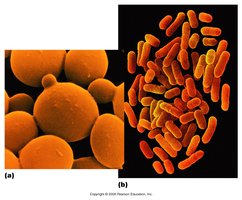
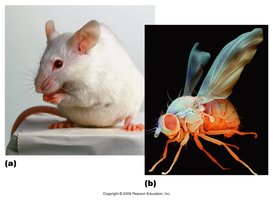
Model organisms are species that are easy to grow, have short life cycles, and produce many offspring, making them ideal for genetic studies. Insights gained from these organisms often apply to humans due to shared genetic mechanisms.
Common Model Organisms: Drosophila melanogaster (fruit fly), Mus musculus (mouse), Arabidopsis thaliana (plant), Caenorhabditis elegans (nematode), Danio rerio (zebrafish), Escherichia coli (bacterium), Saccharomyces cerevisiae (yeast).
Model Organisms and Human Diseases
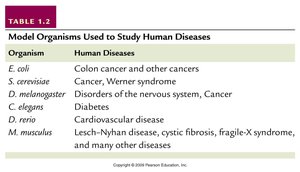
Model organisms are used to study the genetic basis of human diseases, as many genes are conserved across species. Recombinant DNA technology allows for the creation of disease models and the study of gene function in vivo.
Organism | Human Diseases Studied |
|---|---|
E. coli | Colon cancer, other cancers |
S. cerevisiae | Cancer, Werner syndrome |
D. melanogaster | Nervous system disorders, cancer |
C. elegans | Diabetes |
D. rerio | Cardiovascular disease |
M. musculus | Lesch-Nyhan disease, cystic fibrosis, fragile-X syndrome, many others |
Conclusion: The Age of Genetics
Genetics is central to understanding biological systems, disease, and evolution. Modern genetics integrates classical principles with molecular techniques, driving advances in medicine, agriculture, and biotechnology.