Back
Introduction to Genetics: Concepts, History, and Applications
Study Guide - Smart Notes
 Tailored notes based on your materials, expanded with key definitions, examples, and context.
Introduction to Genetics
Definition and Scope of Genetics
Genetics is the scientific study of the origin, transmission, and expression of genetic material in living organisms. It encompasses the investigation of genes, heredity, and variation, providing insight into how traits are inherited, why individuals differ, and how genetic information is expressed.
Gene: A functional segment of DNA that influences traits.
Heredity: The process by which traits are passed from parents to offspring.
Variation: Differences among individuals due to genetic and environmental factors.
Expression: The use of genetic information to produce RNA and proteins.
History and Development of Genetics
The field of genetics has evolved through several key discoveries and theories, shaping our understanding of biological inheritance.
Spontaneous Generation: Early belief that life arises from non-living matter.
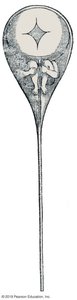
Preformation Theory: The idea that a fertilized egg contains a miniature organism.
Epigenesis: Organisms develop gradually through stages.
Cell Theory: All organisms are composed of cells derived from pre-existing cells.
Milestones in Genetics
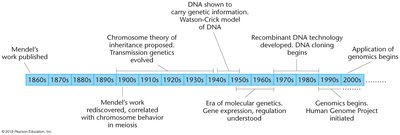
1866: Mendel publishes findings on trait transmission.
Early 1900s: Chromosomal theory of inheritance proposed.
1953: DNA structure discovered (Watson and Crick).
2000s: Human genome sequenced.
2010s: Gene editing technologies (e.g., CRISPR) developed.
Chromosomal Theory of Inheritance
Chromosomes and Genes
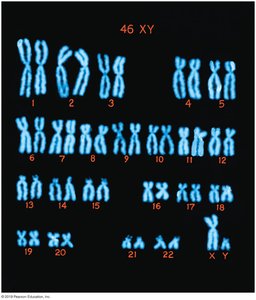
Chromosomes are long DNA molecules packaged with proteins, existing in pairs in diploid cells. Genes reside on chromosomes and are transmitted through gametes, ensuring genetic continuity.
Diploid Number (2n): Total chromosome count in a cell (e.g., humans = 46).
Homologous Chromosomes: Chromosome pairs with similar structure and gene content.
Gene Organization
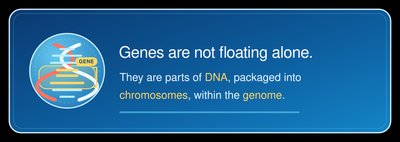
Genes are not isolated; they are organized within chromosomes and the genome.
Genome: All DNA in an organism.
Chromosomes: DNA molecules with associated proteins.
Alleles: Different versions of the same gene.
Cell Division: Mitosis and Meiosis
Mitosis vs. Meiosis
Mitosis and meiosis are processes that ensure proper chromosome number and genetic diversity.
Mitosis: One division, produces two genetically identical diploid cells for growth and repair.
Meiosis: Two divisions, produces four genetically different haploid cells for sexual reproduction.
Importance: Meiosis allows fertilization to restore diploid chromosome number.
Genetic Variation: Alleles and Mutations
Alleles and Their Role
Alleles are alternative forms of a gene, produced by mutations. Mutations are heritable changes in DNA sequence and are a primary source of genetic variation.
Genotype: The set of alleles for a given trait carried by an organism.
Phenotype: The observable trait or feature resulting from genotype expression.
Structure of DNA and RNA
DNA Structure
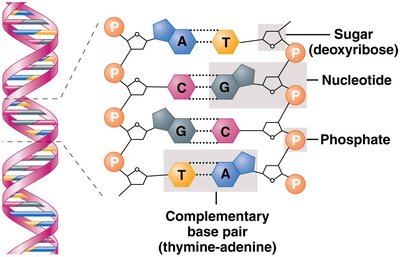
DNA is a double-stranded, antiparallel helix composed of nucleotides. Each nucleotide consists of a deoxyribose sugar, a phosphate group, and a nitrogenous base (adenine, cytosine, guanine, or thymine). Complementary base pairing occurs via hydrogen bonds: A–T (2 bonds), G–C (3 bonds).
RNA Structure
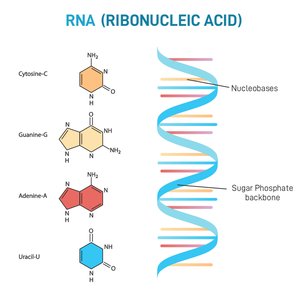
RNA is similar to DNA but is usually single-stranded, contains uracil instead of thymine, and has ribose as its sugar.
Proteins and the Central Dogma
Central Dogma of Molecular Biology
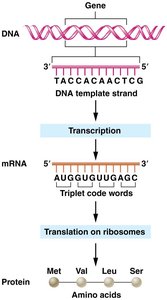
The central dogma describes the flow of genetic information: DNA is transcribed to RNA, which is then translated into protein. Proteins are the end products of gene expression and determine phenotypes.
Codons: Triplet nucleotides in mRNA that encode specific amino acids.
Protein Diversity: 20 amino acids allow numerous combinations and functions.
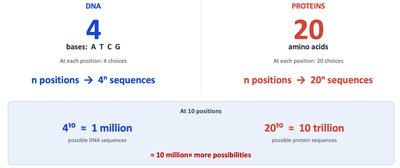
Diversity of DNA vs. Proteins
Proteins have far more possible sequences than DNA due to the greater number of amino acids compared to nucleotide bases.
DNA: 4 bases (A, T, C, G)
Proteins: 20 amino acids
At 10 positions: DNA sequences vs. protein sequences
Genotype to Phenotype: Sickle Cell Anemia Example
Linking DNA Changes to Traits
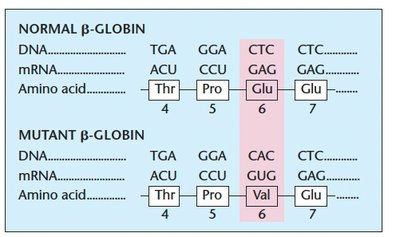
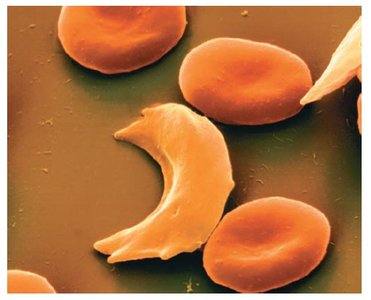
A single nucleotide mutation can alter protein function and result in a visible trait. Sickle cell anemia is caused by a mutation in the β-globin gene, leading to an amino acid substitution (glutamic acid to valine) in hemoglobin.
Normal β-globin: Glu at position 6
Mutant β-globin: Val at position 6
Phenotype: Sickle-shaped red blood cells
The Age of Genetics: Model Organisms and Biotechnology
Model Organisms in Genetics
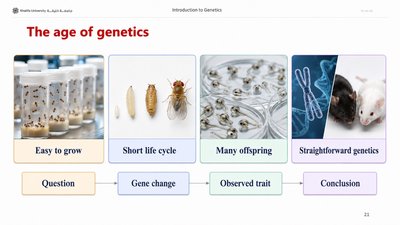
Model organisms are non-human species used to study basic biological processes. They help test the DNA-to-phenotype model under controlled conditions.
Bacteria (E. coli): Fast growth, DNA tools
Yeast (S. cerevisiae): Simple eukaryotic cells
Fruit fly (D. melanogaster): Inheritance and development
Roundworm (C. elegans): Development and neurobiology
Zebrafish (D. rerio): Development, transparent embryos
Mouse (M. musculus): Mammalian disease models
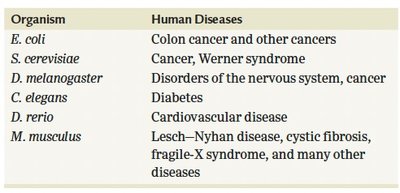
Organism | Human Diseases |
|---|---|
E. coli | Colon cancer and other cancers |
S. cerevisiae | Cancer, Werner syndrome |
D. melanogaster | Disorders of the nervous system, cancer |
C. elegans | Diabetes |
D. rerio | Cardiova scular disease |
M. musculus | Lesch–Nyhan disease, cystic fibrosis, fragile-X syndrome, and many other diseases |
Recombinant DNA Technology and Biotechnology
Recombinant DNA technology involves cutting DNA with restriction enzymes and inserting fragments into vectors to produce clones. This enables gene isolation, study, and genetic modification, revolutionizing agriculture and medicine.
Genomic Libraries: Collections of clones representing an organism’s entire genome.
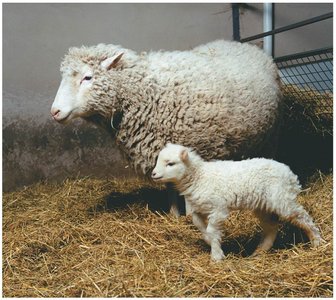
Transgenic Organisms: Created by transferring heritable traits across species.
Biotechnology: Use of molecular techniques to produce products and modify organisms.
Genetics and Medicine
Genetic Disorders and Testing
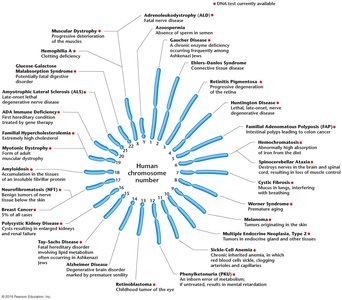
Genetic disorders arise from variants across the genome. Genetic testing enables diagnosis and carrier status determination for numerous inherited disorders.
Over 10 million people in the U.S. have genetic disorders.
Genetic tests are available for prenatal diagnosis and carrier status of over 100 inherited disorders.
Integrated Model of Genetics
Connecting Concepts
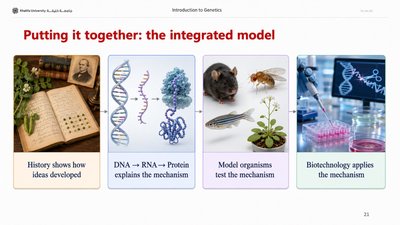
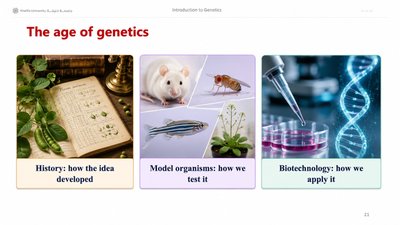
The integrated model of genetics combines historical discoveries, molecular mechanisms, model organism research, and biotechnological applications to advance our understanding and use of genetic information.
History shows how ideas developed.
DNA → RNA → Protein explains the mechanism.
Model organisms test the mechanism.
Biotechnology applies the mechanism.