 Back
Mendelian Genetics: Principles, Patterns, and Applications
Study Guide - Smart Notes
 Tailored notes based on your materials, expanded with key definitions, examples, and context.
Mendelian Genetics
Introduction to Mendel's Experimental Approach
Gregor Mendel, often regarded as the father of genetics, used a model experimental approach to study patterns of inheritance in pea plants. His work laid the foundation for the principles of transmission genetics, which explain how traits are passed from one generation to the next.
Model Organism: Pea plants (Pisum sativum) were chosen for their ease of growth, self-fertilization, and ability to be cross-bred.
Contrasting Traits: Mendel studied seven visible characters, each with two contrasting forms (e.g., tall vs. dwarf stem, yellow vs. green seed).
True Breeding Strains: Mendel obtained strains whose traits appeared unchanged generation after generation.
Quantitative Records: Accurate record-keeping enabled Mendel to derive mathematical ratios for inheritance.
Monohybrid Crosses: Transmission of a Single Trait
A monohybrid cross involves two parents differing in one pair of contrasting traits. Mendel's experiments revealed predictable patterns in the transmission of these traits.
P1 Generation: Parental generation (e.g., TT tall x tt dwarf).
F1 Generation: Offspring are all heterozygous (Tt) and display the dominant trait.
F2 Generation: Self-crossing F1 yields a phenotypic ratio of 3:1 (dominant:recessive).
Reciprocal Crosses: The direction of the cross does not affect the outcome.
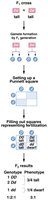
Example: Crossing tall (TT) and dwarf (tt) pea plants yields F1 (all tall, Tt), and F2 (3/4 tall, 1/4 dwarf).
Mendel's Three Principles
Unit Factors in Pairs: Genetic characters are controlled by unit factors (genes) existing in pairs in individual organisms.
Dominance/Recessiveness: When two unlike unit factors are present, one is dominant and the other is recessive.
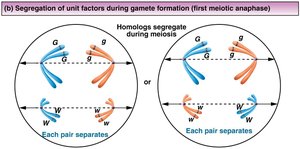
Segregation: During gamete formation, paired unit factors separate randomly, so each gamete receives one factor.
Modern Genetics Terminology
Gene: Mendel's unit factor; a segment of DNA encoding a functional RNA or protein.
Allele: Alternative forms of a gene at a specific locus.
Homozygote: Organism with identical alleles for a trait (e.g., DD, dd).
Heterozygote: Organism with different alleles for a trait (e.g., Dd).
Genotype: Allele combinations inherited from parents.
Phenotype: Observable features resulting from genotype expression.
Wild Type: Most common allelic combination in a population.
Mutant Type: Resulting from gene mutation.
Punnett Squares and Test Crosses
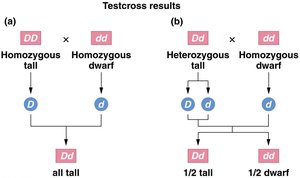
Punnett squares are used to predict all possible genotypes and phenotypes from parental crosses. Test crosses help determine whether an organism with a dominant phenotype is homozygous or heterozygous.
Dihybrid and Trihybrid Crosses: Multiple Traits
Dihybrid crosses involve two pairs of contrasting traits and yield a phenotypic ratio of 9:3:3:1 in the F2 generation. Trihybrid crosses extend Mendel's principles to three pairs of traits, using the forked-line method to calculate phenotypic ratios.
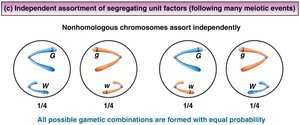
Independent Assortment: During gamete formation, segregating pairs of unit factors assort independently.
Product Law of Probability: The probability of two independent events occurring together is the product of their individual probabilities.
Mathematical Rules for Genetics Problems
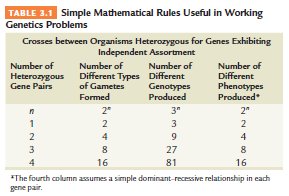
Simple mathematical rules help calculate the number of gametes, genotypes, and phenotypes in crosses involving multiple gene pairs.
Number of Heterozygous Gene Pairs (n) | Number of Gametes | Number of Genotypes | Number of Phenotypes |
|---|---|---|---|
1 | 2 | 3 | 2 |
2 | 4 | 9 | 4 |
3 | 8 | 27 | 8 |
Chromosomal Theory of Inheritance
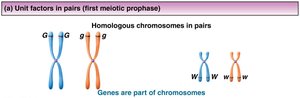
The chromosomal theory of inheritance links Mendel's principles to the behavior of chromosomes during meiosis. Genes are located on chromosomes, and their segregation and independent assortment during meiosis explain Mendel's observations.
Diploid Number (2n): Each species has a specific chromosome number, halved during meiosis and restored after fertilization.
Homologous Chromosomes: Chromosomes paired morphologically and behaviorally, each carrying the same gene loci.
Genetic Variation and Probability
Independent assortment leads to extensive genetic variation. The number of possible gamete combinations is , where n is the haploid number. Probability laws (product and sum) help explain genetic events and outcomes.
Binomial Theorem in Genetics
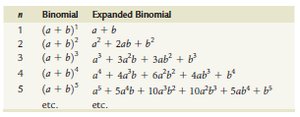
The binomial theorem is used to calculate probabilities of specific combinations of outcomes in genetic crosses.
n | Binomial | Expanded Binomial |
|---|---|---|
1 | (a + b)^1 | a + b |
2 | (a + b)^2 | a^2 + 2ab + b^2 |
3 | (a + b)^3 | a^3 + 3a^2b + 3ab^2 + b^3 |
4 | (a + b)^4 | a^4 + 4a^3b + 6a^2b^2 + 4ab^3 + b^4 |
5 | (a + b)^5 | a^5 + 5a^4b + 10a^3b^2 + 10a^2b^3 + 5ab^4 + b^5 |
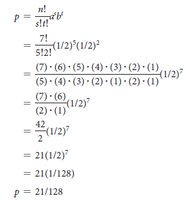
Example: Probability that in a family with seven children, five will be males and two females:
Chi-Square Analysis and the Null Hypothesis
Chi-square analysis evaluates the influence of chance on genetic data. The null hypothesis (Ho) assumes no real difference between observed and expected values; deviations are due to chance.
Chi-Square Formula:
Degrees of Freedom:
Interpretation: If is less than the critical value at p = 0.05, Ho is not rejected; otherwise, it is rejected.
Pedigree Analysis: Patterns of Human Inheritance
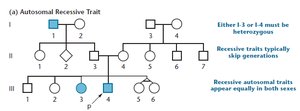
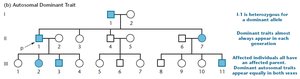
Pedigrees are family trees used to study inheritance patterns of traits in humans. They help distinguish between dominant and recessive modes of inheritance.
Autosomal Recessive Traits: Typically skip generations and appear equally in both sexes.
Autosomal Dominant Traits: Almost always appear in each generation; affected individuals have an affected parent.
Molecular Basis of Mendelian Traits
Modern genetics explains Mendelian traits at the molecular level. For example, wrinkled peas result from a mutation in the gene encoding the starch-branching enzyme (SBEI), and Tay-Sachs disease is caused by a mutation in the gene encoding hexosaminidase A (Hex-A).
Wrinkled Peas: Lack SBEI activity, leading to altered starch formation and water content.
Tay-Sachs Disease: Loss of Hex-A activity causes accumulation of GM2 ganglioside in neurons, leading to neurodegeneration.
Additional info: These molecular explanations illustrate how single-gene mutations can lead to distinct phenotypes, reinforcing Mendel's principles in modern genetics.
