Pearson+ LogoPearson+ Logo
Ch. 8 - Molecular Biology of Transcription and RNA Processing
Sanders - Genetic Analysis: An Integrated Approach 3rd Edition
Sanders3rd EditionGenetic Analysis: An Integrated ApproachISBN: 9780135564172Not the one you use?Change textbook
Chapter 8, Problem 30e

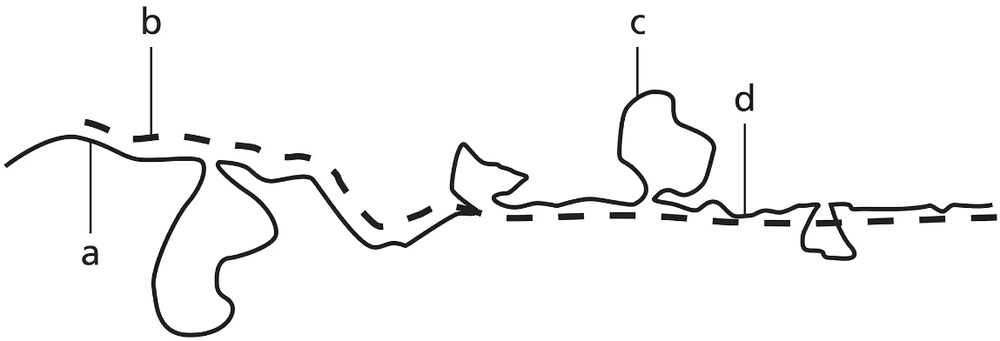
Genomic DNA from a mouse is isolated, fragmented, and denatured into single strands. It is then mixed with mRNA isolated from the cytoplasm of mouse cells. The image represents an electron micrograph result showing the hybridization of single-stranded DNA and mRNA. Based on this electron micrograph image, how many introns and exons are present in the mouse DNA fragment shown?
Electron micrograph showing hybridization of single-stranded DNA and mRNA, indicating introns and exons in mouse DNA.

Verified step by step guidance
1
Understand the context: The problem involves analyzing an electron micrograph showing hybridization between single-stranded DNA and mRNA. This technique is used to identify the regions of DNA that correspond to exons (coding regions) and introns (non-coding regions).
Recall the principle of hybridization: mRNA hybridizes only to the complementary exonic regions of the DNA, as introns are spliced out during mRNA processing. Introns will appear as loops in the DNA strand because they do not have complementary sequences in the mRNA.
Examine the electron micrograph: Count the number of loops (representing introns) and the number of hybridized regions (representing exons). Each loop corresponds to an intron, and each hybridized segment corresponds to an exon.
Determine the total number of introns and exons: The total number of exons is equal to the number of hybridized regions, and the total number of introns is equal to the number of loops observed in the micrograph.
Summarize the findings: Based on the counts from the micrograph, you can determine the number of introns and exons in the DNA fragment. Ensure that you clearly distinguish between the two types of regions in your analysis.

Verified video answer for a similar problem:

This video solution was recommended by our tutors as helpful for the problem above.
Video duration:
3m
Was this helpful?

Key Concepts

Here are the essential concepts you must grasp in order to answer the question correctly.

Introns and Exons

Introns and exons are segments of a gene found in eukaryotic DNA. Exons are the coding regions that are expressed and translated into proteins, while introns are non-coding regions that are removed during RNA processing. Understanding the distinction between these two is crucial for analyzing gene structure and function.
Recommended video:
Guided course
08:39
mRNA Processing

Hybridization

Hybridization refers to the process where complementary strands of nucleic acids, such as DNA and RNA, bind together. In the context of the question, the hybridization of single-stranded DNA with mRNA indicates the regions of the DNA that correspond to expressed genes, which can help identify exons and infer the presence of introns.
Recommended video:
Guided course
03:08
Drosophila P Element

Electron Micrography

Electron micrography is a technique that uses electron beams to visualize samples at a very high resolution. In this context, it allows researchers to observe the hybridized DNA and mRNA, providing insights into the structure of the genetic material and the arrangement of introns and exons within the DNA fragment.
Recommended video:
Guided course
04:29
Induced Mutations
Related Practice
Textbook Question

Genomic DNA from a mouse is isolated, fragmented, and denatured into single strands. It is then mixed with mRNA isolated from the cytoplasm of mouse cells. The image represents an electron micrograph result showing the hybridization of single-stranded DNA and mRNA.

Which nucleic acid is indicated by the 'b' pointer? Justify your answer. 

558
views
Textbook Question

Genomic DNA from a mouse is isolated, fragmented, and denatured into single strands. It is then mixed with mRNA isolated from the cytoplasm of mouse cells. The image represents an electron micrograph result showing the hybridization of single-stranded DNA and mRNA.

What term best identifies the nucleic acid region indicated by the 'c' pointer?

578
views
Textbook Question

Genomic DNA from a mouse is isolated, fragmented, and denatured into single strands. It is then mixed with mRNA isolated from the cytoplasm of mouse cells. The image represents an electron micrograph result showing the hybridization of single-stranded DNA and mRNA.

What term best identifies the nucleic acid region indicated by the 'd' pointer? 

588
views
Textbook Question

A portion of a human gene is isolated from the genome and sequenced. The corresponding segment of mRNA is isolated from the cytoplasm of human cells, and it is also sequenced. The nucleic acid strings shown here are from genomic coding strand DNA and the corresponding mRNA.

There is one intron in the DNA sequence shown. Locate the intron and underline the splice site sequences.

514
views
Textbook Question

A portion of a human gene is isolated from the genome and sequenced. The corresponding segment of mRNA is isolated from the cytoplasm of human cells, and it is also sequenced. The nucleic acid strings shown here are from genomic coding strand DNA and the corresponding mRNA.

Does this intron contain normal splice-site sequences?

492
views