Back

Aerobic Respiration Summary definitions

Control buttons has been changed to "navigation" mode.
1/14
  • Aerobic Respiration

    A process using oxygen to break down nutrients, producing energy, carbon dioxide, and water through multiple metabolic stages.
  • Krebs Cycle

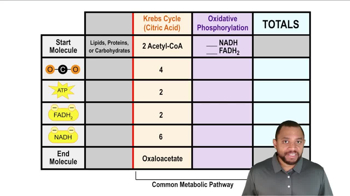
    A stage in food breakdown where Acetyl CoA is converted, generating carbon dioxide, ATP, FADH2, and NADH.
  • Oxidative Phosphorylation

    A metabolic stage where electrons from NADH and FADH2 drive ATP production, with oxygen as the final electron acceptor.
  • Electron Transport Chain

    A series of protein complexes transferring electrons to produce ATP and water, integral to oxidative phosphorylation.
  • Acetyl CoA

    A molecule entering the Krebs Cycle, serving as the main substrate for energy extraction in aerobic respiration.
  • Carbon Dioxide

    A gaseous byproduct released during the Krebs Cycle, representing the removal of carbon atoms from metabolic substrates.
  • ATP

    The primary energy currency generated during aerobic respiration, powering cellular activities.
  • FADH2

    An electron carrier produced in the Krebs Cycle, later donating electrons to the electron transport chain.
  • NADH

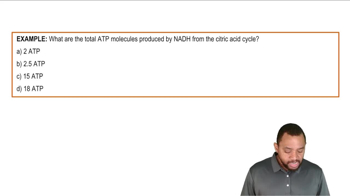
    A high-energy electron carrier formed in the Krebs Cycle, crucial for driving ATP synthesis in later stages.
  • Oxaloacetate

    A four-carbon molecule regenerated at the end of the Krebs Cycle, enabling the cycle to continue.
  • Food Catabolism

    The breakdown of nutrients through sequential metabolic stages to extract usable energy for the cell.
  • Final Electron Acceptor

    A molecule, specifically oxygen in aerobic respiration, that receives electrons at the end of the electron transport chain.
  • Water

    A product formed when oxygen accepts electrons and combines with protons during oxidative phosphorylation.
  • Common Metabolic Pathway

    The shared sequence of reactions, including the Krebs Cycle and oxidative phosphorylation, central to energy production.