Back

Calculate Oxidation Numbers quiz

Control buttons has been changed to "navigation" mode.
1/15
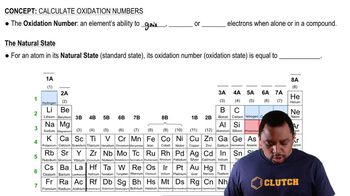
  • What is the oxidation number of an element in its natural or standard state?

    The oxidation number is zero for an element in its natural or standard state.
  • What is the oxidation number of Group 1A elements in compounds?

    Group 1A elements have an oxidation number of +1 in compounds.
  • What is the oxidation number of Group 2A elements in compounds?

    Group 2A elements have an oxidation number of +2 in compounds.
  • What is the oxidation number of fluorine in compounds?

    Fluorine always has an oxidation number of -1 in compounds.
  • When is hydrogen assigned an oxidation number of +1?

    Hydrogen is +1 when bonded to nonmetals.
  • When is hydrogen assigned an oxidation number of -1?

    Hydrogen is -1 when bonded to metals or boron.
  • What is the typical oxidation number of oxygen in compounds (not peroxides or superoxides)?

    Oxygen typically has an oxidation number of -2 in compounds, unless it is in a peroxide or superoxide.
  • What is the oxidation number of oxygen in peroxides?

    In peroxides, oxygen has an oxidation number of -1.
  • What is the oxidation number of oxygen in superoxides?

    In superoxides, oxygen has an oxidation number of -0.5.
  • What is the oxidation number of a monoatomic ion?

    The oxidation number of a monoatomic ion is equal to its charge.
  • What is the oxidation number of chlorine, bromine, and iodine in compounds (except with oxygen)?

    Chlorine, bromine, and iodine have an oxidation number of -1, except when bonded to oxygen.
  • What are the four steps to determine the oxidation number of an element not explicitly listed?

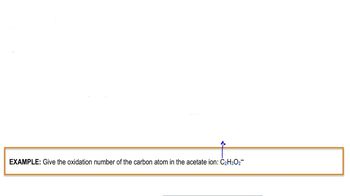
    Treat the element as x, use known oxidation numbers for other elements, distribute subscripts, and solve the equation set to the compound's charge.
  • What is a peroxide and how does it affect oxygen's oxidation number?

    A peroxide contains two Group 1A elements and two oxygens, giving oxygen an oxidation number of -1.
  • What is a superoxide and how does it affect oxygen's oxidation number?

    A superoxide contains one Group 1A element and two oxygens, giving oxygen an oxidation number of -0.5.
  • How do you determine the oxidation number of an element in a compound if it is not covered by the specific rules?

    Assign x to the unknown element, use known oxidation numbers for the others, distribute subscripts, and set the sum equal to the compound's charge to solve for x.