Back

Endothermic & Exothermic Reactions definitions

Control buttons has been changed to "navigation" mode.
1/15
  • Endothermic Reaction

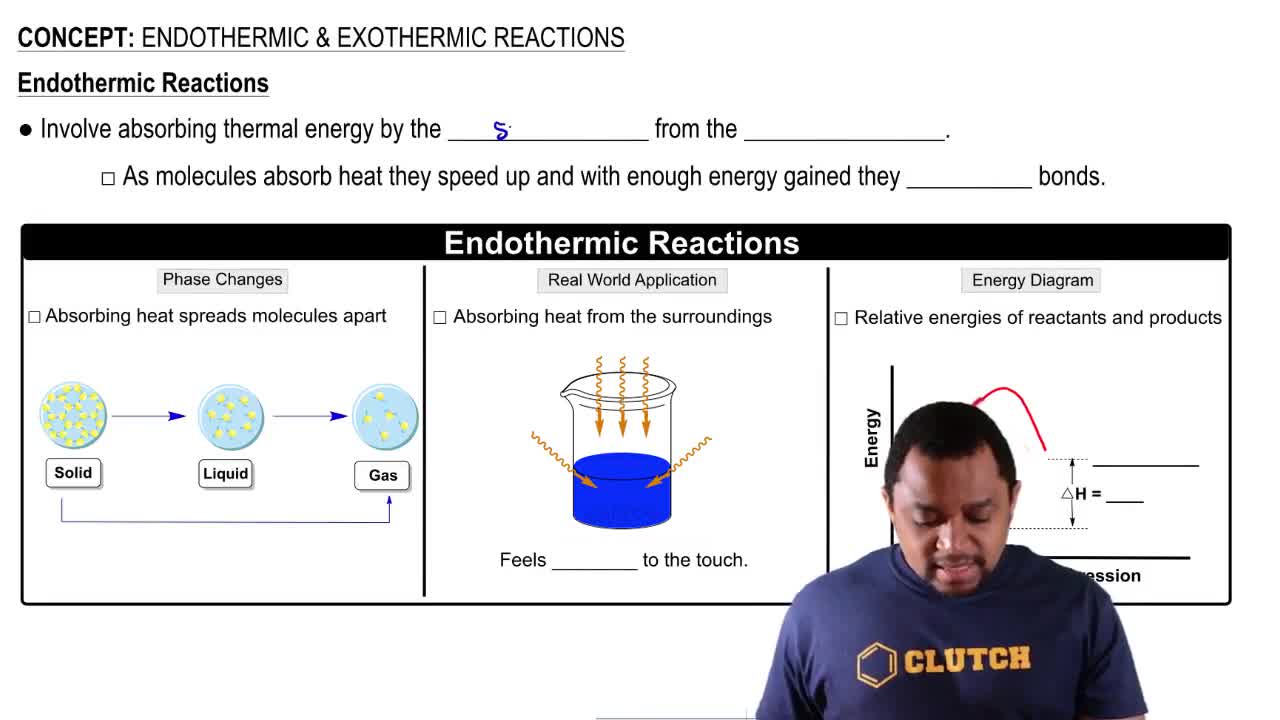
    Heat-absorbing process where molecules gain energy, speed up, and may break bonds, often causing phase changes like melting or vaporization.
  • Exothermic Reaction

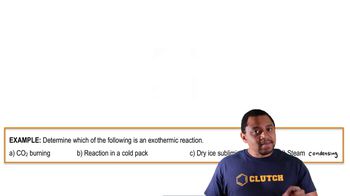
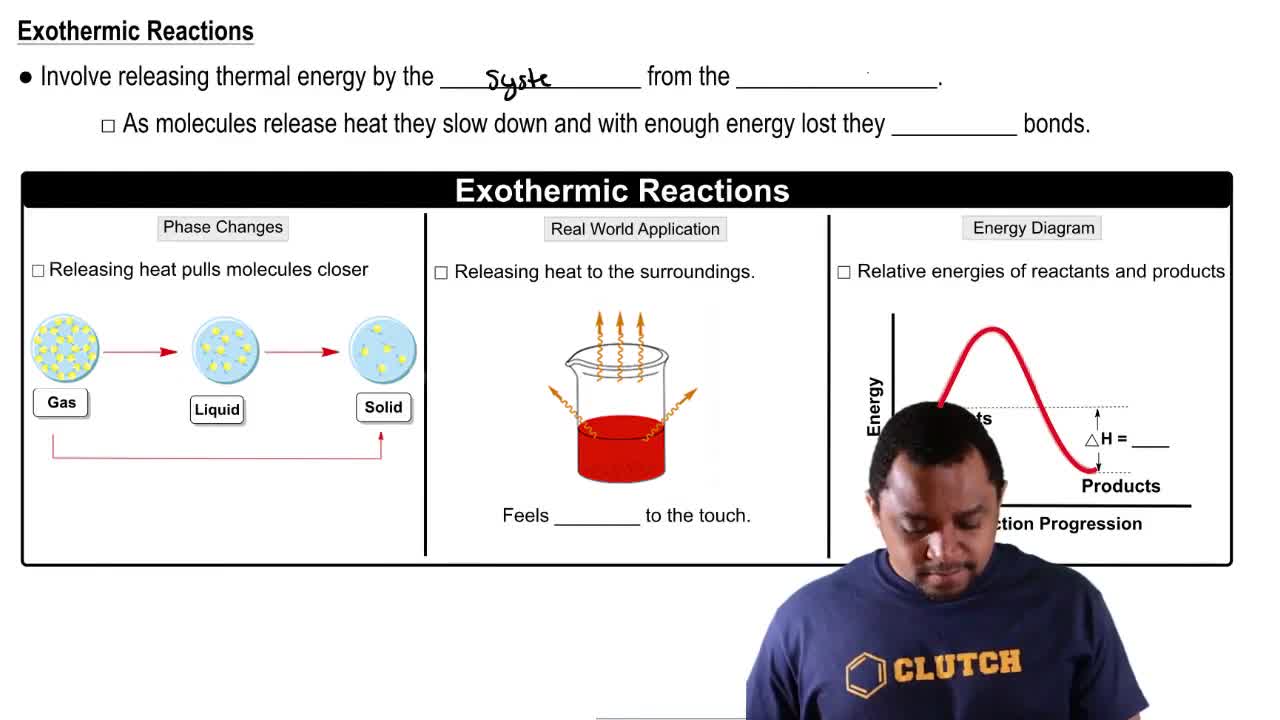
    Heat-releasing process where molecules lose energy, slow down, and form bonds, often resulting in condensation or freezing.
  • Thermal Energy

    Form of energy transferred as heat, influencing molecular motion and phase changes during chemical reactions.
  • Bond Breaking

    Process requiring energy input, leading to separation of atoms within molecules, common in heat-absorbing reactions.
  • Bond Formation

    Process where atoms join together, releasing energy, typical in heat-releasing reactions.
  • Phase Change

    Transition between states of matter, such as solid to liquid or liquid to gas, driven by energy absorption or release.
  • Fusion

    Transition from solid to liquid, requiring absorption of heat, also known as melting.
  • Vaporization

    Transition from liquid to gas, involving energy absorption to separate molecules.
  • Sublimation

    Direct transition from solid to gas, bypassing the liquid phase, requiring significant energy input.
  • Condensation

    Transition from gas to liquid, involving energy release as molecules come closer together.
  • Freezing

    Transition from liquid to solid, where molecules lose energy and arrange into a fixed structure.
  • Deposition

    Direct transition from gas to solid, skipping the liquid phase, accompanied by energy release.
  • Energy Diagram

    Graphical representation showing energy changes of reactants and products during a chemical reaction.
  • Enthalpy

    Measure of total heat content in a system, indicating energy absorbed or released during reactions.
  • Delta H

    Symbol representing the change in enthalpy, positive for heat absorption and negative for heat release.