Back

Energy Diagrams definitions

Control buttons has been changed to "navigation" mode.
1/15
  • Energy Diagram

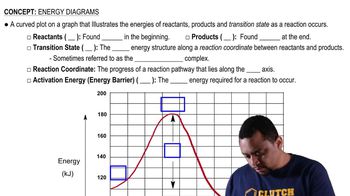
    A curved graph showing energy changes of reactants, products, and the transition state throughout a chemical reaction.
  • Reactants

    Substances present at the start of a reaction, located at the beginning of an energy diagram curve.
  • Products

    Substances formed at the end of a reaction, found at the end of an energy diagram curve.
  • Transition State

    The highest energy point between reactants and products, representing the maximum energy structure during a reaction.
  • Activated Complex

    A temporary, high-energy arrangement of atoms at the peak of the energy diagram, identical to the transition state.
  • Reaction Coordinate

    The x-axis of an energy diagram, representing the progress or lifetime of a chemical reaction.
  • Activation Energy

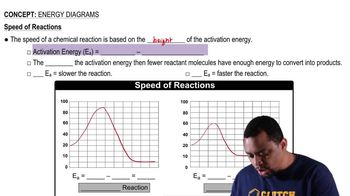
    The minimum energy difference between reactants and the transition state, determining how fast a reaction proceeds.
  • Energy Barrier

    Another term for activation energy, indicating the energy hurdle reactants must overcome to form products.
  • Overall Energy Change

    The difference in energy between products and reactants, influencing whether a reaction is favorable.
  • Enthalpy

    A measure of thermal energy change during a reaction, specifically related to heat absorbed or released.
  • Gibbs Free Energy

    A value indicating the favorability of product formation, with negative values showing spontaneous reactions.
  • Exothermic Reaction

    A process where thermal energy is released, resulting in products with lower energy than reactants.
  • Endothermic Reaction

    A process where thermal energy is absorbed, resulting in products with higher energy than reactants.
  • Exergonic Reaction

    A reaction with negative Gibbs free energy, favoring product formation and increased stability.
  • Endergonic Reaction

    A reaction with positive Gibbs free energy, making product formation unfavorable and less stable.