Back

Intensive vs. Extensive Properties definitions

Control buttons has been changed to "navigation" mode.
1/14
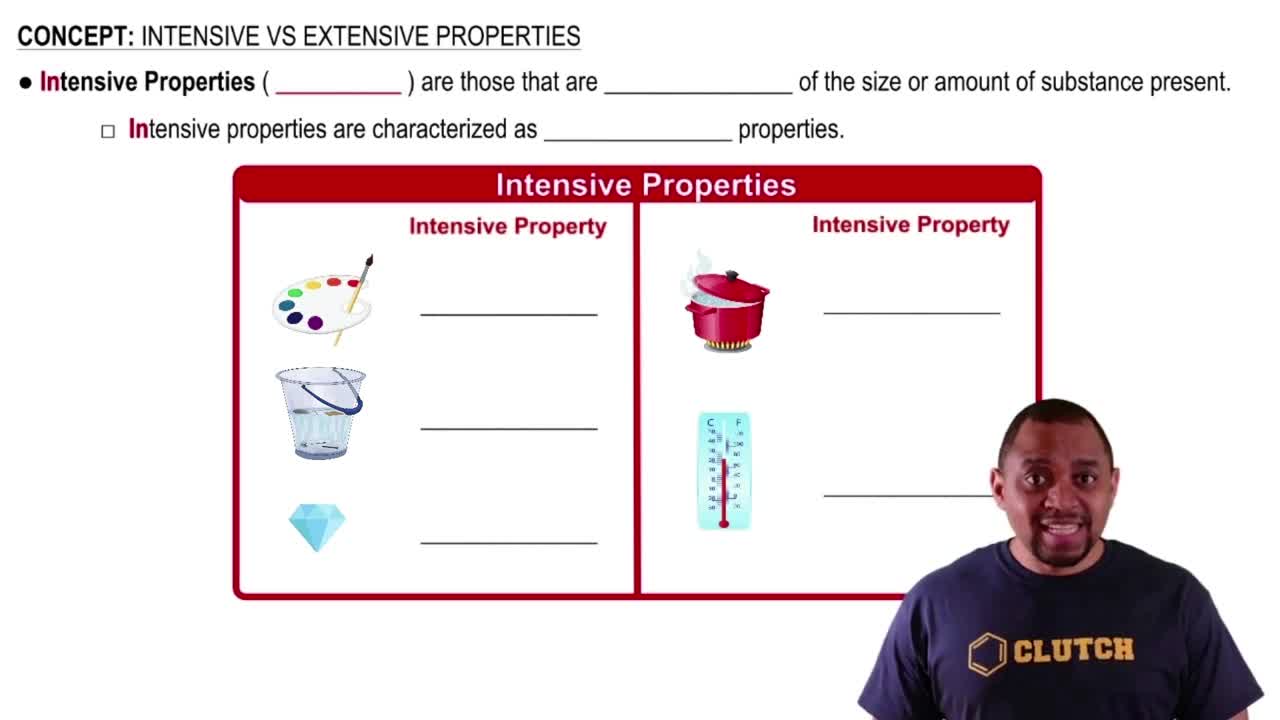
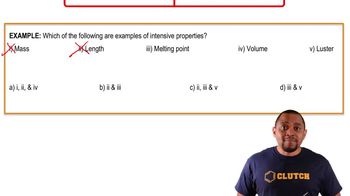
  • Intensive Property

    A characteristic of matter that remains unchanged regardless of the amount or size of the substance present.
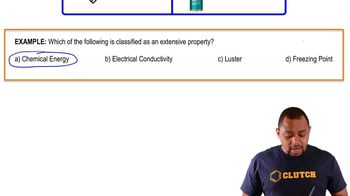
  • Extensive Property

    A characteristic of matter that varies depending on the quantity or size of the substance present.
  • Density

    A measure of how much mass is contained in a given volume, unaffected by the sample's size.
  • Color

    A visual attribute of a substance that remains consistent regardless of the amount present.
  • Hardness

    A measure of a material's resistance to scratching or deformation, independent of sample size.
  • Boiling Point

    The temperature at which a substance transitions from liquid to gas, constant for a pure material.
  • Melting Point

    The temperature at which a substance changes from solid to liquid, unaffected by the amount present.
  • Freezing Point

    The temperature at which a liquid becomes a solid, remaining the same for a pure substance.
  • Temperature

    A measure of the average kinetic energy of particles, not influenced by the quantity of material.
  • Mass

    A measure of the amount of matter in a substance, directly proportional to the quantity present.
  • Length

    A measurement of distance or extent, which increases or decreases with the size of the sample.
  • Volume

    The amount of three-dimensional space occupied by a substance, dependent on the sample's size.
  • Energy

    A property representing the capacity to do work, with total quantity scaling with the amount of substance.
  • Physical Property

    A characteristic of matter observable without changing its chemical identity, including both intensive and extensive types.