Back

Naming Nucleosides and Nucleotides definitions

Control buttons has been changed to "navigation" mode.
1/15
  • Nucleoside

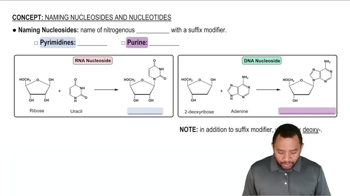
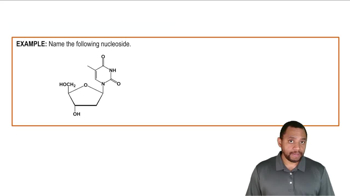
    A molecule formed by attaching a nitrogenous base to a sugar, lacking any phosphate group.
  • Nucleotide

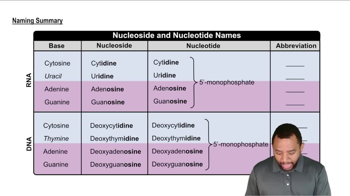
    A compound consisting of a nucleoside linked to a phosphate group at the 5' carbon of the sugar.
  • Nitrogenous Base

    A ring-shaped molecule, either a purine or pyrimidine, that forms the core of nucleosides and nucleotides.
  • Pyrimidine

    A single-ring nitrogenous base category, including cytosine, uracil, and thymine, with nucleosides ending in 'idine'.
  • Purine

    A double-ring nitrogenous base category, including adenine and guanine, with nucleosides ending in 'osine'.
  • Ribose

    A five-carbon sugar present in RNA nucleosides, providing the backbone for attachment of bases.
  • Deoxyribose

    A five-carbon sugar in DNA nucleosides, lacking an oxygen atom at the 2' carbon compared to ribose.
  • Glycosidic Bond

    A covalent linkage between the nitrogen of a base and the anomeric carbon of a sugar in nucleosides.
  • Monophosphate

    A single phosphate group attached to the 5' carbon of a nucleoside, converting it into a nucleotide.
  • Suffix Modifier

    A naming change applied to a base in nucleosides: 'idine' for pyrimidines, 'osine' for purines.
  • Prefix Deoxy

    A naming addition indicating the absence of an oxygen atom at the 2' carbon in DNA nucleosides and nucleotides.
  • One-Letter Code

    A single-character abbreviation assigned to each nitrogenous base, used in nucleotide shorthand.
  • Abbreviation MP

    A two-letter suffix added to nucleotide abbreviations to denote the presence of a monophosphate group.
  • Anomeric Carbon

    The carbon atom in a sugar that forms a glycosidic bond with a nitrogenous base in nucleosides.
  • 5' Carbon

    The specific carbon in the sugar ring where the phosphate group attaches to form a nucleotide.