Back

Periodic Trend: Ionization Energy (Simplified) definitions

Control buttons has been changed to "navigation" mode.
1/15
  • Ionization Energy

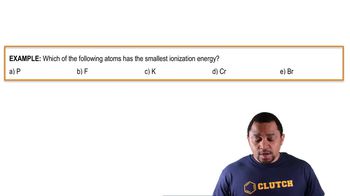
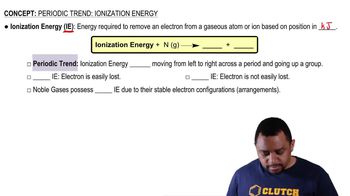
    Amount of energy, in kilojoules, needed to detach an electron from a gaseous atom or ion.
  • Gaseous Atom

    An atom in the gas phase, not bonded to other atoms, used as the reference for measuring ionization energy.
  • Electron Configuration

    Arrangement of electrons in atomic shells, influencing how easily electrons are removed.
  • Noble Gases

    Group of elements with stable outer shells, making electron removal extremely difficult.
  • Period

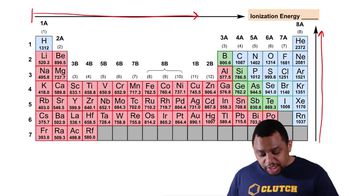
    Horizontal row in the periodic table, across which ionization energy generally increases.
  • Group

    Vertical column in the periodic table, where ionization energy increases as you move upward.
  • Helium

    Element with the highest ionization energy, requiring the most energy to remove an electron.
  • Francium

    Element with one of the lowest ionization energies, making electron removal very easy.
  • Product

    Substance formed after an electron is removed from a gaseous atom during ionization.
  • Reactant

    Substance, including energy, present at the start of the ionization process.
  • Atomic Mass

    Total mass of an atom, with very large values often linked to instability and rare discussion of ionization energy.
  • Stability

    Tendency of an atom to resist change, often linked to high ionization energy in noble gases.
  • Periodic Trend

    Predictable pattern observed in the periodic table, such as the increase of ionization energy across periods and up groups.
  • Kilojoule

    Unit of energy measurement used to express the amount required to remove an electron.
  • Heavy Elements

    Atoms with large atomic masses and numbers, often unstable and rarely discussed for ionization energy.