Back

Physical Properties definitions

Control buttons has been changed to "navigation" mode.
1/12
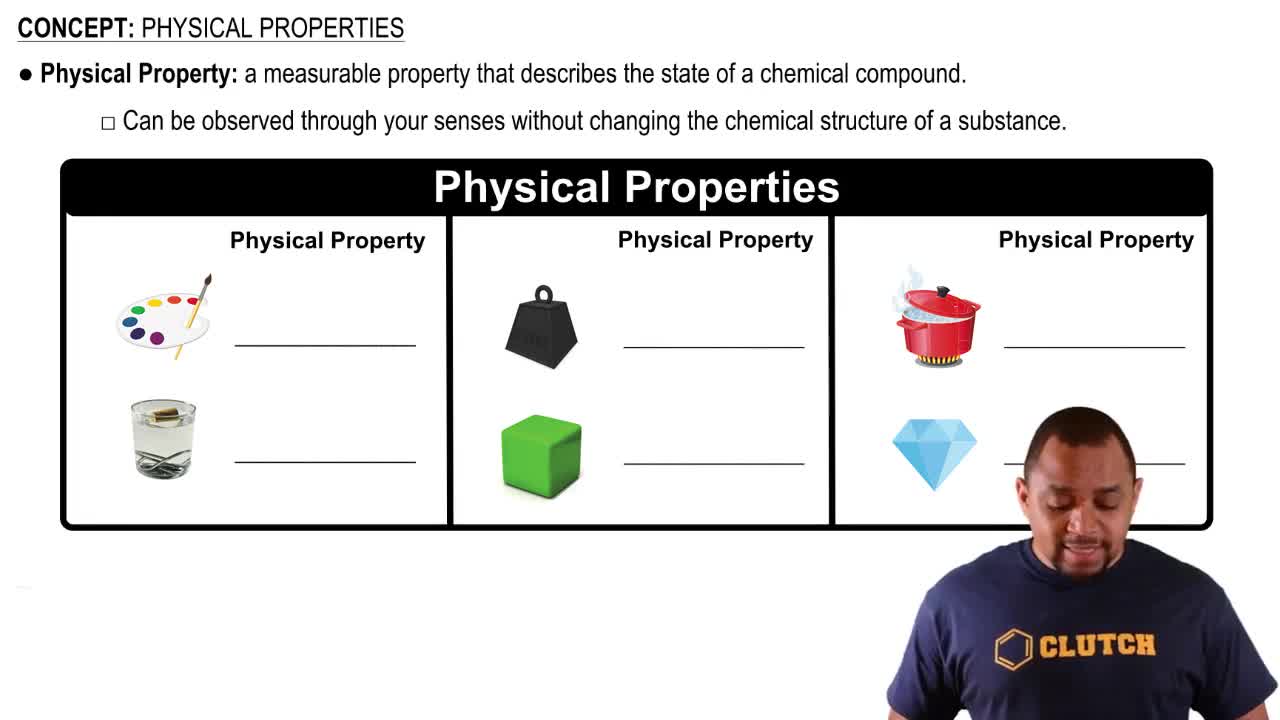
  • Physical Property

    A measurable attribute observed without altering a substance’s chemical structure, often detected using the senses.
  • Color

    A visual attribute perceived by the eyes, allowing identification of substances as red, yellow, or other hues.
  • Density

    A measure determining whether an object sinks or floats in a liquid, based on its mass relative to its volume.
  • Mass

    A fundamental quantity representing the amount of matter contained within an object.
  • Volume

    The amount of three-dimensional space occupied by a substance or object.
  • Boiling Point

    The specific temperature at which a substance transitions from a liquid to a gaseous state.
  • Freezing Point

    The temperature at which a liquid transforms into a solid, marking the onset of solidification.
  • Melting Point

    The temperature at which a solid becomes a liquid, indicating the start of liquefaction.
  • Hardness

    A material’s resistance to deformation or penetration, exemplified by substances like diamond.
  • Softness

    A material’s tendency to be easily deformed or broken, representing the opposite end of the hardness scale.
  • State

    A physical condition of matter, such as solid, liquid, or gas, described by observable properties.
  • Structure

    The arrangement of particles in a substance, remaining unchanged during observation of physical properties.