Back

Polyatomic Ions definitions

Control buttons has been changed to "navigation" mode.
1/15
  • Polyatomic Ion

    A group of covalently bonded atoms from different elements carrying an overall charge, acting as a single charged unit.
  • Oxyanion

    A negatively charged polyatomic ion containing oxygen, often with a nonmetal as the central atom.
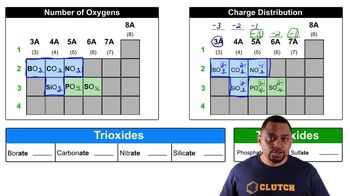
  • Trioxide

    A polyatomic ion structure containing three oxygen atoms, typically ending with the suffix 'ate' in its name.
  • Tetraoxide

    A polyatomic ion structure containing four oxygen atoms, commonly found in ions like sulfate and phosphate.
  • Halogenoxyanion

    A polyatomic ion containing a halogen and oxygen, with naming based on the number of oxygens and specific prefixes or suffixes.
  • Charge Pattern

    A predictable sequence of negative charges for trioxides and tetraoxides, determined by periodic table groupings.
  • Suffix

    The ending part of a polyatomic ion's name, such as 'ate' or 'ite', indicating the number of oxygens present.
  • Prefix

    The beginning part of a polyatomic ion's name, like 'per-' or 'hypo-', used to indicate the number of oxygens.
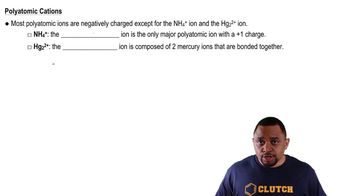
  • Ammonium

    A positively charged polyatomic ion with the formula NH4+, unique among common polyatomic ions for its positive charge.
  • Mercury(I) Ion

    A polyatomic cation formed by two mercury atoms, each with a +1 charge, resulting in a combined 2+ charge.
  • Permanganate

    A tetraoxide polyatomic ion with the formula MnO4−, notable for not fitting standard charge or naming patterns.
  • Chromate

    A tetraoxide polyatomic ion with the formula CrO4^2−, requiring memorization due to its irregular pattern.
  • Oxalate

    A polyatomic ion with the formula C2O4^2−, classified among the 'other' tetraoxides due to its unique structure.
  • Cyanide

    A simple polyatomic ion with the formula CN−, lacking oxygen and not fitting the trioxide or tetraoxide categories.
  • Acetate

    A polyatomic ion with the formula C2H3O2− or CH3COO−, commonly encountered in organic and general chemistry.