Pearson+ LogoPearson+ Logo
Ch.4 Introduction to Organic Compounds
Frost - General, Organic and Biological Chemistry 4th Edition
Frost4th EditionGeneral, Organic and Biological ChemistryISBN: 9780134988696Not the one you use?Change textbook
Chapter 1, Problem 56

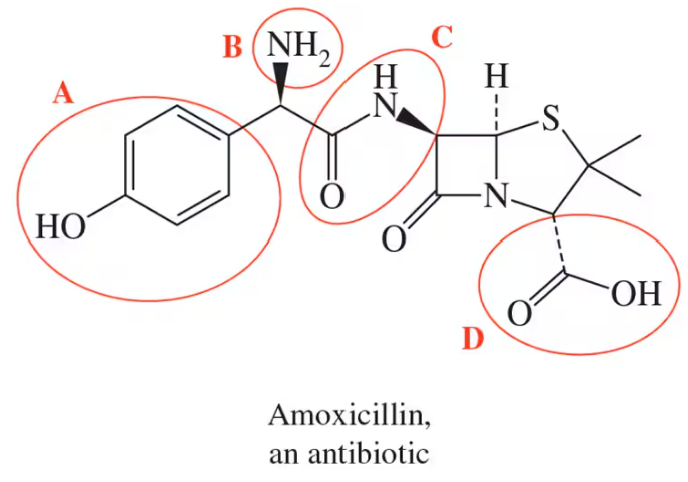
Name the four functional groups circled in the following molecule:
Molecule of Amoxicillin with four functional groups labeled A, B, C, and D highlighted in red circles.

Verified step by step guidance
1
Identify the functional groups in the molecule by analyzing the chemical structure provided in the image. Look for characteristic arrangements of atoms that define functional groups, such as hydroxyl (-OH), amine (-NH2), carboxyl (-COOH), or others.
Locate the first circled region in the molecule and determine the functional group present. For example, if the circled region contains a hydroxyl group (-OH), it is classified as an alcohol functional group.
Move to the second circled region and analyze the atoms and bonds present. If the region contains a nitrogen atom bonded to hydrogen(s), it may represent an amine functional group.
Examine the third circled region and identify the functional group based on its structure. For instance, if it contains a carbon atom double-bonded to an oxygen atom and single-bonded to a hydroxyl group (-COOH), it is a carboxylic acid functional group.
Finally, analyze the fourth circled region and classify the functional group. If the region contains a sulfur atom bonded to a hydrogen atom (-SH), it is a thiol functional group. Summarize the names of all four functional groups identified.

Verified video answer for a similar problem:

This video solution was recommended by our tutors as helpful for the problem above.
Video duration:
3m
Was this helpful?

Key Concepts

Here are the essential concepts you must grasp in order to answer the question correctly.

Functional Groups

Functional groups are specific groups of atoms within molecules that are responsible for the characteristic chemical reactions of those molecules. They determine the properties and reactivity of organic compounds. Common functional groups include hydroxyl, carboxyl, amino, and carbonyl groups, each imparting unique chemical behavior.
Recommended video:
Guided course
1:11
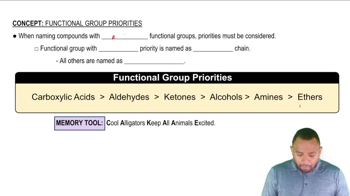
Functional Group Priorities Concept 1

Amoxicillin Structure

Amoxicillin is a type of penicillin antibiotic that contains several functional groups that contribute to its antibacterial properties. Understanding its molecular structure, including the arrangement of atoms and functional groups, is essential for grasping how it interacts with bacterial enzymes and inhibits cell wall synthesis.
Recommended video:
Guided course
1:01
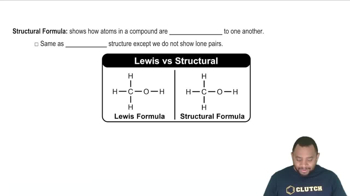
Structural Formula Concept 2

Chemical Nomenclature

Chemical nomenclature is the systematic naming of chemical compounds based on their structure and functional groups. Familiarity with nomenclature helps in identifying and naming the functional groups present in a molecule, which is crucial for understanding its chemical behavior and biological activity, especially in pharmaceuticals like amoxicillin.
Recommended video:
Guided course
00:58
Chemical Reaction: Chemical Change Concept 1