Pearson+ LogoPearson+ Logo
Ch.16 Amines
McMurry - Fundamentals of GOB 8th Edition
McMurry8th EditionFundamentals of GOBISBN: 9780134015187Not the one you use?Change textbook
Chapter 16, Problem 38

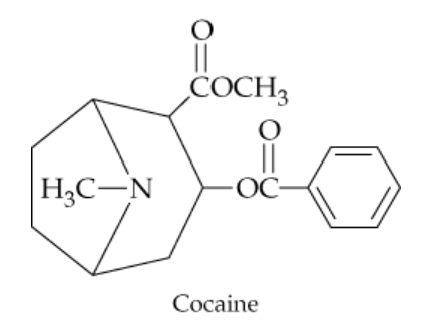
Identify the functional groups in cocaine
Chemical structure of cocaine, highlighting its functional groups including esters and a nitrogen-containing ring.

Verified step by step guidance
1
Review the structure of cocaine, which is a complex organic molecule. Cocaine contains multiple functional groups that contribute to its chemical properties.
Identify the ester functional group. An ester is characterized by the presence of a carbon atom double-bonded to an oxygen atom (C=O) and single-bonded to another oxygen atom (O) that is connected to a carbon chain. Look for this pattern in the structure of cocaine.
Locate the amine functional group. An amine contains a nitrogen atom (N) bonded to one or more carbon atoms. In cocaine, this is part of the tropane ring system.
Check for the presence of an aromatic ring. Cocaine contains a benzene ring, which is a six-membered ring with alternating double bonds, making it an aromatic functional group.
Summarize the functional groups identified: cocaine contains an ester group, an amine group, and an aromatic ring. These groups influence its reactivity and interactions in biological systems.

Verified video answer for a similar problem:

This video solution was recommended by our tutors as helpful for the problem above.
Was this helpful?

Key Concepts

Here are the essential concepts you must grasp in order to answer the question correctly.

Functional Groups

Functional groups are specific groups of atoms within molecules that are responsible for the characteristic chemical reactions of those molecules. They determine the properties and reactivity of organic compounds. Common functional groups include hydroxyl, carboxyl, amino, and carbonyl groups, each influencing the behavior of the molecule in biological and chemical contexts.
Recommended video:
Guided course
1:11
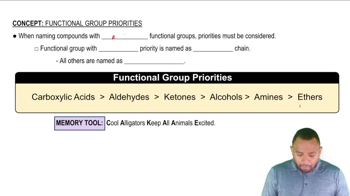
Functional Group Priorities Concept 1

Cocaine Structure

Cocaine is an alkaloid derived from the coca plant, and its structure includes several functional groups that contribute to its pharmacological effects. Key components of its structure include a benzene ring, an ester group, and a tertiary amine, which are crucial for its interaction with neurotransmitter systems in the brain, particularly dopamine transporters.
Recommended video:
Guided course
1:01
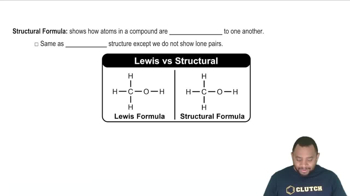
Structural Formula Concept 2

Chemical Properties of Cocaine

The chemical properties of cocaine are influenced by its functional groups, which affect its solubility, stability, and interaction with biological systems. For instance, the presence of the ester group allows for hydrolysis, while the amine group can participate in hydrogen bonding, impacting how cocaine is absorbed and metabolized in the body.
Recommended video:
Guided course
02:11
Chemical Properties Example 1