Pearson+ LogoPearson+ Logo
Ch.23 Lipids
McMurry - Fundamentals of GOB 8th Edition
McMurry8th EditionFundamentals of GOBISBN: 9780134015187Not the one you use?Change textbook
Chapter 23, Problem 1b

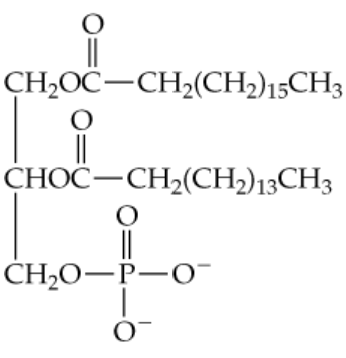
Use Figure 23.1 to identify the family of lipids to which each of these molecules belongs.
b. Chemical structure diagram of fatty acids, illustrating lipid families with molecular formulas and bonds.

Verified step by step guidance
1
Examine the structure of the molecule provided in the image. Look for key structural features such as the presence of long hydrocarbon chains, rings, or functional groups like esters, alcohols, or carboxylic acids.
Refer to Figure 23.1 in your textbook or resource. This figure likely categorizes lipids into families such as fatty acids, triglycerides, phospholipids, steroids, or waxes based on their structural characteristics.
Compare the structural features of the molecule in the image to the descriptions or examples provided in Figure 23.1. For instance, if the molecule contains a four-ring structure, it may belong to the steroid family. If it has a glycerol backbone with three fatty acid chains, it may be a triglyceride.
Identify the family of lipids that best matches the structural features of the molecule. Ensure that all key characteristics align with the definition of the lipid family you select.
Double-check your identification by reviewing the structural details and confirming that no other lipid family fits the molecule better. This ensures accuracy in your classification.

Verified video answer for a similar problem:

This video solution was recommended by our tutors as helpful for the problem above.
Video duration:
5m
Was this helpful?

Key Concepts

Here are the essential concepts you must grasp in order to answer the question correctly.

Lipid Classification

Lipids are classified into several categories based on their structure and function, including triglycerides, phospholipids, sterols, and waxes. Understanding these categories is essential for identifying specific lipid molecules, as each type has distinct characteristics and roles in biological systems.
Recommended video:
Guided course
1:28
Intro to Lipids Example 1

Structure of Lipids

The structure of lipids is crucial for their function. For example, triglycerides consist of glycerol and three fatty acids, while phospholipids have a hydrophilic 'head' and two hydrophobic 'tails.' Recognizing these structural differences helps in determining the family to which a lipid belongs.
Recommended video:
Guided course
1:09
Intro to Lipids Concept 2

Biological Functions of Lipids

Lipids play various roles in biological systems, including energy storage, membrane structure, and signaling. For instance, phospholipids are fundamental components of cell membranes, while sterols like cholesterol are involved in membrane fluidity and signaling pathways. Understanding these functions aids in identifying lipid families based on their biological significance.
Recommended video:
Guided course
1:09
Intro to Lipids Concept 2