
Pearson+ LogoPearson+ Logo
Ch.18 Metabolic Pathways and ATP Production
Timberlake - Chemistry: An Introduction to General, Organic, and Biological Chemistry 14th Edition
Timberlake14thChemistry: An Introduction to General, Organic, and Biological ChemistryISBN: 9781292472249Not the one you use?Change textbook
Chapter 18, Problem 91

Which citric acid cycle intermediate(s) can be produced from the carbon atoms of each of the following amino acids?
a. serine
b. lysine
c. methionine
d. glutamate

Verified step by step guidance
1
Step 1: Understand the citric acid cycle (also known as the Krebs cycle or TCA cycle). It is a series of chemical reactions used by all aerobic organisms to release stored energy through the oxidation of acetyl-CoA derived from carbohydrates, fats, and proteins. Amino acids can be converted into intermediates of the cycle through various metabolic pathways.
Step 2: Analyze the amino acid serine. Serine can be converted into pyruvate through deamination and subsequent reactions. Pyruvate is then converted into acetyl-CoA, which enters the citric acid cycle. Acetyl-CoA contributes to the production of citrate, an intermediate in the cycle.
Step 3: Examine lysine. Lysine is a ketogenic amino acid, meaning it is metabolized into acetyl-CoA or acetoacetate. Acetyl-CoA enters the citric acid cycle and contributes to the production of citrate, while acetoacetate can also be converted into intermediates like succinyl-CoA.
Step 4: Investigate methionine. Methionine is a glucogenic amino acid, meaning it can be converted into succinyl-CoA, an intermediate in the citric acid cycle, through a series of reactions involving homocysteine and propionyl-CoA.
Step 5: Consider glutamate. Glutamate is directly converted into α-ketoglutarate through deamination. α-Ketoglutarate is an intermediate in the citric acid cycle and plays a key role in energy production and biosynthesis.

Key Concepts

Here are the essential concepts you must grasp in order to answer the question correctly.

Citric Acid Cycle (Krebs Cycle)

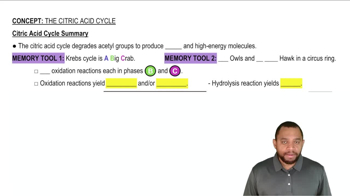
The citric acid cycle, also known as the Krebs cycle, is a key metabolic pathway that takes place in the mitochondria. It involves a series of chemical reactions used by all aerobic organisms to generate energy through the oxidation of acetyl-CoA derived from carbohydrates, fats, and proteins. Understanding this cycle is essential for identifying how amino acids can be converted into intermediates that enter the cycle.
Recommended video:
Guided course
2:31
Citric Acid Cycle Summary Concept 12

Amino Acid Catabolism

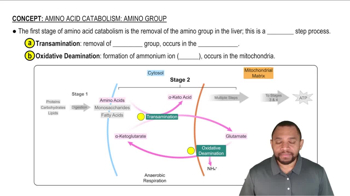
Amino acid catabolism refers to the process by which amino acids are broken down to produce energy or to create metabolic intermediates. Different amino acids can be converted into various intermediates of the citric acid cycle, depending on their structure and the specific enzymes involved. This concept is crucial for determining which intermediates can be produced from the amino acids listed in the question.
Recommended video:
Guided course
2:21
Amino Acid Catabolism: Amino Group Concept 1

Metabolic Intermediates

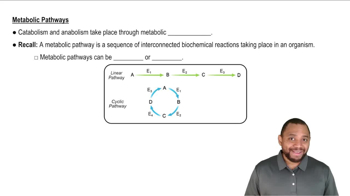
Metabolic intermediates are compounds that form during the metabolic pathways, including the citric acid cycle. They serve as substrates for further reactions and are essential for the synthesis of other biomolecules. Identifying the specific intermediates produced from the amino acids mentioned in the question requires an understanding of how these compounds fit into the broader metabolic framework.
Recommended video:
Guided course
0:52
Metabolic Pathways Concept 2