
Ch. 16 The Autonomic Nervous System and Higher-Order Functions
Martini - Fundamentals of Anatomy & Physiology 11th Edition
Martini, Nath, Bartholomew11th EditionFundamentals of Anatomy & PhysiologyISBN: 9780136874089Non è quello che usi tu?Cambia libro di testo
Capitolo 16, Problema 27

Why is autonomic tone a significant part of ANS function?

Guida verificata passo dopo passo
1
Understand that autonomic tone refers to the baseline level of activity maintained by the autonomic nervous system (ANS) even in the absence of external stimuli.
Recognize that this tone allows the ANS to regulate vital functions such as heart rate, blood vessel diameter, and digestive activity continuously and smoothly.
Note that autonomic tone provides a balance between the sympathetic and parasympathetic divisions, enabling rapid adjustments to maintain homeostasis.
Consider that without autonomic tone, the body would respond only to changes rather than maintaining stable internal conditions, leading to less efficient physiological regulation.
Summarize that autonomic tone is significant because it ensures ongoing control and fine-tuning of organ systems, supporting the body's ability to adapt to varying demands.

Risposta video verificata per un problema simile:

Questa soluzione video è stata consigliata dai nostri tutor come utile per risolvere questo problema.

Concetti chiave

Ecco i concetti essenziali che devi comprendere per rispondere correttamente alla domanda.

Autonomic Tone

Autonomic tone refers to the baseline level of activity maintained by the autonomic nervous system (ANS) in its two branches, sympathetic and parasympathetic. It represents the continuous, steady-state influence on target organs, allowing the body to maintain homeostasis and respond quickly to changes.
Video consigliato:
1:50
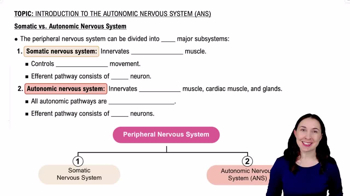
Somatic vs. Autonomic Nervous System

Sympathetic and Parasympathetic Balance

The ANS functions through a balance between sympathetic (fight or flight) and parasympathetic (rest and digest) branches. Autonomic tone reflects this balance, where one branch may dominate or both may exert influence, enabling fine-tuned regulation of physiological processes like heart rate and digestion.
Video consigliato:
4:39
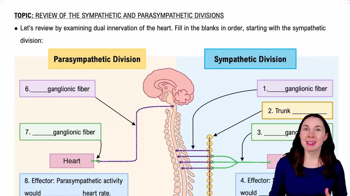
Review of the Sympathetic and Parasympathetic Divisions

Homeostasis and Physiological Regulation

Autonomic tone is crucial for maintaining homeostasis by continuously adjusting organ function to meet the body's needs. This ongoing regulation ensures stability in vital parameters such as blood pressure, respiratory rate, and digestion, even in the absence of external stimuli.
Video consigliato:
01:59
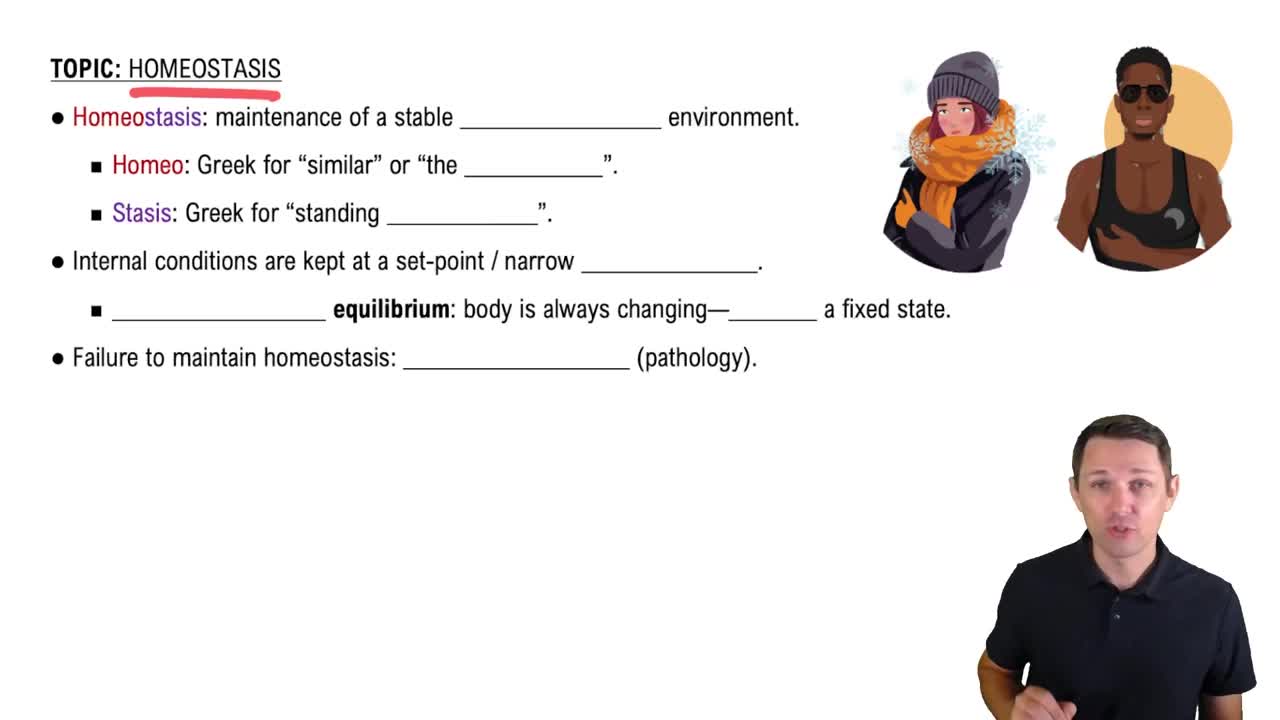
Introduction to Homeostasis
Pratica correlata
Domanda del libro di testo

Under which of the following circumstances would the diameter of peripheral blood vessels be greatest?

(a) Increased sympathetic stimulation

(b) Decreased sympathetic stimulation

(c) Increased parasympathetic stimulation

(d) Decreased parasympathetic stimulation

(e) Both increased parasympathetic and sympathetic stimulation

697
views
Domanda del libro di testo

A possible side effect of a drug used to open the airways of someone suffering from an asthma attack is

(a) Decreased activity of the digestive system

(b) Diarrhea

(c) Profuse urination

(d) Increased blood pressure

(e) Decreased heart rate

822
views
Domanda del libro di testo

Phil is stung on his cheek by a wasp. Because Phil is allergic to wasp venom, his throat begins to swell and his respiratory passages constrict. Would acetylcholine or epinephrine be more helpful in relieving his condition? Why?

725
views
Domanda del libro di testo

The condition known as shock is characterized in part by a decreased return of venous blood to the heart. How could an upsetting situation, such as the sight of a tragic accident or very bad news, produce some temporary symptoms of shock?

744
views
Domanda del libro di testo

Nicotine stimulates cholinergic receptors of the ANS. Based on this information, how would cigarette smoking affect the cardiovascular system?

700
views
Domanda del libro di testo

You are home alone at night when you hear what sounds like breaking glass. What physiological effects would this experience probably produce, and what would be their cause?

657
views