Ch. 10 - Reactions of Alcohols, Ethers, Epoxides, Amines, and Sulfur-Containing Compounds
Bruice - Organic Chemistry 8th Edition
Bruice8th EditionOrganic ChemistryISBN: 9780135213711Non è quello che usi tu?Cambia libro di testo
Capitolo 10, Problema 42

Explain why the half-life (the time it takes for one-half of the compound to be metabolized) of Xylocaine is longer than that of Novocaine.

Guida verificata passo dopo passo
1
Identify the structural differences between Xylocaine (Lidocaine) and Novocaine (Procaine). Xylocaine contains an amide functional group, while Novocaine contains an ester functional group.
Understand the chemical stability of amides versus esters. Amides are more resistant to hydrolysis due to the partial double bond character of the C-N bond, which makes them less reactive to enzymatic breakdown.
Recognize the role of esterases in the body. Esterases are enzymes that rapidly hydrolyze ester bonds, leading to faster metabolism of compounds like Novocaine.
Consider the metabolic pathways. Xylocaine, with its amide bond, is metabolized primarily in the liver by cytochrome P450 enzymes, which is a slower process compared to the rapid hydrolysis of Novocaine by esterases in the plasma.
Conclude that the longer half-life of Xylocaine is due to its amide bond, which is more chemically stable and metabolized more slowly than the ester bond in Novocaine.

Risposta video verificata per un problema simile:

Questa soluzione video è stata consigliata dai nostri tutor come utile per risolvere questo problema.
Durata del video:
7m

Concetti chiave

Ecco i concetti essenziali che devi comprendere per rispondere correttamente alla domanda.

Half-Life

Half-life is the time required for the concentration of a substance to reduce to half its initial value. In pharmacology, it is crucial for understanding how long a drug remains active in the body. The half-life can be influenced by factors such as metabolism, elimination pathways, and the drug's chemical structure.
Video consigliato:
02:08
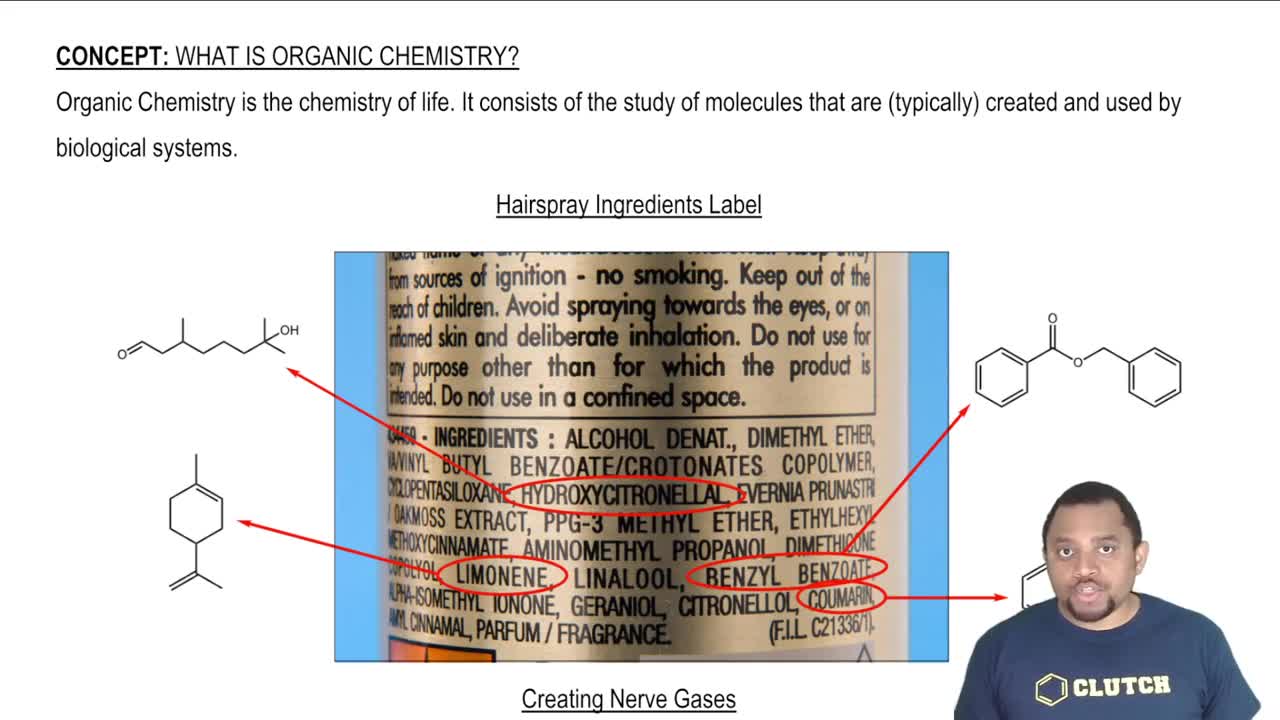
Organic molecules in your everyday life.

Metabolism of Drugs

Drug metabolism refers to the biochemical modification of pharmaceutical substances by living organisms, primarily through enzymatic activity. The rate of metabolism can vary significantly between different drugs due to their chemical properties and the pathways they undergo, affecting their half-lives. Understanding the metabolic pathways of Xylocaine and Novocaine is essential to explain their differing half-lives.
Video consigliato:
Percorso guidato
1:23
Intro to Metabolism Concept 1

Chemical Structure and Properties

The chemical structure of a drug influences its solubility, stability, and interaction with metabolic enzymes. Xylocaine (lidocaine) and Novocaine (procaine) have different molecular structures, which can lead to variations in their absorption, distribution, and elimination. These structural differences are key to understanding why Xylocaine has a longer half-life compared to Novocaine.
Video consigliato:
Percorso guidato
1:19
Polymers Structure and Properties Concept 1