Ch. 10 - Reactions of Alcohols, Ethers, Epoxides, Amines, and Sulfur-Containing Compounds
Bruice - Organic Chemistry 8th Edition
Bruice8th EditionOrganic ChemistryISBN: 9780135213711Non è quello che usi tu?Cambia libro di testo
Capitolo 10, Problema 51

The following three nitrogen mustards were studied for possible clinical use. One is now used clinically, one was found to be too unreactive, and one was found to be too insoluble in water to be injected intravenously. Which is which? (Hint: Draw resonance contributors.)

Guida verificata passo dopo passo
1
Step 1: Analyze the chemical structures of the three nitrogen mustards provided in the image. The first compound has a phenyl group attached to the nitrogen atom, the second compound has a methyl group attached to the nitrogen atom, and the third compound has a phenyl group with a carbonyl group attached to the nitrogen atom.
Step 2: Consider the reactivity of each compound. The nitrogen atom in the first compound is conjugated with the aromatic ring, allowing resonance stabilization. This delocalization reduces the nucleophilicity of the nitrogen and makes the compound less reactive.
Step 3: Evaluate the solubility of each compound. The third compound has a carbonyl group attached to the aromatic ring, which increases polarity and hydrogen bonding potential. This makes the compound more water-soluble compared to the other two.
Step 4: Compare the second compound to the others. The nitrogen atom in the second compound is not conjugated with an aromatic ring, and it lacks additional polar functional groups. This makes it more reactive and less water-soluble than the other two compounds.
Step 5: Based on the analysis, assign the clinical use, reactivity, and solubility properties: The second compound is likely the one used clinically due to its reactivity. The first compound is too unreactive due to resonance stabilization. The third compound is too water-soluble due to the carbonyl group.

Risposta video verificata per un problema simile:

Questa soluzione video è stata consigliata dai nostri tutor come utile per risolvere questo problema.
Durata del video:
6m

Concetti chiave

Ecco i concetti essenziali che devi comprendere per rispondere correttamente alla domanda.

Nitrogen Mustards

Nitrogen mustards are a class of alkylating agents derived from mustard gas, characterized by a nitrogen atom in their structure. They are used in chemotherapy due to their ability to form covalent bonds with DNA, leading to cell death. Understanding their chemical properties, such as reactivity and solubility, is crucial for evaluating their clinical applications.
Video consigliato:
Percorso guidato
3:16
Nitrogenous Bases Concept 2

Resonance Structures

Resonance structures are different ways of drawing the same molecule that illustrate the delocalization of electrons. In nitrogen mustards, resonance can affect the stability and reactivity of the compound. Analyzing resonance contributors helps predict how these compounds will behave in biological systems, influencing their clinical effectiveness.
Video consigliato:
03:04
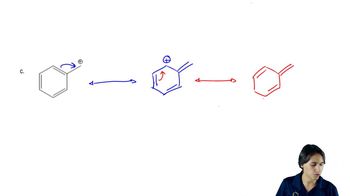
Drawing Resonance Structures

Solubility and Reactivity

Solubility and reactivity are key factors in determining the clinical use of chemical compounds. A compound must be soluble enough to be administered intravenously, while also being reactive enough to interact with biological targets. Understanding the balance between these properties is essential for assessing which nitrogen mustard is suitable for clinical use.
Video consigliato:
01:17
Reactivity of Molecules