Ch. 3 - An Introduction to Organic Compounds: Nomenclature, Physical Properties, and Structure
Bruice - Organic Chemistry 8th Edition
Bruice8th EditionOrganic ChemistryISBN: 9780135213711Non è quello che usi tu?Cambia libro di testo
Capitolo 3, Problema 75

Why are lower molecular weight alcohols more soluble in water than higher molecular weight alcohols?

Guida verificata passo dopo passo
1
Consider the structure of alcohols: they have a hydrophilic (water-attracting) hydroxyl group (-OH) and a hydrophobic (water-repelling) hydrocarbon chain.
Understand that solubility in water is influenced by the ability of a substance to form hydrogen bonds with water molecules.
Recognize that lower molecular weight alcohols have shorter hydrocarbon chains, which means the hydrophilic hydroxyl group has a more significant influence on the molecule's overall polarity.
Note that as the hydrocarbon chain length increases in higher molecular weight alcohols, the hydrophobic character of the molecule increases, reducing its overall solubility in water.
Conclude that the balance between the hydrophilic and hydrophobic parts of the molecule determines the solubility, with lower molecular weight alcohols being more soluble due to their relatively larger hydrophilic component.

Risposta video verificata per un problema simile:

Questa soluzione video è stata consigliata dai nostri tutor come utile per risolvere questo problema.

Concetti chiave

Ecco i concetti essenziali che devi comprendere per rispondere correttamente alla domanda.

Hydrophilicity and Hydrophobicity

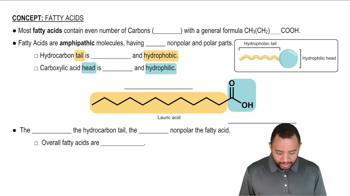
Hydrophilicity refers to the affinity of a molecule for water, while hydrophobicity indicates a lack of such affinity. Lower molecular weight alcohols, like methanol and ethanol, have shorter hydrocarbon chains, which makes them more hydrophilic due to their ability to form hydrogen bonds with water. In contrast, higher molecular weight alcohols have longer hydrophobic hydrocarbon chains that reduce their overall solubility in water.
Video consigliato:
Percorso guidato
2:00
Fatty Acids Concept 1

Hydrogen Bonding

Hydrogen bonding is a type of intermolecular force that occurs when a hydrogen atom covalently bonded to a highly electronegative atom, such as oxygen, interacts with another electronegative atom. Lower molecular weight alcohols can form more hydrogen bonds with water molecules due to their smaller size and higher proportion of hydroxyl (-OH) groups, enhancing their solubility. Higher molecular weight alcohols have fewer hydroxyl groups relative to their size, limiting their ability to interact with water.
Video consigliato:
00:48
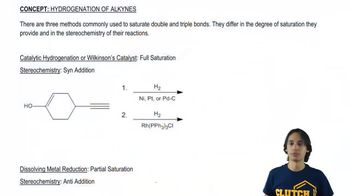
The definition of hydrogenation.

Molecular Size and Structure

The size and structure of a molecule significantly influence its solubility in water. As the molecular weight of alcohols increases, the hydrophobic hydrocarbon portion becomes more dominant, overshadowing the hydrophilic -OH group. This structural change leads to decreased solubility in water for higher molecular weight alcohols, as the larger hydrophobic regions do not interact favorably with water molecules.
Video consigliato:
08:41
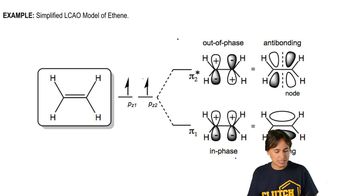
Review of Molecular Orbitals