뒤로
뒤로
문제 77c,d
Draw the substitution products for each of the following reactions; if the products can exist as stereoisomers, show what stereoisomers are obtained:
c. benzyl chloride + CH3CH2OH
d. allyl chloride + CH3OH
문제 77e,f
Draw the substitution products for each of the following reactions; if the products can exist as stereoisomers, show what stereoisomers are obtained:
e. 1-bromo-2-butene + CH3O−
f. 1-bromo-2-butene + CH3OH
문제 79
Would you expect methoxide ion to be a better nucleophile if it is dissolved in CH3OH or if it is dissolved in DMSO? Why?
문제 81
Alkylbenzyldimethyl ammonium chloride is a leave-on skin antiseptic used to treat such things as cuts and cold sores. It is also the antiseptic in many hand sanitizers. It is actually a mixture of compounds that differ in the number of carbons (any even number between 8 and 18) in the alkyl group. Show three different sets of reagents (each set composed of an alkyl chloride and an amine) that can be used to synthesize the alkylbenzyldimethyl ammonium chloride shown here.
문제 82a,b
Fill in the squares in the following chemical equations:
a.
b.
문제 82c,d
Fill in the squares in the following chemical equations:
c.
d.
문제 83a
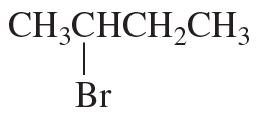
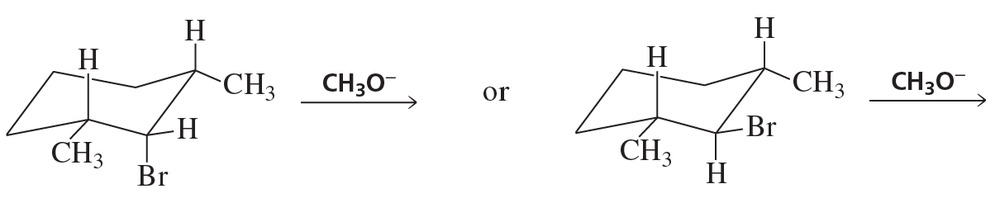
Draw the major product obtained when each of the following alkyl halides undergoes an E2 reaction:
a.
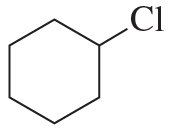
문제 83b
Draw the major product obtained when each of the following alkyl halides undergoes an E2 reaction:
b.
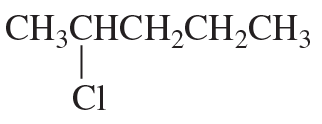
문제 83e
Draw the major product obtained when each of the following alkyl halides undergoes an E2 reaction:
e.
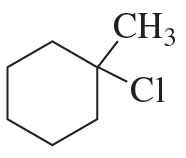
문제 83f
Draw the major product obtained when each of the following alkyl halides undergoes an E2 reaction:
f.
문제 84a,b
Draw the major product obtained when an alkyl halide in [PROBLEM 9-83] undergoes an E1 reaction.
a.
b.
문제 84c
Draw the major product obtained when an alkyl halide in [PROBLEM 9-83] undergoes an E1 reaction.
c.
문제 84d
Draw the major product obtained when an alkyl halide in [PROBLEM 9-83] undergoes an E1 reaction.
d.
문제 85a
Indicate how each of the following factors affects an E1 reaction:
1. the strength of the base
2. the concentration of the base
3. the solvent
문제 85b
Indicate how each of the same factors affects an E2 reaction.
1. the strength of the base
2. the concentration of the base
3. the solvent
문제 86a
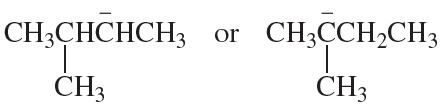
Which species in each pair is more stable?
a.
문제 86b
Which species in each pair is more stable?
b.
문제 86c,d
Which species in each pair is more stable?
c.
d.
문제 86e
Which species in each pair is more stable?
e.
문제 86f
Which species in each pair is more stable?
f.
문제 87
A chemist wanted to synthesize the anesthetic 2-ethoxy-2-methylpropane. He used ethoxide ion and 2-chloro-2-methylpropane for his synthesis and ended up with no ether. What was the product of his synthesis? What reagents should he have used?
문제 88
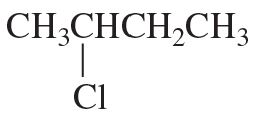
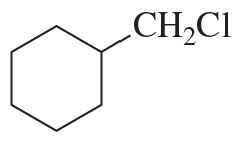
Which reactant in each of the following pairs undergoes an elimination reaction more rapidly? Explain your choice.
a.
b.
문제 89a,b
For each of the following reactions, draw the major elimination product; if the product can exist as stereoisomers, indicate which stereoisomer is obtained in greater yield.
a. (R)-2-bromohexane + high concentration of CH3O−
b. (R)-3-bromo-3-methylhexane + CH3OH
문제 89c
For each of the following reactions, draw the major elimination product; if the product can exist as stereoisomers, indicate which stereoisomer is obtained in greater yield.
c. trans-1-chloro-2-methylcyclohexane + high concentration of CH3O−
문제 89d
For each of the following reactions, draw the major elimination product; if the product can exist as stereoisomers, indicate which stereoisomer is obtained in greater yield.
d. trans-1-chloro-3-methylcyclohexane + high concentration of CH3O−
문제 89e,f
For each of the following reactions, draw the major elimination product; if the product can exist as stereoisomers, indicate which stereoisomer is obtained in greater yield.
e. 3-bromo-3-methylpentane + high concentration of CH3CH2O−
f. 3-bromo-3-methylpentane + CH3CH2OH
문제 90
a. Which reacts faster in an E2 reaction: 3-bromocyclohexene or bromocyclohexane?
b. Which reacts faster in an E1 reaction?
문제 91
When the following reactions are carried out under the same conditions, the rate constant for the first reaction (kH) is found to be 7 times greater than the rate constant for the second reaction (kD). What does that tell you about the mechanism of the reaction? (Hint: a C—D bond is 1.2 kcal/mol stronger than a C—H bond.)
문제 92a
Starting with an alkyl halide, how could the following compounds be prepared?
a. 2-methoxybutane
문제 92b
Starting with an alkyl halide, how could the following compounds be prepared?
b. 1-methoxybutane