
Ch. 1 An Introduction to Anatomy and Physiology
Martini - Fundamentals of Anatomy & Physiology 11th Edition
Martini, Nath, Bartholomew11th EditionFundamentals of Anatomy & PhysiologyISBN: 9780136874089당신이 사용하는 게 아니라요?교과서 변경
1장, 문제 15

Match each numbered item with the most closely related lettered item. Use letters for answers in the spaces provided.
_____Abdominopelvic cavity
a. Study of tissues 
b. Constant internal environment 
c. Face-up position 
d. Study of functions 
e. Positive feedback 
f. Organ system 
g. Study of cells 
h. Negative feedback 
i. Serous membrane 
j. Study of internal and external body structures 
k. Diaphragm 
l. Tissue 
m. Peritoneal cavity 
n. Organ 
o. Face-down position

검증된 단계별 안내
1
Step 1: Understand the term 'Abdominopelvic cavity' — it is a major body cavity that includes the abdominal and pelvic regions, housing many organs and lined by a specific serous membrane.
Step 2: Review the lettered options to find the one that best relates to the Abdominopelvic cavity. Focus on options that describe anatomical spaces or membranes associated with body cavities.
Step 3: Identify that the 'Peritoneal cavity' (option m) is the specific serous membrane-lined space within the Abdominopelvic cavity, making it the most closely related term.
Step 4: Confirm that other options like 'Diaphragm' (k) separate the thoracic and abdominopelvic cavities but do not define the abdominopelvic cavity itself.
Step 5: Conclude that the correct match for 'Abdominopelvic cavity' is 'm. Peritoneal cavity' based on anatomical relationships.

비슷한 문제에 대한 검증된 영상 답변:

이 영상 해법은 위 문제에 도움이 된다고 튜터들이 추천한 것입니다.
영상 길이:
5m
도움이 되었나요?

주요 개념

질문에 올바르게 답하기 위해 반드시 이해해야 하는 핵심 개념들은 다음과 같습니다.

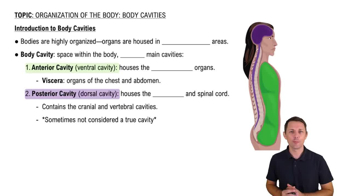
Body Cavities and Their Divisions

The abdominopelvic cavity is a major body cavity located below the diaphragm, encompassing the abdominal and pelvic regions. It houses many vital organs and is often subdivided into smaller cavities like the peritoneal cavity. Understanding these cavities helps in locating organs and understanding their relationships.
추천 영상:
3:20
Introduction to Body Cavities

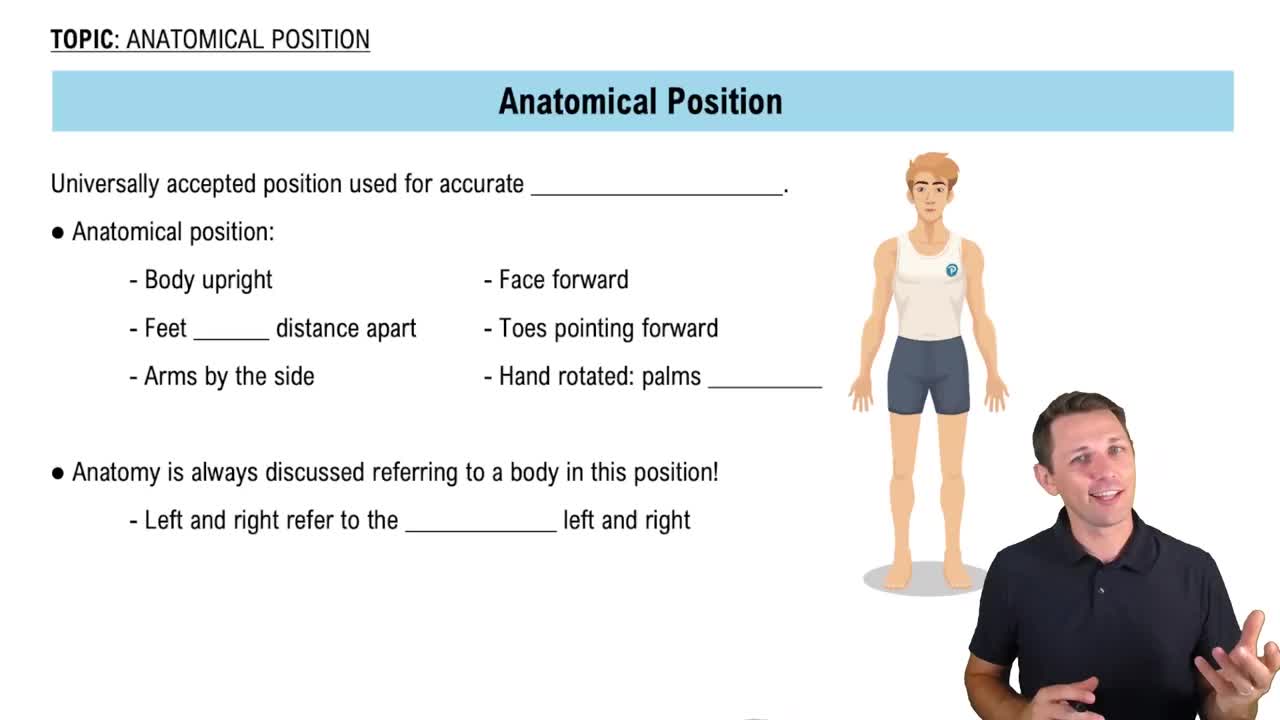
Anatomical Terminology and Positions

Anatomical terms such as 'face-up position' (supine) and 'face-down position' (prone) describe body orientations used to standardize descriptions of location and movement. These terms are essential for clear communication in anatomy and clinical settings.
추천 영상:
02:40
Anatomical Position

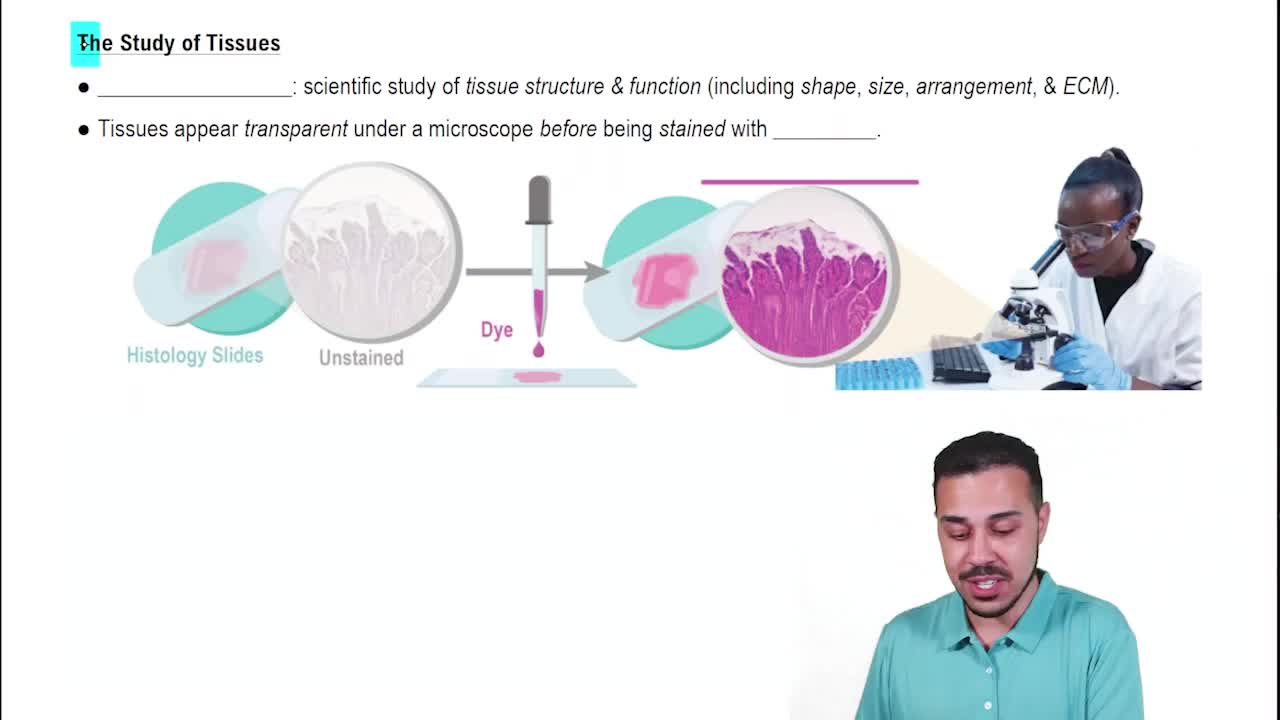
Histology and Related Studies

Histology is the study of tissues, while cytology focuses on cells, and anatomy studies body structures. Differentiating these fields clarifies the scope of study when matching terms like 'study of tissues' or 'study of cells' to their definitions.
추천 영상:
02:52
What is Histology?
관련 실천
교과서 질문

Match each numbered item with the most closely related lettered item. Use letters for answers in the spaces provided.

_____Divides thoracic and abdominopelvic body cavities

a. Study of tissues 

b. Constant internal environment 

c. Face-up position 

d. Study of functions 

e. Positive feedback 

f. Organ system 

g. Study of cells 

h. Negative feedback 

i. Serous membrane 

j. Study of internal and external body structures 

k. Diaphragm 

l. Tissue 

m. Peritoneal cavity 

n. Organ 

o. Face-down position

34
views
교과서 질문

The following is a list of six levels of organization that make up the human body:

(1) Tissue

(2) Cell

(3) Organ

(4) Chemical

(5) Organism

(6) Organ system

The correct order, from the simplest to the most complex level, is

(a) 2, 4, 1, 3, 6, 5

(b) 4, 2, 1, 3, 6, 5

(c) 4, 2, 1, 6, 3, 5

(d) 4, 2, 3, 1, 6, 5

(e) 2, 1, 4, 3, 5, 6

177
views
교과서 질문

Match each numbered item with the most closely related lettered item. Use letters for answers in the spaces provided.

_____Supine

a. Study of tissues 

b. Constant internal environment 

c. Face-up position 

d. Study of functions 

e. Positive feedback 

f. Organ system 

g. Study of cells 

h. Negative feedback 

i. Serous membrane 

j. Study of internal and external body structures 

k. Diaphragm 

l. Tissue 

m. Peritoneal cavity 

n. Organ 

o. Face-down position

60
views
교과서 질문

Match each numbered item with the most closely related lettered item. Use letters for answers in the spaces provided.

____Prone

a. Study of tissues 

b. Constant internal environment 

c. Face-up position 

d. Study of functions 

e. Positive feedback 

f. Organ system 

g. Study of cells 

h. Negative feedback 

i. Serous membrane 

j. Study of internal and external body structures 

k. Diaphragm 

l. Tissue 

m. Peritoneal cavity 

n. Organ 

o. Face-down position

42
views
교과서 질문

Match each numbered item with the most closely related lettered item. Use letters for answers in the spaces provided.

______Pericardium

a. Study of tissues 

b. Constant internal environment 

c. Face-up position 

d. Study of functions 

e. Positive feedback 

f. Organ system 

g. Study of cells 

h. Negative feedback 

i. Serous membrane 

j. Study of internal and external body structures 

k. Diaphragm 

l. Tissue 

m. Peritoneal cavity 

n. Organ 

o. Face-down position

38
views
교과서 질문

The study of the structure of tissues is called (a) gross anatomy, (b) cytology, (c) histology, (d) organology.

147
views